Spanish self-study plan: 30 minutes a day, A1 to B2
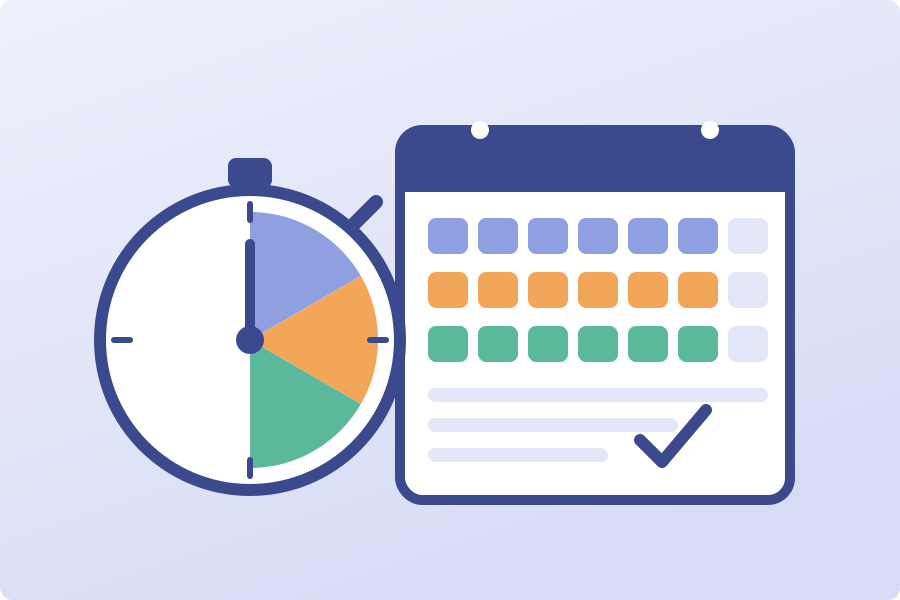
Most people who want to learn Spanish do not have two free hours a day. They have half an hour: on the train, after the children are in bed, in a lunch break. The good news is that thirty minutes is enough to make steady progress, as long as those minutes have a structure. This guide gives you that structure: three ten-minute blocks, four weekly templates from A1 to B2, a way to fit one lesson a week into the plan and a simple system to see that you are actually moving.
Is 30 minutes a day enough to learn Spanish?
Yes, 30 minutes a day is enough to make real, measurable progress in Spanish, but it is a long-distance plan, not a shortcut. Over a year it adds up to roughly 180 hours, which is serious study time if you use it well.
To put that in perspective, Cambridge English publishes guided learning hours for each level of the Common European Framework (CEFR): about 90–100 hours to reach A1, 180–200 for A2 and 350–400 for B1, counted from zero and including lessons. The table was written for English and Cambridge itself calls it a guideline only, but it is a useful yardstick for Spanish too. Studying completely alone usually takes longer, because nobody corrects you.
So the honest maths looks like this:
- From zero to a solid A2: about a year of daily half-hours.
- From A2 to B1: usually another year or a little more.
- From B1 to B2: plan on at least another year; this is where progress feels slowest.
Why not just do three and a half hours on Saturday instead? Because memory works better with spaced practice. A large review of studies on distributed practice (Cepeda et al., 2006, Psychological Bulletin) found that spreading study sessions over time gives better long-term recall than cramming the same amount into one session. A daily half-hour also turns Spanish into a habit rather than a project you postpone. If keeping the habit is your weak spot, our guide on how not to quit a language covers the psychology behind it.
Self-study myths and facts
- MythThirty minutes a day is too little to get anywhere.FactIt adds up to about 180 hours a year. That is roughly the guided-hours figure for reaching A2 from zero.
- MythOne long session at the weekend does the same job.FactSpaced practice gives better long-term recall than cramming the same time into one session.
- MythYou should only start speaking once you know enough grammar.FactOutput belongs in every week from A1: reading aloud, shadowing, short recordings.
- MythIf you feel stuck for a month, the plan has failed.FactPlateaus are normal, especially between B1 and B2. Change the input material, not the whole plan.
How to split 30 minutes: input, review, output
The simplest structure that works is three blocks of ten minutes: input (new Spanish coming in), review (bringing back what you already met) and output (you produce Spanish, out loud or in writing). Each block trains a different thing, and skipping one creates a predictable gap.
| Block | Time | What you do | What it builds |
|---|---|---|---|
| Input | 10 min | Listen to or read something slightly above your level | Understanding, new words in context |
| Review | 10 min | Flashcards, re-listening, rereading yesterday's notes | Memory: what you learned stays |
| Output | 10 min | Speak aloud, record yourself, write a short text | Speaking and writing, finding words fast |
A few rules make the blocks work:
- Input first. It gives you material for the other two blocks. A phrase you heard in the podcast becomes a flashcard and then a sentence you say.
- Review is short and daily. Ten minutes of spaced repetition beats an hour once a week. Our guide to flashcards and spaced repetition explains how to set up a deck that does not grow out of control.
- Output is never optional. It is the block people skip because it is uncomfortable. It is also the one that decides whether you can speak when a real person is in front of you.
- Prepare tomorrow's material today. Spending the first five minutes deciding what to do is the fastest way to lose a 30-minute session.
If thirty minutes in one go is impossible, split them: input on the commute, review while the kettle boils, output in the evening. The total matters more than the shape.
A1 weekly study plan for beginners
At A1 your goal is to understand and use everyday phrases about yourself, your home and simple needs. The plan leans on input and review, with output kept short and safe: repeating, reading aloud, answering simple questions about yourself.
| Day | Input (10 min) | Review (10 min) | Output (10 min) |
|---|---|---|---|
| Mon | A short beginner dialogue with audio | New cards from the dialogue | Read the dialogue aloud twice |
| Tue | The same dialogue, listening without text | Flashcards | Answer 5 questions about yourself aloud |
| Wed | A new short dialogue | Flashcards | Shadowing: repeat right after the audio |
| Thu | A beginner podcast episode, first 10 min | Flashcards + Monday's dialogue | Write 5 sentences about your day |
| Fri | Labels, menus, signs: real Spanish around you | Flashcards | Record a 30-second self-introduction |
| Sat | Free choice: a song with lyrics, a children's video | Week's notes | Describe a photo in 5 sentences |
| Sun | Rest or catch-up | — | — |
What to watch at A1: pronunciation and the core verbs (ser, estar, tener, ir, querer, poder). Do not chase grammar tables; learn whole phrases like ¿Me puede repetir? and Quería un café.
A2 weekly plan: from phrases to conversations
At A2 you can handle simple routine situations, and the goal now is to talk about the past, make plans and cope with short conversations without a script. Input gets longer and more natural, and output moves from memorised sentences to your own.
| Day | Input (10 min) | Review (10 min) | Output (10 min) |
|---|---|---|---|
| Mon | A learner podcast episode | Flashcards | Retell the episode in 5 sentences aloud |
| Tue | A graded reader, one short chapter | Flashcards | Write what you did last weekend |
| Wed | The same podcast, second listen without stopping | Flashcards + Tuesday's text | Voice message in Spanish to a friend or teacher |
| Thu | A short video on a daily-life topic | Flashcards | Role-play a situation: pharmacy, phone call, shop |
| Fri | Graded reader, next chapter | Mistakes notebook | Record a 1-minute story about your week |
| Sat | Free choice | Week's new words | Prepare questions for your next conversation |
| Sun | Rest or catch-up | — | — |
What to watch at A2: the two past tenses (pretérito indefinido and imperfecto) and the near future (voy a + infinitive). Start a mistakes notebook: one line per error, the wrong version and the right one.
B1 weekly plan: speaking without preparing
At B1 you can deal with most everyday situations and talk about experiences, plans and opinions. The goal is to speak without rehearsing first and to follow native-speed Spanish on familiar topics. Now output gets as much weight as input.
| Day | Input (10 min) | Review (10 min) | Output (10 min) |
|---|---|---|---|
| Mon | A podcast for natives on a topic you like | Flashcards (collocations, not single words) | Summarise it aloud in 2 minutes, recorded |
| Tue | A news article in easy or standard Spanish | Flashcards | Write a 120-word opinion on it |
| Wed | A TV series episode, 10 min with Spanish subtitles | Mistakes notebook | Retell the scene without notes |
| Thu | Same podcast, second listen | Flashcards | 2-minute monologue on a random topic |
| Fri | An opinion column or a long social post | Re-read Tuesday's text and correct it | Conversation or language exchange |
| Sat | Free choice | Week's new expressions | Listen to Monday's recording, note 3 errors |
| Sun | Rest or catch-up | — | — |
What to watch at B1: the subjunctive in common phrases (espero que, cuando llegues, no creo que) and linking words (sin embargo, aunque, por eso). If podcasts are your main input, our guide to learning a language through podcasts has a level-by-level approach.
B2 weekly plan: precision and real-life Spanish
At B2 you can follow most of what you hear and argue a point, and the work becomes about precision: richer vocabulary, fewer repeated errors and the ability to handle a phone call, a meeting or a complaint. Input should be the same material native speakers use.
| Day | Input (10 min) | Review (10 min) | Output (10 min) |
|---|---|---|---|
| Mon | A radio programme or long-form podcast | Flashcards (expressions, register) | Argue for and against in 2 minutes |
| Tue | A newspaper opinion piece | Mistakes notebook | Write a formal email or complaint |
| Wed | A series without subtitles | Flashcards | Retell with reported speech |
| Thu | A talk or interview | Re-read Tuesday's email, improve it | Debate a topic with yourself, recorded |
| Fri | A book chapter | Flashcards | Conversation on a demanding topic |
| Sat | Free choice | Week's expressions | Rewrite a paragraph in a more formal register |
| Sun | Rest or catch-up | — | — |
What to watch at B2: the errors that have become habits. At this level your mistakes notebook is worth more than any new textbook, because the same ten errors usually account for most of what still sounds foreign.
What does a 30-minute Spanish session look like, minute by minute?
A good session has no decisions in it: you sit down, open what you prepared yesterday and follow the clock. Here is one real A2 Tuesday, with the Spanish you would actually use, so you can copy the shape for any level.
| Minute | Block | What you do |
|---|---|---|
| 0–1 | Start | Open the chapter and the flashcard app you lined up yesterday |
| 1–10 | Input | Read one graded-reader chapter (about 2 pages); underline 5 useful phrases, not single words |
| 10–20 | Review | Due flashcards first, then add the 5 phrases as new cards, each inside a full sentence |
| 20–29 | Output | Write 6–8 sentences about last weekend, then read them aloud twice |
| 29–30 | Close | Note tomorrow's material and tick the calendar |
Input (minutes 1–10). Suppose the chapter contains Se me olvidó el móvil en casa and Al final no pudimos entrar. These are worth more than any isolated word, because they are whole patterns you can reuse. Five phrases per session is plenty: thirty-five a week, if they stick, is a lot.
Review (minutes 10–20). Do the cards that are due before you add new ones. Each new card is a sentence with a gap, for example Se me ___ el móvil en casa → olvidó. Say the full sentence aloud every time. Ten minutes usually covers 40–60 reviews once the deck is running.
Output (minutes 20–29). Write about last weekend and force yourself to use two of today's phrases:
El sábado fui al centro con mi hermana. Queríamos ver una exposición, pero había mucha cola y al final no pudimos entrar. Comimos en un bar pequeño. Por la tarde se me olvidó el móvil en casa y no pude llamar a nadie.
Then read it aloud, slowly, then at normal speed. If you are unsure of a sentence, mark it with a question mark: that is exactly what you take to your teacher or to a language exchange.
Close (minute 29–30). Write one line: "Wed: podcast ep. 14, cards, voice message". Tomorrow starts without thinking.
The same shape works at every level; only the material changes. At A1 the input is a 1-minute dialogue and the output is reading it aloud. At B2 the input is a radio interview and the output is a recorded 2-minute argument.
What free resources can you use for each block?
You do not need to buy anything to run this plan: a phone, a free flashcard app and Spanish public media cover all three blocks. The table lists types of material that work, with examples.
| Block | Type of material | Examples |
|---|---|---|
| Input A1–A2 | Learner dialogues with audio, graded readers, children's TV | Your course book audio, graded readers from a library, cartoons dubbed in Spanish |
| Input B1–B2 | Media for native speakers | RTVE Play (Spain's public broadcaster, free series and documentaries), RNE radio podcasts, newspapers |
| Review | Spaced-repetition flashcards | Anki (free on desktop and Android), or a paper box of cards |
| Output, speaking | Your phone's voice recorder, voice messages | Record, listen back, record again |
| Output, writing | A notebook or notes app | Short texts you later correct with a teacher |
| Output, conversation | Language exchanges (intercambios), lessons | Local exchange meetups, online tandem partners, a weekly lesson |
Two practical tips. First, choose one input source per week and stay with it; switching podcasts every day means you never get used to a voice. Second, if you live in Spain, the street is free input: bus announcements, supermarket labels, the neighbours' conversation at the bakery. Ten minutes of listening to what people say at the counter, and then saying it yourself, is a complete session.
Common mistakes in a 30-minute study plan
The most common mistakes are not about grammar but about the plan itself: doing only the comfortable block, adding too many new cards and never getting corrected. Each has a simple fix.
| Mistake | Why it hurts | Fix |
|---|---|---|
| Doing three input blocks and no output | You understand more but still freeze when speaking | Output is the one block you never cut |
| Adding 30 new cards a day | In two weeks review takes an hour and you quit | Maximum 5–10 new cards per session |
| Learning single words | You know olvidar but cannot say se me olvidó | Every card is a full sentence |
| Changing the method every Monday | Nothing gets time to work | Keep the same template for at least 8 weeks |
| Material far too hard | You decode instead of learning | You should understand roughly 80% without a dictionary |
| Never recording yourself | You cannot hear your own errors | One recording a week, listened to the next day |
| No correction for months | Errors become habits | A teacher, an exchange partner or at least a mistakes journal |
English speakers tend to bring the same handful of slips into their output block. Catch them early:
| What English speakers often say | Correct Spanish | Why |
|---|---|---|
| Soy 30 años | Tengo 30 años | Age uses tener |
| Estoy embarazada (meaning embarrassed) | Me da vergüenza / Estoy avergonzado | Embarazada means pregnant |
| Realicé que... | Me di cuenta de que... | Realizar means to carry out |
| Soy aburrido (meaning bored) | Estoy aburrido | With ser it means boring |
| Yo gusto el café | Me gusta el café | The thing liked is the subject |
| Actualmente (meaning actually) | En realidad | Actualmente means currently |
When you spot one of these in your writing, it goes into the review block as a card the next day. That is how output and review feed each other.
What to do when you miss a day or lose motivation
Missing a day is normal; missing two in a row is how plans die. The rule that works for most people is simple: never two zero days in a row, and on a bad day do the 10-minute version instead of nothing.
The 10-minute emergency session:
- 3 minutes input: listen to one short audio you already know.
- 4 minutes review: only the due flashcards, no new ones.
- 3 minutes output: say aloud three sentences about your day, in Spanish.
It feels too small to matter, but it keeps the chain alive, and the chain is what makes the next full session easy to start.
Other situations and what to do:
- Travel or a busy week: switch to "review + output only" for those days. Input can wait; the cards and your voice cannot.
- Illness: stop completely, then restart with the emergency version for two days before the full plan.
- Boredom: keep the structure, change the content. A new series, a topic you care about (football, cooking, your profession), a podcast with a different voice.
- You missed a week: do not try to "catch up" with a three-hour session. Restart at normal size; delete or postpone the pile of overdue cards if it is too large.
A fixed time and place helps more than willpower. "After breakfast, at the kitchen table, before I open email" is a plan; "sometime today" is not.
How to combine self-study with one lesson a week
One lesson a week turns 30 minutes a day from guesswork into a plan: the teacher sets the direction and corrects what you cannot hear yourself, and your daily half-hours do the repetition. The lesson becomes the anchor of the week.
Arrange the week around it:
- Day after the lesson: review block = the lesson notes. Turn every correction into a flashcard.
- Middle of the week: input on the lesson topic. If the lesson was about renting a flat, read flat ads and listen to a conversation about rent.
- Two days before: output block = the homework or a recording on the lesson topic.
- Day before: write three questions you want to ask and three sentences you are unsure about. That list makes the lesson twice as useful.
The weekly maths changes too. Seven half-hours plus a 60-minute lesson is about four and a half hours a week, and an hour with a teacher carries more feedback than an hour alone. For a self-studier, feedback is the missing piece: you can collect input and review on your own, but correction of your speaking needs another person.
If you want that anchor, our 4 private Spanish lessons a month give you one 60-minute one-to-one lesson a week on Zoom with a qualified native teacher from Spain, on a fixed day and time.
Common self-study traps and how to avoid them
Most self-studiers do not quit because of a lack of motivation. They quit because small planning mistakes pile up over several weeks. These are the ones English speakers run into most often.
| Trap | Why it happens | What works better |
|---|---|---|
| Only flashcards, no speaking | Cards feel productive and are easy to count. | Add five minutes of talking out loud about your day after every card session. |
| Input that is too hard | You want "real" Spanish, so you pick the news or a series with no subtitles. | Choose material where you follow about four sentences in five, then step up slowly. |
| Reading grammar without using it | Rules feel clear after reading but stay passive. | Write three sentences about your own life with every new rule. |
| Trying to catch up | After two missed days you plan a double session. | Simply do the normal block; catching up costs more willpower than it is worth. |
| Translating word for word | English structures feel natural, so you copy them. | Learn whole chunks: tengo hambre, me gusta, hace frío. |
Two classic examples of the last trap: many learners say «Estoy embarazada» meaning "I'm embarrassed", but it means "I'm pregnant"; the phrase you want is «Me da vergüenza». Others say «Soy aburrido» when they mean "I'm bored", which actually says "I'm boring". The correct version is «Estoy aburrido».
A short exercise: plan your next week
On Sunday, take ten minutes and answer three questions in writing:
- Which real time slots do I have for 30 minutes this week? Write specific times, for example "Tuesday, 7:30 on the train".
- Which block do I find hardest? Put it at the start of the session, while your energy is still high.
- What one topic do I want to be able to talk about in Spanish next Sunday? For example: «Esta semana he trabajado mucho y el sábado voy a ver a mis amigos.»
The following Sunday, record that story as a short voice note. This turns the plan into a result you can check, and week by week you can hear whether the half-hours are turning into real speaking ability.
How long to B1 at your pace?
Five quick questions. You get an approximate range, not a promise.
How to track your Spanish progress
Track two things: the minutes you put in and what you can now do in Spanish. Minutes keep the habit honest; can-do checks show the result. Neither works alone.
A simple tracking system that takes five minutes a week:
- A minutes log. A calendar where you tick each day you did all three blocks. The goal is not a perfect streak but no two missed days in a row.
- A monthly recording. On the first day of each month, record a 2-minute talk on the same topic, for example "my week". Compare it with last month's: speed, pauses, tenses, vocabulary.
- Can-do statements. The Council of Europe's CEFR self-assessment grid describes each level in plain sentences. Every eight weeks, read the descriptors for your next level and mark which ones are already true.
- Counted words. The number of mature cards in your flashcard app is a rough but honest measure of vocabulary growth.
If progress feels flat for a month, change the input, not the plan: a new podcast, a different series, a graded reader one step harder. Plateaus are normal, especially between B1 and B2. For more ways to measure, read our guide on how to evaluate your language learning progress.
Is your 30-minute plan solid?
What is the 10-minute emergency session for?
Frequently asked questions
Can I learn Spanish with 30 minutes a day?
Yes, if the minutes are structured and daily. Thirty minutes a day is about 180 hours a year. Using Cambridge's guided learning hours as a rough guide (180–200 hours for A2, 350–400 for B1, counted from zero), that is roughly a year to a solid A2 and another year or more to B1.
How long does it take to reach B1 in Spanish studying 30 minutes a day?
From zero, usually around two years of daily half-hours, longer if you study completely alone. From A2, about another year. Adding one lesson a week raises your weekly time to about four and a half hours and adds correction, which self-study lacks.
Is it better to study 30 minutes every day or 3 hours once a week?
Every day. Research on distributed practice, such as the 2006 review by Cepeda and colleagues, shows that spreading study over time gives better long-term recall than cramming the same hours into one session. Daily study also builds a habit.
What should I do in a 30-minute Spanish study session?
Split it into three ten-minute blocks: input (listen or read something slightly above your level), review (flashcards or yesterday's notes) and output (speak aloud, record yourself or write). Prepare tomorrow's material at the end so you do not lose time deciding.
Can I split the 30 minutes into shorter sessions?
Yes. Input on the commute, review during a break and output in the evening works just as well. The daily total and the three types of practice matter more than doing them in one sitting.
Is self-study enough, or do I need a teacher?
You can get input and review on your own. What self-study cannot give you is correction of your speaking and writing. Many learners combine daily self-study with one lesson a week, using the lesson to fix errors and set the week's topic.
What should I do if I miss a day of Spanish study?
Do not try to make it up with a long session. The useful rule is never two zero days in a row: on a bad day do a 10-minute version (3 minutes of familiar audio, 4 minutes of due flashcards, 3 minutes speaking aloud) and return to the full 30 minutes the next day.
Book your free trial lesson
One to one with a native teacher, on Zoom.
Times shown in your zone: Europe/Madrid
1. Pick a day
Loading the timetable…
3. Your email for the confirmation and the Zoom link
One-to-one lessons with a native teacher
On Zoom with a qualified teacher from Spain who also speaks English.