How much Spanish do you need to live in Spain

Fourteen months in Spain. The NIE went through a gestoría, a friend came along to the bank, the estate agent spoke English. Then your daughter's teacher stops you in the corridor and wants a word: no appointment, no interpreter, three minutes, and she is talking about your child.
That is where the question stops being abstract, so here is the answer first. A2 is what the state asks for citizenship, an exam level rather than a life level. B1 is what your own life asks for: the health centre, the school, the bank, the plumber, the neighbour downstairs. B2 is what an employer or a Spanish university asks for.
A2: enough for the exam, not for the day
For Spanish nationality by residence you need DELE A2 or higher plus the CCSE, the constitutional and sociocultural test, both run by the Instituto Cervantes. Nationals of Spanish-speaking countries are exempt from the language exam. Fees and dates change, so check the Cervantes site, not a forum post from three years ago.
At A2 you can say things:
- Hola, quería pedir cita. — Hello, I'd like an appointment.
- Vivo en Alicante desde hace dos años. — I've lived in Alicante for two years.
- Perdone, no le entiendo. ¿Puede hablar más despacio? — Sorry, I don't follow. Could you speak more slowly?
What A2 does not do is handle the reply. You ask cleanly, the funcionario answers in one long sentence with three conditions, and you are back to nodding. People pass A2 and still take a friend to the bank.
B1: your life without a middleman
B1 is where you stop outsourcing your own affairs. You still make mistakes, and by evening you are tired of it, but nobody has to come with you.
At the health centre. Your médico de cabecera is the family doctor you are assigned to.
- ¿Me da cita con el médico de cabecera? — Can I get an appointment with my GP?
- Me duele aquí desde hace tres días y por la noche va a peor. — It hurts here, three days now, and worse at night.
- Soy alérgica a la penicilina. — I'm allergic to penicillin.
- ¿Esto lo cubre la Seguridad Social o va por lo privado? — Is this covered by the public system or is it private?
At the school and the ayuntamiento.
- ¿Cómo va mi hija en clase? ¿En qué tiene que mejorar? — How is my daughter doing? What does she need to work on?
- Mañana no viene, tiene fiebre. — She won't be in tomorrow, she has a temperature.
- Vengo a empadronarme. ¿Qué documentos hacen falta? — I've come to register on the padrón. Which documents do I need?
At the bank and with the builder.
- No estoy de acuerdo con este cargo, quiero reclamarlo. — I don't agree with this charge, I want to dispute it.
- ¿Me puede explicar exactamente qué estoy firmando? — Can you explain exactly what I am signing?
- Tengo una fuga en el baño, ¿cuándo puede venir? — I have a leak in the bathroom, when can you come?
- ¿Me pasa un presupuesto por escrito antes de empezar? — Could you give me a written quote before you start?
With the neighbours. The comunidad de vecinos is your building's owners' association, and it votes on your money.
- ¿A qué hora es la reunión de la comunidad? — What time is the residents' meeting?
- Perdona, anoche se oía mucho ruido. ¿Podemos bajarlo a partir de las once? — Sorry, it was noisy last night. Could we keep it down after eleven?
- Voy a tener obras en casa, te aviso por si molesta. — I'm having work done, just so you know.
At A2 you can complain. At B1 you can complain and still be on good terms in the lift the next morning.
B2: work, university and being taken seriously
B2 is where Spanish stops being a survival tool and becomes a working one. A job ad asking for nivel alto de español usually means B2. Universities normally want B2 or C1 for a degree taught in Spanish, each setting its own rule.
- Me encargo de los clientes y del seguimiento de los pedidos. — I handle the clients and follow up on orders.
- Entiendo tu punto, pero hay un riesgo que no hemos mirado. — I take your point, but there is a risk we haven't looked at.
- No lo veo claro, y te explico por qué. — I'm not convinced, and I'll tell you why.
Below B2 you can do the job. At B2 you can defend how you did it, in a meeting, when somebody disagrees.
How long each step takes
Treat the numbers as an orientation, not a law: the CEFR describes what you can do, not what it costs in hours. Counting lessons plus homework, the rough shape is 150 to 250 hours from zero to A2, another 150 to 250 to B1, another 200 to 300 to B2.
Where you land depends on your first language (Italian, French, Portuguese and Romanian give a real head start; English gives vocabulary but not the verbs; Slavic and other non-Romance languages get no discount), on how much Spanish your day actually contains, and above all on weekly load. Two hours a week plus homework is roughly 100 to 120 hours a year, so A2 from zero takes about two years; four or five hours a week gets you there inside one.
The coast: English works, until it doesn't
In Torrevieja, on the Costa del Sol and the Costa Blanca, a year or two on English alone is realistic: the agency, the bar, the private clinic, an English-speaking gestor.
Then it stops, in one of four places. Urgencias at three in the morning. A state school, where the corridor conversation happens in Spanish. A contract, where the clause that matters is never the one somebody summarises for you. And work outside the expat bubble, where the better-paid work is.
The cost of not knowing never arrives as a bill. It arrives as intermediaries you keep paying and papers you sign blind, and it grows the longer you leave it.
Start from where you are
Nobody needs Spanish in the abstract. Take the next situation you have to survive, the parents' meeting or the call to the health centre, and learn that. A2 gets the paperwork done, B1 gets your life back, B2 gets the job.
Frequently asked questions
What level of Spanish do I need for Spanish citizenship?
DELE A2 or higher, plus the CCSE test on constitutional and sociocultural knowledge. Both are run by the Instituto Cervantes, and nationals of Spanish-speaking countries are exempt from the language exam. A2 is the legal minimum, not the level at which daily life becomes comfortable.
Can I live in Spain without speaking Spanish?
On the coast, for a year or two, yes. Agencies, bars and private clinics in Torrevieja or on the Costa del Sol work in English. It stops at the public hospital, the state school, a contract you have to sign yourself, and any job outside the expat bubble.
How long does it take to reach B1 in Spanish?
As an orientation rather than a rule, somewhere around 300 to 500 hours from zero, counting lessons plus homework. At two hours a week that is two to three years; at four or five hours a week it is closer to eighteen months. Speakers of Romance languages move faster.
Do I need B2 Spanish to work in Spain?
It depends on the job. Below B2 you can do the work; at B2 you can argue your case in a meeting, deal with clients and follow colleagues talking fast. Job ads asking for nivel alto de español usually mean B2, and degrees taught in Spanish normally ask for B2 or C1.
Book your free trial lesson
One to one with a native teacher, on Zoom.
Times shown in your zone: Europe/Madrid
Loading the timetable…
3. Your email for the confirmation and the Zoom link
One-to-one lessons with a native teacher
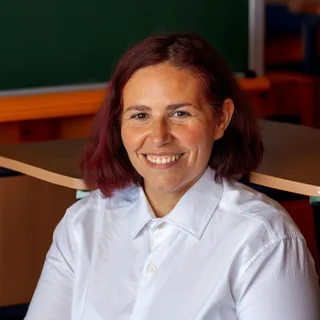
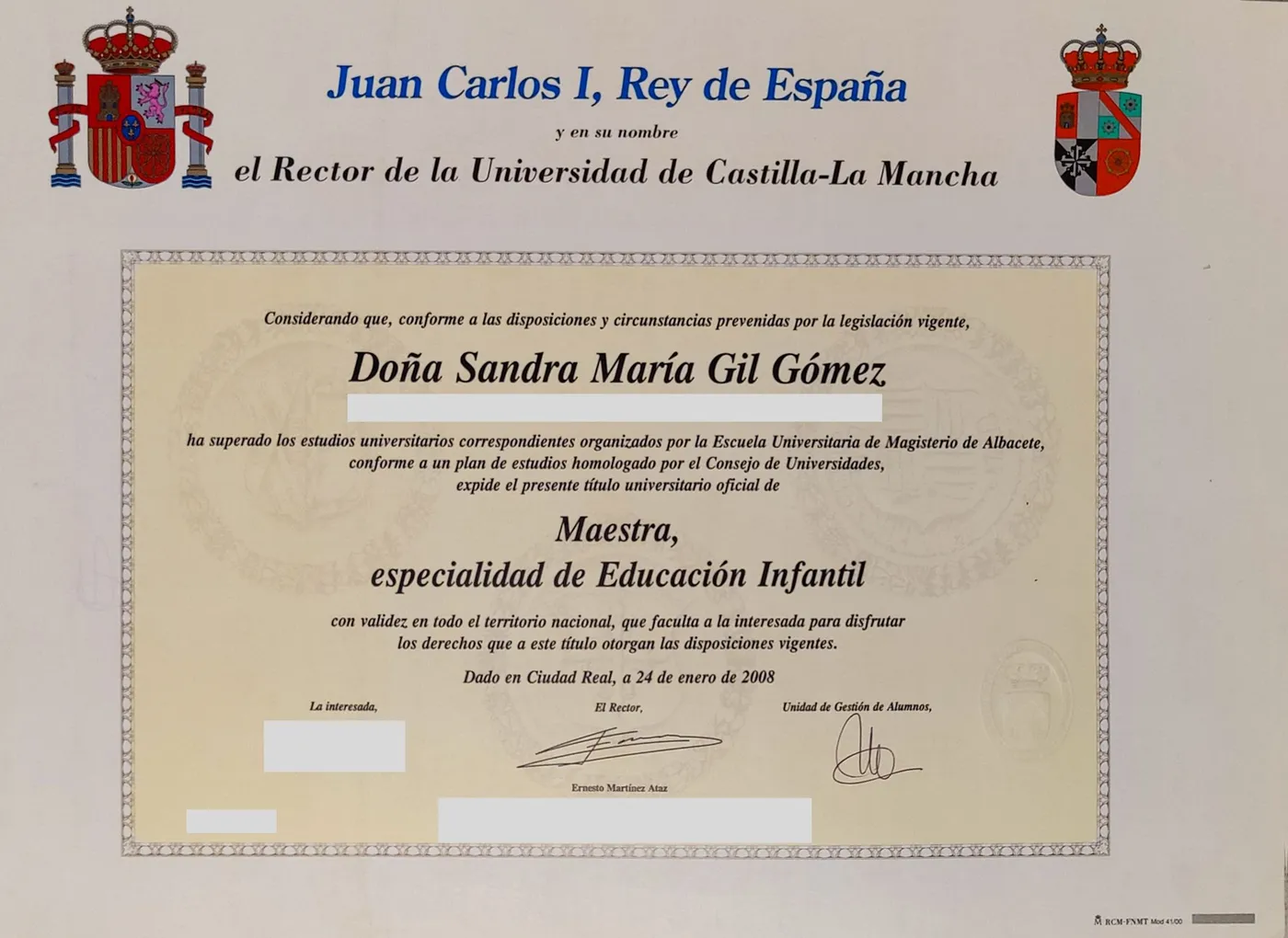
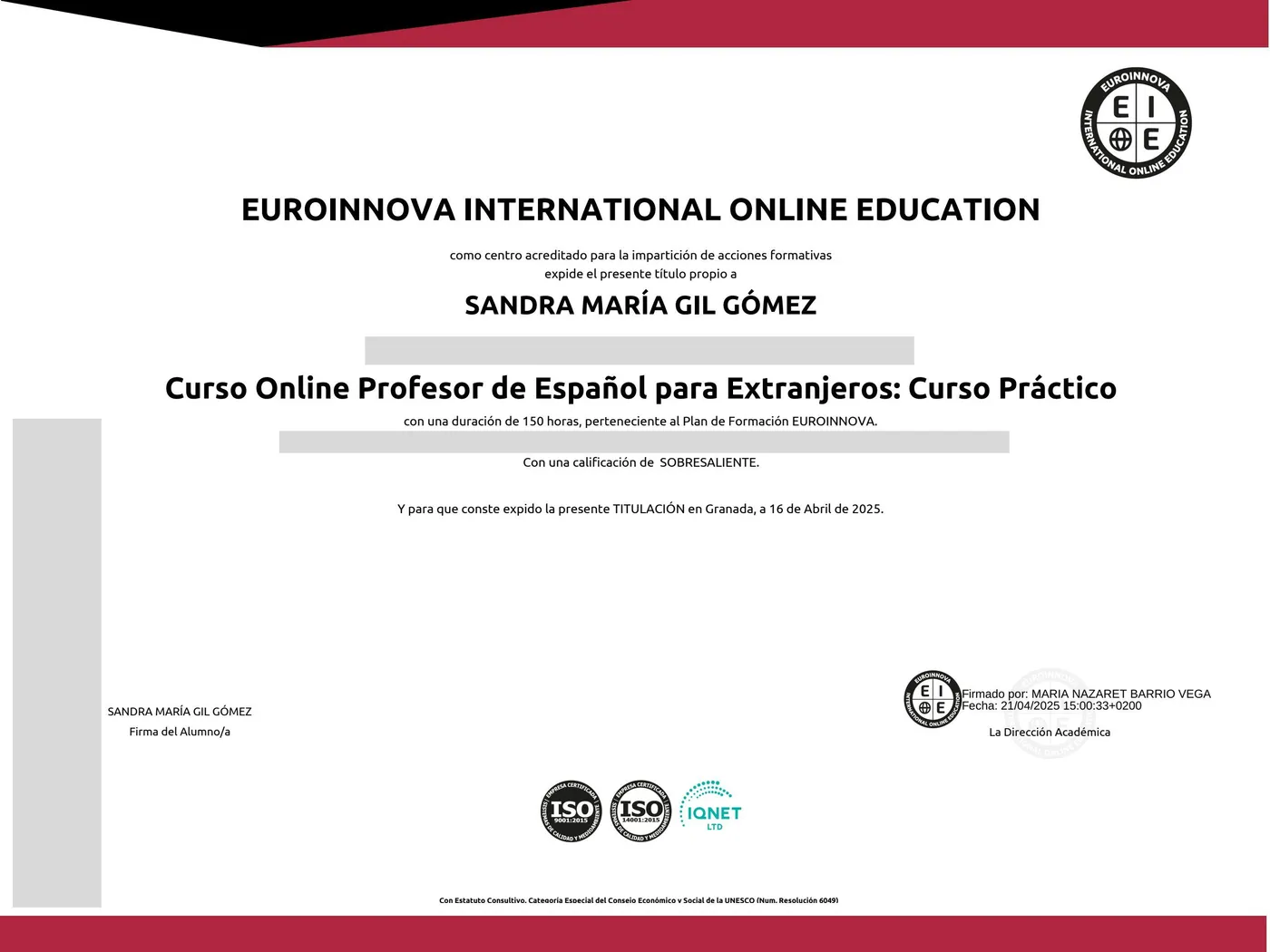
On Zoom with a qualified teacher from Spain who also speaks English.