La hora del vermut: terraces, plans and paying in Spain
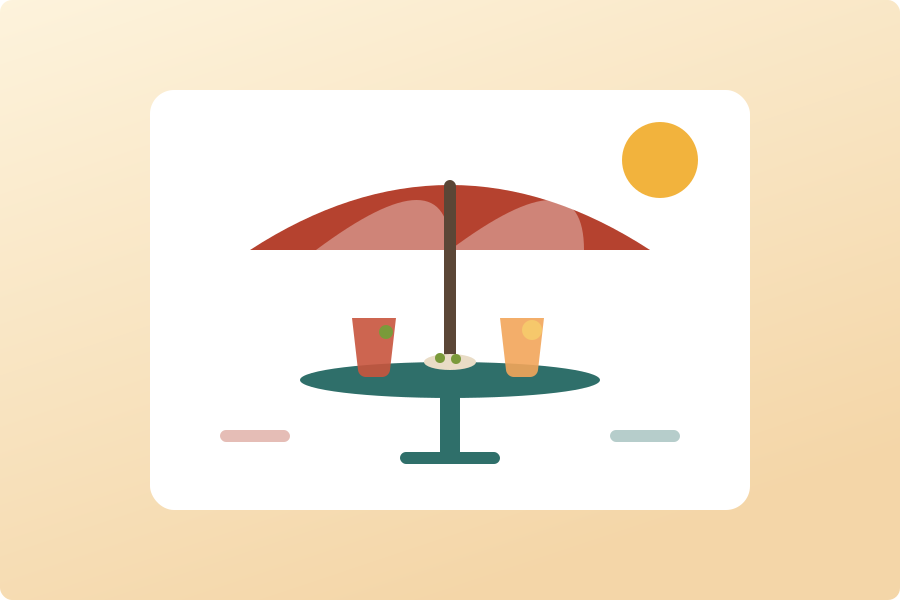
It is Saturday, half past twelve, and a message lands in the group chat: ¿Vermut a la una en la plaza? Nobody asks who is coming. Somebody replies with a thumbs up, someone else says me apunto, pero llego tarde, and by two o'clock there are nine people around three pushed-together tables, one of them a friend of a friend you have never met. When the bill arrives, three people reach for it at once. If you have just moved to Spain, this is one of the easiest ways into local social life, and also one of the most confusing.
This guide explains how the weekend aperitivo works: what la hora del vermut is, what quedar para tomar algo really means, how plans are made and joined, what sobremesa is, what to order if you do not drink alcohol, and how the bill gets paid. A caveat first: these are habits, not rules. They vary with region, age, budget and family life, and plenty of Spaniards spend their Sundays at home, in the countryside or at the children's football match.
What is la hora del vermut in Spain?
La hora del vermut is the late-morning drink before lunch, mostly at weekends, usually somewhere between noon and two. It is a short, relaxed stop at a bar or terrace with something to drink and a small snack, and today the name often refers to the moment rather than the drink.
Zaragoza's official tourism site describes it as a ritual between midday and lunch, traditionally after Sunday mass, and notes that elsewhere in Europe vermouth tends to be drunk later in the day (Zaragoza Turismo). Spanish red vermouth is served very cold, often with an olive or a slice of orange, and some people add a splash of soda (sifón) to make it lighter. The snacks matter as much as the glass: olives, crisps, pickles, mussels, cockles or a plate of patatas bravas.
Reus, in Tarragona, calls itself the capital of vermouth and has a museum dedicated to it, and in Catalonia fer el vermut is a weekend institution. Both spellings, vermut and vermú, are correct according to the RAE's Diccionario panhispánico de dudas. Phrases you will hear: ¿Vamos a tomar el vermut?, Quedamos para el vermú and, in many places, ir de vermut.
What time do Spaniards go out for drinks at the weekend?
At the weekend the day has three social slots: the aperitivo around 12:30–14:00, a late lunch around 14:00–16:00 that can turn into a long sobremesa, and an evening plan that rarely starts before nine. Not everyone does all three, of course.
The late-afternoon slot has a name too. Tardeo is a colloquial word for going out in the afternoon instead of late at night, popular with people who have children or work early on Monday. On weekdays, tomar algo after work exists, but it is less of a ritual than in the UK; many people go home first and meet later.
For newcomers, the timing is the biggest adjustment. If you suggest meeting at six for dinner, you may get polite laughter. Six is for coffee or a walk. Dinner with friends is often at nine or later, especially in summer.
What does "quedar para tomar algo" mean?
Quedar means to arrange to meet, and quedar para tomar algo means "to meet for a drink", with no obligation to drink anything alcoholic. Algo is genuinely open: a coffee, a soft drink, a beer or a vermouth all count.
The verb is the core of social Spanish. ¿Quedamos? (shall we meet?), ¿A qué hora quedamos? (what time shall we meet?), He quedado con Marta (I'm meeting Marta). Do not confuse it with quedarse, which means to stay: Me quedo en casa means you are staying home.
Related expressions: tomar algo (have a drink), ir de cañas (go out for small beers, although people order anything), ir de tapas (go round bars for small dishes) and salir (go out, usually in the evening).
How are plans made in Spain, and can you just join?
Plans in Spain are often open: someone proposes a time and place, people join as they can, and friends bring friends. Asking if you can come, or bring someone, is normal and rarely seen as intrusive.
What this looks like in practice:
- Group chats rule. Most plans live in WhatsApp groups. A vague ¿Hacemos algo el finde? on Thursday becomes a concrete place on Saturday morning.
- Joining is easy. ¿Puedo apuntarme? or ¿Os importa si me apunto? (mind if I join?) is fine. The answer is usually ¡Claro, cuantos más mejor!
- Bringing someone is normal. ¿Puedo traer a una amiga? rarely gets a no for a bar plan. For a dinner at someone's home, ask first.
- Times are approximate. A la una can mean ten past one. Being twenty minutes late to a terrace plan is mild; being late to a restaurant booking is less so.
- Not every yes is a yes. Si puedo, me paso (if I can, I'll drop by) is often a polite maybe. Our guide to ya veremos and saying no without saying no explains how to read these answers.
If you are new and nobody invites you, propose something small and specific: ¿Os apetece un vermut el domingo en el bar de la plaza? Specific beats vague.
What is sobremesa?
Sobremesa is the time spent talking at the table after a meal has finished. The RAE's dictionary defines it exactly that way, and de sobremesa means straight after eating, without getting up.
At weekends and on holidays, the sobremesa after a long lunch can last longer than the meal itself: coffee, perhaps a chupito or an herbal tea, and a conversation that drifts from politics to football to someone's cousin's wedding. Getting up right after dessert can come across as being in a hurry.
For learners, sobremesa is where real Spanish happens: overlapping voices, stories, jokes and opinions, not menu vocabulary. This is also why people who have studied for years often say they understand everything in class and nothing at the table. How people greet and react in that kind of conversation is covered in our guide to greetings, two kisses, tú and usted.
Do you have to drink alcohol? What to order instead
No. Ordering something non-alcoholic at the vermut hour or on a terrace is completely normal, and nobody needs a reason. The drink is the excuse for the meeting, not its point.
Spain is a big market for alcohol-free options. According to the brewers' association Cerveceros de España, alcohol-free beer accounts for about 14% of the beer consumed in the country, and Spain leads Europe in its production and consumption (2025 sector report). Useful orders:
- Una sin / una cero cero. An alcohol-free beer; 0,0 is the zero-alcohol version.
- Un vermut sin alcohol. Many bars now stock one.
- Un mosto. Grape juice, the classic aperitivo alternative, often with ice and a slice of orange.
- Un refresco, un agua con gas, un zumo. Soft drink, sparkling water, juice.
- Un café / un descafeinado. Perfectly fine at any hour.
If someone insists, No, gracias, hoy tomo un mosto is enough. A small dish of olives or crisps often comes with the drink in many places, though the custom varies by city. How to order the food itself, from a caña to a ración, is in our guide to ordering tapas and the menú del día.
The Spanish aperitivo: myths and facts
- MythAt the vermouth hour you have to drink vermouth.FactThe name now refers to the moment. Soft drinks, mosto, alcohol-free beer and coffee are all ordinary orders.
- MythNot drinking alcohol makes you an outsider in Spain.FactAlcohol-free beer is about 14% of the beer consumed in Spain, according to Cerveceros de España. Ordering una sin or un mosto raises no eyebrows.
- MythTe invito just means you are welcome to come.FactIt means the speaker is paying. The polite reply is to thank them and offer the next round.
- MythAsking to join a plan is pushy.FactPlans are often open. ¿Puedo apuntarme? is a normal question, and friends of friends join all the time.
Who pays in Spain: rounds, a escote or each their own?
In small groups of friends, a common habit is for one person to pay a round and someone else to pay the next. In bigger groups the bill is usually split equally, which Spaniards call pagar a escote or a pachas. Paying only for exactly what you had is less common among friends, but not rude.
The RAE defines a escote as each person paying their share of a common expense (DLE). In practice:
- Rounds (rondas). Esta ronda la pago yo or simply Esta la pago yo (this one's on me). The unspoken deal is that the next one is someone else's.
- Inviting means paying. Te invito does not just mean "I'm inviting you": it means "I'm paying". If someone says it, they expect to pay; you can answer Vale, pero la próxima la pago yo.
- The battle for the bill. Two people insisting on paying is a polite ritual. Insist once or twice, then accept with Bueno, gracias, la próxima es mía.
- Splitting by phone. Many people pay one bill and the others send their share by Bizum, Spain's bank-to-bank mobile payment: Te hago un Bizum.
- Birthdays. In many groups the person celebrating pays a round or the drinks, the opposite of some other countries.
People from the UK will recognise the rounds; Americans used to separate checks may find that asking for cuentas separadas in a busy bar is unusual. Splitting equally and settling by Bizum later is the easy solution.
What do you eat at the vermouth hour?
At the vermouth hour you eat small, salty things that go with a cold drink: olives, crisps, pickles, tinned seafood and perhaps one shared plate. It is a snack to open the appetite, not a meal, because lunch is coming at two or three.
The classic spread is surprisingly consistent across the country, even if the details change:
| Snack | What it is | How to ask for it |
|---|---|---|
| Aceitunas / gildas | Olives; a gilda is an olive, anchovy and pickled chilli on a stick | ¿Nos pones unas aceitunas? |
| Patatas fritas / chips | Crisps, often from a big bag behind the bar | Unas patatas, por favor |
| Berberechos, mejillones en escabeche | Cockles and marinated mussels, usually from a tin | Una lata de berberechos |
| Boquerones en vinagre | White anchovies in vinegar and garlic | Una de boquerones |
| Encurtidos / banderillas | Pickles, gherkins, pickled onions on a stick | ¿Tenéis banderillas? |
| Patatas bravas | Fried potatoes with a spicy sauce | Una de bravas para compartir |
| Pincho de tortilla | A slice of Spanish omelette | Un pincho de tortilla |
Tinned seafood (conservas) is not seen as second-rate in Spain. In many vermouth bars the tin is opened in front of you, served with crisps and a dash of the house sauce, and it is the main attraction. If the group orders something to share, it is normal to pick from the middle with your own fork or a toothpick; nobody expects individual plates.
How much to order? For three or four people, two or three small things is plenty. Ordering a ración each is a lunch, and the others may feel you have changed the plan. Our guide to ordering tapas and the menú del día explains the difference between a tapa, a media ración and a ración.
Is the vermouth hour the same in Madrid, Catalonia and Andalusia?
No. The idea of a late-morning drink before lunch is shared, but the drink, the snack and the name change from region to region. Take the descriptions below as general tendencies, not laws: every city has its own bars and every group of friends its own habits.
- Madrid. Traditional bars often serve vermut de grifo, vermouth on tap, poured from a barrel or a tap at the counter. Sunday vermouth after a walk through the Rastro flea market and the streets of La Latina is a well-known plan. A few olives or crisps with the drink are common.
- Catalonia. Fer el vermut (Catalan for "having the vermouth") is a weekend institution, especially on Sunday. Vermouth with soda (amb sifó), tinned seafood, crisps with a spicy sauce and olives are the typical set. Reus, in Tarragona province, has a long vermouth-making tradition and calls itself the capital of vermouth. In Catalonia you will hear vermut, and a Catalan friend might write Fem un vermut?
- Andalusia. The pre-lunch drink is just as common, but many people order a caña or, in the sherry country around Jerez and Sanlúcar, a cold glass of fino or manzanilla. In summer, plans move to the shade or to later in the evening because of the heat.
- Basque Country and Navarre. The equivalent is going from bar to bar for a small glass and a pintxo. In the Basque Country this is called txikiteo or poteo, and a zurito is a very small beer. The gilda, the olive-anchovy-chilli skewer, comes from San Sebastián.
- Granada, León, Galicia and other areas. In places where a free tapa comes with each drink, the aperitivo can turn into lunch without anyone deciding it. As we explain in the tapas guide, this depends on the bar, not on a law.
Whatever the region, one detail stays the same: the vermouth hour ends because lunch begins. If your friends say nos vamos a comer, the aperitivo is over, unless someone invites you to stay.
How does a terrace work in Spain? Tables, ordering and tipping
On a Spanish terrace you sit down at a free table and wait for the waiter to come to you; you do not usually order at the bar and carry drinks outside. You pay at the end, not round by round, unless the waiter asks you to pay when serving, which happens in very busy places.
A few practical points that newcomers often get wrong:
- Ask before you sit. If a table has chairs pulled out or coats on them, ask ¿Está libre? or ¿Está ocupada esta silla? before taking it. Borrowing a chair from another table is normal: ¿Puedo coger esta silla?
- Catch the waiter's eye. Shouting is rude, but waiting silently can take a long time. Raise a hand and say ¡Perdona! or Cuando puedas (when you can). In Spain the informal perdona is normal with waiters.
- The terrace may cost more. Some bars charge more on the terrace than at the counter. The price list should show it, so check if your budget is tight.
- Order the whole round at once. One person usually orders for the table: Para mí un vermut, para ella una sin y dos mostos.
- Ask for the bill when you want it. Spanish waiters rarely bring it without being asked; leaving it on the table would feel like rushing you. Say ¿Nos cobras? or La cuenta, cuando puedas.
- Tipping is optional. As in our tapas guide: prices include VAT, there is no expected percentage, and many people leave the small change or round up. Quédate con el cambio means keep the change.
- Smoking. Rules for smoking on open-air terraces have changed several times and can differ between regions, and a stricter national reform has been under discussion. Follow the signs and, if in doubt, ask ¿Se puede fumar aquí?
Phrases for the terrace:
| Spanish | Meaning | When to use it |
|---|---|---|
| ¿Está libre? | Is it free? | Before sitting at a table or taking a chair |
| ¿Nos podemos sentar fuera? | Can we sit outside? | At the door of a busy bar |
| Cuando puedas. | When you can. | Politely calling the waiter |
| ¿Qué vermut tenéis? | Which vermouth do you have? | When you want to try the house one |
| Uno de grifo, con hielo y naranja. | One on tap, with ice and orange. | Ordering a classic vermouth |
| ¿Esto lo tenéis sin alcohol? | Do you have this without alcohol? | Asking for a 0.0 option |
| ¿Nos traes la cuenta? / ¿Nos cobras? | Can we have the bill? | At the end |
| ¿Se puede pagar con tarjeta? | Can I pay by card? | Before paying, in small bars |
Common mistakes English speakers make at the aperitivo
Most mistakes are about timing, money and words that look like English. None of them will ruin a friendship, but knowing them saves some awkward moments.
- Saying Te invito to mean "you're invited". In English "I'm inviting you to the bar" says nothing about money. In Spanish Te invito means "I'm paying". If you only want to suggest a plan, say ¿Te apetece venir? or ¿Te vienes?
- Asking for separate bills by default. Cuentas separadas exists, but with friends and in a busy bar it sounds fussy. Split equally (a escote) or pay rounds, and settle the difference by Bizum.
- Expecting the bill to arrive. In the UK or the US the bill often comes automatically. In Spain you ask for it, and waiting an hour for it is a sign the waiter is being polite, not slow.
- Arriving "on time" for an open plan. If the message says a la una, the first people may arrive at ten past. For a restaurant booking, though, be punctual.
- Confusing quedar and quedarse. Me quedo (I'll stay) and He quedado (I've arranged to meet) are completely different plans.
- Saying Estoy excitado for "I'm excited". It has a sexual meaning in many contexts. Say ¡Qué ganas! or Me hace mucha ilusión.
- Translating "Can I get a vermouth?" word for word. ¿Puedo conseguir un vermut? sounds odd. Spaniards say ¿Me pones un vermut? or simply Un vermut, por favor, which is not rude in a bar.
- Leaving right after the drink when you were invited. If someone paid the round, staying for at least one more and offering to pay it is the polite move.
Phrases for inviting, accepting and paying in Spanish
These phrases cover a whole weekend plan, from the first message to the bill:
Proposing a plan
- ¿Quedamos para tomar algo? — Shall we meet for a drink?
- ¿Te apetece un vermut el domingo? — Fancy a vermouth on Sunday?
- ¿Qué hacéis el finde? — What are you doing this weekend?
- ¿Dónde quedamos? ¿En la terraza de siempre? — Where shall we meet? The usual terrace?
Accepting or joining
- ¡Me apunto! — Count me in!
- ¿Puedo llevar a alguien? — Can I bring someone?
- Llego un poco tarde, pedidme algo. — I'll be a bit late, order me something.
Saying no or maybe
- Hoy no puedo, pero la próxima sí. — I can't today, but next time yes.
- Si me da tiempo, me paso. — If I have time, I'll drop by.
Paying
- Esta ronda la pago yo. — This round is on me.
- Te invito. — It's on me.
- ¿Pagamos a escote? / ¿A pachas? — Shall we split it?
- ¿Cuánto es cada uno? — How much is it each?
- ¿Me cobras? — Can I pay? (to the waiter)
- Te hago un Bizum. — I'll send you my share.
For the counter phrases themselves, ordering, asking for the bill and talking to the neighbours, see our guide to everyday Spanish in shops, bars and with neighbours.
Example dialogues: from the WhatsApp message to the bill
Here is what a typical Sunday vermouth sounds like, with the phrases you will need at each step. Read the dialogues aloud: speed matters more than perfect grammar at a crowded table.
1. The group chat (Saturday evening)
- Lucía: ¿Vermut mañana? ¿A la una en la plaza?
- Javi: Me apunto. ¿Puedo llevar a mi primo, que está de visita?
- Lucía: ¡Claro, cuantos más mejor!
- You: Yo también voy, pero llego sobre la una y media. Pedidme algo sin alcohol.
- Lucía: Hecho.
Translation: Lucía proposes a vermouth at one in the square, Javi joins and asks to bring his cousin, you join, warn that you will arrive about half past one and ask them to order you something without alcohol.
2. Arriving and ordering on the terrace
- Waiter: Hola, ¿qué os pongo?
- Lucía: Dos vermuts de grifo, una caña, y para él...
- You: Para mí un mosto, por favor. ¿Tenéis algo para picar?
- Waiter: Tenemos aceitunas, patatas y berberechos.
- Javi: Pues unas patatas y una de berberechos para compartir.
3. Joining the conversation
- Javi's cousin: ¿Y tú de dónde eres?
- You: Soy de Mánchester, pero vivo aquí desde marzo.
- Cousin: ¿Y qué tal? ¿Te gusta?
- You: Mucho. Lo que más me cuesta son los horarios: ¡aquí se come tardísimo!
- Lucía: ¡Ya te acostumbrarás!
Simple questions keep the conversation going: ¿Y tú a qué te dedicas? (what do you do?), ¿Qué tal el finde? (how was your weekend?), ¿Habéis visto el partido? (did you watch the match?).
4. The bill
- Javi: Esta ronda la pago yo.
- You: No, no, que la próxima es mía.
- Javi: Vale, pues la próxima tú.
- (Later)
- You: ¿Nos cobras, por favor?
- Waiter: Son veintitrés con cincuenta.
- You: Toma. Y quédate con el cambio.
5. Leaving before lunch
- Lucía: Bueno, yo me voy, que como en casa de mis padres.
- You: Yo también me voy. ¡Gracias por el plan! ¿Repetimos el domingo que viene?
- Javi: ¡Hecho! Ya lo decimos por el grupo.
Notice what is not in these dialogues: long apologies, formal usted, or exact explanations about why you cannot stay. Short, warm and specific is the tone of the aperitivo.
Knowing the phrases is half of it. The other half is keeping up when six people talk at once about the news, the match and the neighbour's renovation. If your Spanish is already around B2, our conversation club B2–C1 gives you exactly that kind of practice: small groups, real topics and a native teacher who keeps the conversation moving, so the next vermut feels less like an exam.
Ready for your first vermut with friends?
When is la hora del vermut?
Frequently asked questions
What time is the vermouth hour in Spain?
Roughly between noon and two, before a late lunch, mostly at weekends. There is no fixed rule: in many groups it means meeting around one and staying until lunchtime.
Do you have to drink vermouth at the vermouth hour?
No. The name now refers to the moment, not the drink. A soft drink, mosto, an alcohol-free beer or a coffee are all normal orders, and nobody needs a reason.
What does quedar mean in Spain?
Quedar means to arrange to meet: ¿Quedamos? is shall we meet?, and he quedado con Marta is I'm meeting Marta. Quedarse, with the pronoun, means to stay.
What does pagar a escote mean?
It means each person pays their share of a common expense, usually by splitting the bill equally. A pachas is a colloquial synonym.
Who pays when a Spaniard says te invito?
The person who says it. Te invito means it's on me. Accept with thanks and offer to pay next time: la próxima la pago yo.
What is sobremesa in Spain?
The time spent talking at the table after a meal. At weekends and holidays it can last longer than the meal itself, with coffee and long conversation.
Do you have to tip on a terrace in Spain?
No. Prices include VAT and there is no expected percentage. Many people leave the small change or round up; quédate con el cambio means keep the change.
Book your free trial lesson
One to one with a native teacher, on Zoom.
Times shown in your zone: Europe/Madrid
1. Pick a day
Loading the timetable…
3. Your email for the confirmation and the Zoom link
One-to-one lessons with a native teacher
On Zoom with a qualified teacher from Spain who also speaks English.