Spanish pluperfect (había comido): telling stories in the past
You are telling a Spanish colleague about your first week in Madrid: Cuando llegué al piso, el casero ya se había ido. That se había ido is the pluperfect, the tense for "had gone", "had eaten", "had already left". It is easy to form and it tends to get skipped in conversation, because English speakers often get by without "had" and expect Spanish to let them. Spanish lets you skip it less often than English does.
This guide covers the forms, irregular participles, when the pluperfect is required and when the preterite is enough, how it works with ya and todavía no, how it fits next to the preterite, imperfect and present perfect in one story, reported speech, the typical mistakes English speakers make, two dialogues and exercises with answers. The basic contrast between comí and comía is covered in our guide to the preterite vs the imperfect, and he comido has its own guide on the present perfect vs the preterite. Here we build on both.
What is the pluperfect in Spanish?
The Spanish pluperfect (pretérito pluscuamperfecto de indicativo) describes an action that was already finished before another moment in the past. It matches the English past perfect: había comido means "I had eaten".
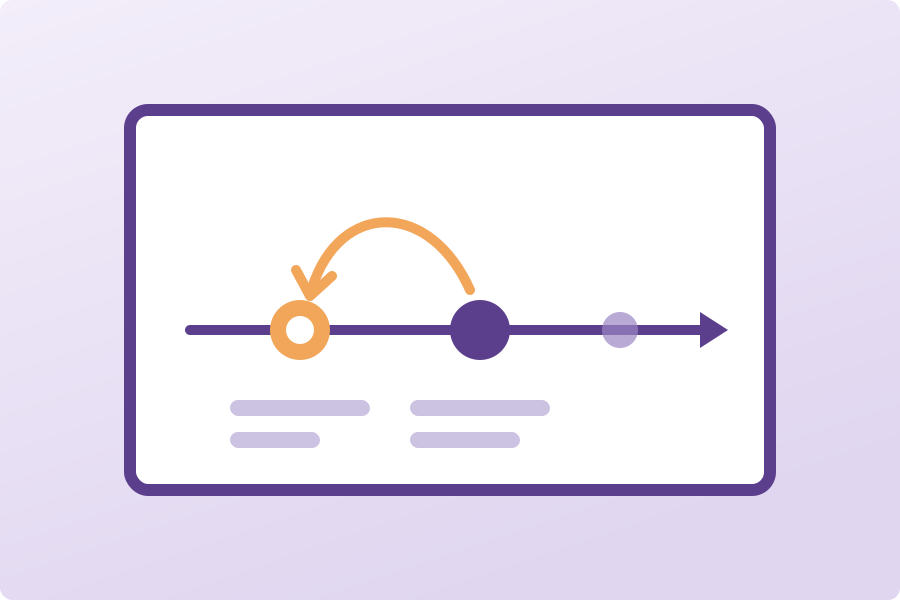
Think of it as the past of the past. You set a reference point in the past, usually with a preterite or an imperfect, and the pluperfect looks back from there:
- Cuando llegué a la estación, el tren ya había salido. - When I got to the station, the train had already left.
- No había probado el pulpo hasta que viví en Galicia. - I had never tried octopus until I lived in Galicia.
- Me dijo que había encontrado piso. - She told me she had found a flat.
In each sentence there are two points on the timeline. The pluperfect marks the earlier one. Without it, the listener usually assumes that the events happened in the order you mention them, and that can change the meaning completely.
The names vary. The Real Academia Española says pretérito pluscuamperfecto; Spanish textbooks often shorten it to pluscuamperfecto; some old grammars call it antecopretérito. English courses call it the pluperfect or the past perfect. It is the same tense. It belongs to the B1 level of the Plan curricular del Instituto Cervantes, which is why it appears at the moment you start telling longer stories.
How do you form the pluperfect in Spanish?
You form the pluperfect with the imperfect of haber (había, habías, había, habíamos, habíais, habían) plus the past participle of the main verb. The participle never changes: había comido, habíamos comido, habían comido.
| Person | Haber (imperfect) | hablar | comer | vivir |
|---|---|---|---|---|
| yo | había | había hablado | había comido | había vivido |
| tú | habías | habías hablado | habías comido | habías vivido |
| él, ella, usted | había | había hablado | había comido | había vivido |
| nosotros, nosotras | habíamos | habíamos hablado | habíamos comido | habíamos vivido |
| vosotros, vosotras | habíais | habíais hablado | habíais comido | habíais vivido |
| ellos, ellas, ustedes | habían | habían hablado | habían comido | habían vivido |
Regular participles are simple: verbs in -ar take -ado (hablado, trabajado, llegado), verbs in -er and -ir take -ido (comido, vivido, salido). Every form of haber has a written accent on the í: había, never habia.
Three rules keep the form clean:
- The participle is invariable. It does not agree with the subject or the object: Ella había comido, Las cartas que había escrito. Compare the adjective use with estar: La carta estaba escrita (agreement) versus Había escrito la carta (no agreement).
- Pronouns go before había. Ya lo había visto. No se había dado cuenta. ¿Te había llamado antes? They never go between haber and the participle, and they never attach to the participle.
- Nothing goes between haber and the participle in normal speech. Ya había comido or Había comido ya, but not Había ya comido in everyday Spanish (you will meet it in some literary texts). Negation goes in front: No había comido.
Since yo and él/ella/usted share the same form (había), Spanish adds the subject when the context is not clear: Yo no lo sabía, pero él ya había hablado con el jefe.
A note on the pretérito anterior (hube comido): you will meet it in novels after apenas, en cuanto or cuando (Apenas hubo terminado, se levantó). It is literary and practically absent from speech. In conversation you use the preterite or the pluperfect instead.
Irregular past participles in the pluperfect
The pluperfect uses exactly the same participles as the present perfect, so the irregular ones are the same short list. If you already say he hecho and he visto, you can say había hecho and había visto.
The ones you will use most often:
| Infinitive | Participle | Pluperfect example |
|---|---|---|
| hacer | hecho | Ya había hecho la maleta. |
| decir | dicho | Nadie me lo había dicho. |
| ver | visto | Nunca había visto tanta gente. |
| escribir | escrito | Había escrito tres correos. |
| poner | puesto | Alguien había puesto la mesa. |
| volver | vuelto | Todavía no habían vuelto. |
| abrir | abierto | La tienda no había abierto. |
| romper | roto | Se había roto la lavadora. |
| morir | muerto | La planta se había muerto. |
| resolver | resuelto | El problema ya se había resuelto. |
| descubrir | descubierto | Habían descubierto el error. |
| cubrir | cubierto | La nieve había cubierto el coche. |
Compounds follow their base verb: deshacer - deshecho, devolver - devuelto, proponer - propuesto, describir - descrito, prever - previsto. Verbs ending in -aer, -eer and -oír carry an accent on the í of the participle: traído, leído, creído, oído.
The full list, with the verbs that have two participles (imprimido and impreso, freído and frito), is in our present perfect guide. The only new thing for the pluperfect is the auxiliary.
When do you use the pluperfect in Spanish?
Use the pluperfect when you are already in the past and need to refer to something that happened before that point. It also covers "never before" experiences, explanations of why something happened, and reported speech.
These are the main uses you will need in daily life:
1. An action before another past action. The classic case: two events, and the earlier one comes second in the sentence.
- Cuando llegó la policía, los ladrones ya habían huido. - When the police arrived, the thieves had already fled.
2. The explanation or cause behind a past situation. You describe a past result and then go back to what caused it.
- Estaba agotada porque había trabajado doce horas. - I was exhausted because I had worked twelve hours.
- No pude entrar: me había dejado las llaves dentro. - I couldn't get in: I had left my keys inside.
3. First-time experiences seen from a past moment. With nunca or jamás, often with antes.
- Nunca había visto el mar hasta los veinte años. - I had never seen the sea until I was twenty.
4. Surprise, realisation or correction in conversation. Spanish speakers use the pluperfect to say "I hadn't realised", "I'd already told you" or "I thought you had...".
- ¡Ah, no me había dado cuenta! - Oh, I hadn't noticed!
- Ya te lo había dicho. - I had already told you.
- Pensaba que habías terminado. - I thought you had finished.
5. Reported speech. When the reporting verb is in the past, he hecho and hice usually become había hecho: Me dijo que había hecho la reserva. We look at this in its own section below.
Notice what is not on this list: "a long time ago" by itself. Something that happened in 1998 takes the preterite if you are simply telling it: Me mudé a Valencia en 1998. Distance in time does not call for the pluperfect. What calls for it is a second, later reference point in the past.
The pluperfect: myths and facts
- MythThe pluperfect is for things that happened a long time ago.FactDistance does not decide. Me mudé a Valencia en 1998 is a preterite. The pluperfect needs a later reference point in the past: something had happened before something else.
- MythIf I had known translates as si lo había sabido.FactIn conditional sentences Spanish uses the pluperfect subjunctive: si lo hubiera sabido. The indicative pluperfect is for real past facts.
- MythThe participle agrees with the object: la pizza que había comida.FactAfter haber the participle is invariable and always ends in -o: la pizza que había comido.
- MythYou always need the pluperfect when one action came before another.FactWhen a connector already shows the order, such as antes de or después de que, two preterites are normal: Antes de salir, cerré las ventanas.
Pluperfect vs preterite: había comido or comí?
Use the preterite when you tell events in the order they happened. Use the pluperfect when you step back to an earlier event that matters for the moment you are describing. Often both are correct, but they tell a different story.
Compare these two sentences:
- Cuando llegué, empezó la película. - When I arrived, the film started. (I arrived, then it started.)
- Cuando llegué, la película ya había empezado. - When I arrived, the film had already started. (It started first; I missed the beginning.)
Same words, different order of events. This is where the pluperfect stops being optional. With cuando, Spanish reads a preterite + preterite pair as "first one, then the other, almost at the same time". If the second action actually happened earlier, you need the pluperfect.
When the order is already clear from a connector, Spanish is more relaxed:
- Después de que terminó la reunión, fuimos a comer. - correct, the order is explicit.
- Antes de salir, cerré las ventanas. - correct, antes de shows the order.
- Primero fui al banco y luego pasé por correos. - events in sequence, preterite only.
In these sentences the pluperfect is possible but not necessary. In everyday speech in Spain, people often use two preterites when the order is obvious and the pluperfect when they want to stress "already" or "before".
A useful rule of thumb: if in English you would naturally say "had already", "had never" or "had just", Spanish almost always wants the pluperfect. If English is happy with two simple pasts ("I closed the windows and left"), the preterite is usually enough.
One more contrast: "had just". Había llegado justo antes is possible, but acababa de + infinitive is far more common: Acababa de llegar cuando sonó el teléfono - I had just arrived when the phone rang. Acabar de goes in the imperfect here, not the pluperfect.
Pluperfect vs imperfect and present perfect
The imperfect describes what was going on or what something was like at a past moment; the pluperfect describes what was already finished by then. The present perfect (he comido) looks back from now; the pluperfect looks back from a point in the past.
Imperfect vs pluperfect. Both create background, but different background:
- Cuando llegué, mis amigos cenaban. - When I arrived, my friends were having dinner. (dinner in progress)
- Cuando llegué, mis amigos ya habían cenado. - When I arrived, my friends had already had dinner. (dinner over)
The imperfect is the scene you walk into; the pluperfect is what had already taken place before you walked in. A story usually needs both: La cocina estaba hecha un desastre porque alguien había preparado una paella.
Present perfect vs pluperfect. They are the same structure seen from two places on the timeline:
- Hoy he visto a Lucía. - Today I have seen Lucía. (point of view: now)
- Le dije a Pablo que ese día había visto a Lucía. - I told Pablo that I had seen Lucía that day. (point of view: the moment I told him)
The shift happens naturally when you move from a live conversation to telling about it later. ¿Has comido? becomes Me preguntó si había comido. Nunca he estado en Sevilla becomes, years later, Hasta 2024 nunca había estado en Sevilla.
Here is the full system in one table, for the verb comer:
| Tense | Form | Viewpoint | Example |
|---|---|---|---|
| Present perfect | he comido | from now, period still open | Hoy he comido tarde. |
| Preterite | comí | closed event in the past | Ayer comí paella. |
| Imperfect | comía | background, habit, in progress | De niño comía mucho pan. |
| Pluperfect | había comido | finished before a past moment | A las tres ya había comido. |
Ya and todavía no with the pluperfect
Ya (already) and todavía no (not yet) are the most frequent companions of the pluperfect. Ya goes before había or after the participle; todavía no and aún no go before había.
- Ya había cenado or Había cenado ya. - I had already had dinner.
- Todavía no había llegado. / Aún no había llegado. - He hadn't arrived yet.
- ¿Ya habías estado en Granada? - Had you already been to Granada?
The block había + participle stays together. Ya and todavía no sit around it, just like pronouns and no. With a pronoun, the order is fixed: Ya se lo había dicho - I had already told him.
These two words solve a common problem: they show the order of events even when the clauses are in an unusual order. Ya había salido cuando me llamaste is perfectly clear: first I left, then you called. Todavía no había salido cuando me llamaste: you called, I was still at home.
Other markers that often go with the pluperfect:
- Nunca / jamás: Nunca había comido algo tan picante.
- Antes: Ya nos habíamos visto antes, ¿verdad?
- Para entonces / a esas alturas: Para entonces ya habían cerrado la frontera.
- Hasta ese momento / hasta entonces: Hasta entonces no había pensado en mudarme.
- Hacía + time + que: Hacía tres años que no la había visto - though most speakers say que no la veía here.
Todavía without no also appears, in the sense of "still": Todavía no había terminado is the usual way to say "he still hadn't finished".
Telling a story with all past tenses
A good story in Spanish uses four past tenses, each with its own job: the preterite moves the plot, the imperfect paints the scene, the pluperfect explains what had happened before, and the present perfect frames the story from today. Here is a short story with every verb marked.
El año pasado me mudé a Sevilla por trabajo. Era agosto y hacía un calor que nunca había sentido. El primer día llegué al piso a las once de la noche. El casero me había dejado las llaves en el bar de abajo, pero cuando entré, el bar ya había cerrado. Estaba cansado, no conocía a nadie y mi móvil tenía un cinco por ciento de batería. Al final llamé a la agencia y una chica muy amable vino con otra copia. Me explicó que el casero se había equivocado de bar. Desde entonces he vuelto a ese bar muchas veces, eso sí.
The story analysed by tense:
| Verb | Tense | Job in the story |
|---|---|---|
| me mudé, llegué, entré, llamé, vino, explicó | Preterite | The events, in order |
| era, hacía, estaba, conocía, tenía | Imperfect | Scene, state, feelings |
| había sentido, había dejado, había cerrado, se había equivocado | Pluperfect | What had happened before the event |
| he vuelto | Present perfect | Link to today |
Try to remove the pluperfects and the story breaks. El casero me dejó las llaves en el bar sounds like a new event happening after my arrival. Cuando entré, el bar cerró means it closed in my face as I came in, which is a different (and odder) story. The pluperfect is what lets you jump back without losing the listener.
A practical way to build stories: first write the line of events in the preterite, then add the scene in the imperfect, then ask "what had already happened before each event?" and add one or two pluperfects. Do not overload a story with them: native speakers use the pluperfect when the jump back matters, not in every sentence.
Pluperfect in reported speech: dijo que había...
In reported speech, when the reporting verb is in the past (dijo, me contó, explicó, preguntó), a present perfect or a preterite in the original words usually becomes a pluperfect. "He comprado pan" becomes Dijo que había comprado pan.
| Direct speech | Reported speech |
|---|---|
| "He terminado el informe." | Dijo que había terminado el informe. |
| "Llegué ayer." | Me contó que había llegado el día anterior. |
| "¿Has visto mis llaves?" | Me preguntó si había visto sus llaves. |
| "No he entendido nada." | Reconoció que no había entendido nada. |
| "Ya habíamos pagado." | Explicaron que ya habían pagado. (no change) |
With a preterite in the original, both versions are heard in Spain: Me dijo que llegó ayer is common in conversation, Me dijo que había llegado el día anterior is more careful and the safer choice in writing and in exams. With a present perfect in the original, the pluperfect is the normal choice.
Remember the other changes that come with reported speech: ayer becomes el día anterior, hoy becomes ese día, aquí becomes allí, and yo/mi become él/su. A future in the original becomes a conditional: Dijo que vendría. That shift is explained in our guide to the Spanish conditional.
You will hear this pattern constantly in Spain: at work (El cliente dijo que no había recibido la factura), with the administration (Me dijeron que no había entregado el certificado) and in daily gossip (¿Sabes que Marta me contó que había dejado el trabajo?).
Common pluperfect mistakes for English speakers
English speakers usually know the past perfect, so the concept is clear. The mistakes come from English habits: skipping "had" when the order is obvious in English, using the wrong participle, and copying "if I had known" into Spanish word for word.
1. Skipping the pluperfect after "when" and "because". In English, "When I got there, the film started" and "the film had started" are also different, but in casual English people often drop "had". In Spanish, keep it: Cuando llegué, la película ya había empezado. The same with causes: No pude pagar porque me había dejado la cartera en casa, not ...porque me dejé la cartera if you mean it was already left behind.
2. Using the pluperfect for "a long time ago". En 2010 había vivido en Londres sounds like you are about to say what happened after that. If you just mean "In 2010 I lived in London", say En 2010 viví en Londres or vivía, depending on the view.
3. "If I had known" with the indicative. "If I had known" is not the indicative pluperfect in Spanish. It needs the pluperfect subjunctive: Si lo hubiera sabido, te lo habría dicho. Saying Si lo había sabido is a very common mistake. The same goes for "I wish I had": Ojalá lo hubiera sabido.
4. Regular endings on irregular participles. Había escribido, había rompido, había hacido, había ponido - all wrong. The correct forms are escrito, roto, hecho, puesto. These irregulars are worth learning as a block with había in front.
5. Making the participle agree. La pizza que había comida - wrong. After haber the participle always ends in -o: La pizza que había comido.
6. Putting words between haber and the participle. English says "I had already eaten", "I had never seen", so learners say Había ya comido, Había nunca visto. In Spanish: Ya había comido, Nunca había visto.
7. Translating "had" as tener. Tenía comido is not standard Spanish for "I had eaten". "Had" as an auxiliary is always haber.
8. Using the pluperfect where English uses "had to" or "had + noun". "I had to go" is Tuve que ir or Tenía que ir, and "I had a dog" is Tenía un perro. Neither is a pluperfect. Only "had + past participle" maps onto había + participio.
Quick check: the pluperfect
Which auxiliary forms the pluperfect?
Dialogues: the pluperfect in everyday Spain
The pluperfect is a conversational tense in Spain: people use it to explain why something went wrong, to report what someone said and to react with surprise. These two dialogues show it in situations you will actually meet.
At work, on Monday morning
Elena: ¿Qué tal la presentación del viernes? Tom: Un poco caótica. Cuando llegué a la sala, el cliente ya había llegado y yo todavía no había preparado el proyector. Elena: ¿Y nadie te avisó? Tom: Sí, Javier me había mandado un mensaje, pero no lo vi. Tenía el móvil en silencio. Elena: Vaya. ¿Y al final qué tal? Tom: Bien. El cliente me dijo que nunca había visto una propuesta tan clara. Así que me salvé.
Here había llegado and había preparado set the order before the arrival, había mandado explains the cause, and nunca había visto reports a first-time experience.
With a neighbour, after a burst pipe
Vecina: ¡Hola! ¿Sabes lo del agua? Ayer el portero me contó que se había roto una tubería en el tercero. Ana: ¡No me digas! Yo no me había enterado de nada. ¿Cuándo pasó? Vecina: Por la mañana. Cuando llegó el fontanero, el agua ya había bajado hasta el segundo. Ana: Pues menos mal que yo había cerrado la llave de paso antes de irme de vacaciones. Vecina: Muy bien hecho. A mí siempre se me olvida.
Notice Ayer el portero me contó que se había roto: the conversation is in the preterite and imperfect, and the pluperfect jumps back to the earlier event. Yo no me había enterado is the typical reaction "I hadn't heard anything".
Read the dialogues out loud, then retell each one in the third person: Tom dijo que cuando llegó.... That retelling is exactly what the pluperfect is for.
Pluperfect exercises with answers
Do the exercises without looking at the answers, then check. Each block practises one decision: the form, the choice between the pluperfect and other past tenses, and reported speech.
A. Put the verb in the pluperfect.
- Cuando llegamos, la tienda ya (cerrar) ________.
- Nunca (yo, ver) ________ una tormenta así.
- ¿Tú ya (estar) ________ en Bilbao antes de ese viaje?
- No podía entrar porque (perder, yo) ________ la tarjeta.
- Los niños todavía no (volver) ________ del colegio.
- Me dijeron que ya (hacer, ellos) ________ la reserva.
B. Pluperfect, preterite or imperfect?
- Cuando salí de casa, (llover) ________ y no llevaba paraguas.
- Cuando llegó el médico, el paciente ya (despertarse) ________.
- Ayer (ir, yo) ________ al Ayuntamiento y (pedir) ________ cita.
- Estaba nerviosa porque nunca (hablar) ________ en público.
- De pequeño, (vivir, yo) ________ en un pueblo cerca de Burgos.
C. Report the sentences, starting with Dijo que / Me preguntó si.
- "He perdido el autobús."
- "¿Has llamado al seguro?"
- "No he recibido el paquete."
D. Find and correct the mistake.
- Había escribido tres correos antes de comer.
- Si lo había sabido, no habría venido.
- Cuando llegué, ya los invitados habían comidos.
Answers
- había cerrado 2. había visto 3. habías estado 4. había perdido 5. habían vuelto 6. habían hecho
- llovía (the scene when I left) 8. se había despertado (it happened before the doctor arrived) 9. fui, pedí (events in order) 10. había hablado (first time seen from the past) 11. vivía (background, a long state in the past)
- Dijo que había perdido el autobús. 13. Me preguntó si había llamado al seguro. 14. Dijo que no había recibido el paquete.
- Había escrito tres correos antes de comer. 16. Si lo hubiera sabido, no habría venido. (pluperfect subjunctive) 17. Cuando llegué, los invitados ya habían comido. (the participle is invariable: comido, not comidos)
If you got 14 or more right, the pluperfect is already in place and the next step is using it while speaking, without stopping to think. If you made mistakes in block B, go back to the sections on the preterite and the imperfect: those are decisions about the timeline, not about forms, and they get easier with stories told out loud and corrected. That is the kind of practice our monthly group course is built around: mini-groups where you retell, report and get corrected, with lessons in Spanish adapted to your level.
How to start using the pluperfect when you speak
Start with three or four fixed phrases you will use every week, then add the pluperfect to stories you already tell. The form takes minutes to learn; using it automatically takes regular speaking practice.
Phrases worth learning as chunks:
- No me había dado cuenta. - I hadn't noticed.
- Ya te lo había dicho. - I had already told you.
- Pensaba que ya habías llegado. - I thought you had already arrived.
- Nunca había visto nada igual. - I had never seen anything like it.
- No me había enterado. - I hadn't heard about it.
Then use one simple routine. Every time you tell a story in Spanish, stop after each event and ask: was something already finished by this moment? If yes, add one pluperfect with ya or todavía no. Retell other people's stories too, starting with Me contó que..., because reported speech forces the pluperfect in naturally.
Finally, listen for it. In Spanish series, podcasts and conversations at work you will hear había + participle much more often once you know what to listen for. Each time you notice one, ask yourself what the later reference point is. That question is the whole tense in one line.
Frequently asked questions
How do you form the pluperfect in Spanish?
Use the imperfect of haber (había, habías, había, habíamos, habíais, habían) plus the past participle: había comido, habíamos salido. The participle never changes, and pronouns go before había: ya lo había visto.
What is the difference between había comido and comí?
Comí tells an event in sequence. Había comido marks an action that was already finished before another past moment: Cuando llegaste, ya había comido. With cuando, two preterites mean one event followed the other, so the pluperfect changes the meaning.
Is the Spanish pluperfect the same as the English past perfect?
Mostly yes: había visto corresponds to had seen. The difference is that Spanish keeps it in cases where casual English drops had, for example after cuando or porque. And if I had known is not the indicative pluperfect but the subjunctive: si lo hubiera sabido.
Where do ya and todavía no go with the pluperfect?
Before había, or ya after the participle: ya había cenado, había cenado ya, todavía no había llegado. Nothing goes between había and the participle in normal speech.
Do you have to use the pluperfect in reported speech?
When the reporting verb is in the past, a present perfect in the original words normally becomes a pluperfect: He terminado becomes Dijo que había terminado. With a preterite in the original, both dijo que llegó and dijo que había llegado are heard, but the pluperfect is the safer choice in writing.
What level is the pluperfect in Spanish?
The Instituto Cervantes curriculum places it at B1, together with longer narration in the past. Most learners meet it once they can already use the preterite, the imperfect and the present perfect.
Book your free trial lesson
One to one with a native teacher, on Zoom.
Times shown in your zone: Europe/Madrid
1. Pick a day
Loading the timetable…
3. Your email for the confirmation and the Zoom link
One-to-one lessons with a native teacher
On Zoom with a qualified teacher from Spain who also speaks English.