Preterite vs imperfect in Spanish: the rule that actually works
You tell a Spanish friend about your weekend and get stuck on the second verb. Fui or iba? Estuve or estaba? English has one simple past for both, so every story turns into a guessing game. This guide gives you one rule that covers most cases, full conjugation tables with the irregular verbs, the signal words that help (and the ones that mislead), the verbs that change meaning, a story analysed line by line, and exercises with answers.
A note on names: the Real Academia Española now calls comí the pretérito perfecto simple, but most textbooks in Spain still say pretérito indefinido, and English courses say "preterite". They are the same tense. If the past tenses are where your Spanish has stalled, you are not alone: it is one of the classic signs of the intermediate plateau.
What is the difference between the preterite and the imperfect?
The preterite tells what happened: a completed event that moves the story forward. The imperfect describes what it was like: the scene, the background, what used to happen or what was already in progress.
A simple test: if you can add "and then what happened?" after the verb, use the preterite. If the verb sets the stage and the story pauses, use the imperfect.
- Llegué a Madrid en marzo. - I arrived in Madrid in March. (event)
- Hacía frío y no conocía a nadie. - It was cold and I didn't know anyone. (the scene)
- Encontré piso en dos semanas. - I found a flat in two weeks. (next event)
Here is the whole contrast on one page:
| Question | Preterite (indefinido) | Imperfect (imperfecto) |
|---|---|---|
| What does it do in a story? | Moves the plot on | Paints the scene, pauses the plot |
| Is the action seen as finished? | Yes, with a beginning and an end | No limits in view |
| Typical English | I went, I said, I lived (for three years) | I was going, I used to go, I would go |
| Habits | Only if counted or closed: Fui tres veces | Yes: Iba todos los días |
| Description, age, time | Rarely | Yes: Era tarde, tenía veinte años |
| Interruptions | The action that interrupts | The action that is interrupted |
The Instituto Cervantes Plan Curricular, the reference syllabus for teaching Spanish, introduces the preterite at A1–A2 as "past actions framed in a precise moment" and the imperfect as description and habit. At B1 it adds the harder cases: interrupted actions, polite quería and verbs that change meaning. That is why the contrast feels "done" at A2 and then comes back at B1.
How do you conjugate the preterite in Spanish?
Regular preterites add one set of endings for -ar verbs and one shared set for -er and -ir verbs. Watch the written accents: hablé and habló carry them, and without the accent they become different words (hable is subjunctive, hablo is present).
| Person | hablar | comer | vivir |
|---|---|---|---|
| yo | hablé | comí | viví |
| tú | hablaste | comiste | viviste |
| él / ella / usted | habló | comió | vivió |
| nosotros | hablamos | comimos | vivimos |
| vosotros | hablasteis | comisteis | vivisteis |
| ellos / ustedes | hablaron | comieron | vivieron |
Hablamos and vivimos look the same as the present; context tells you which one it is: Ayer hablamos (yesterday we talked) vs Siempre hablamos (we always talk).
The frequent irregular verbs are the ones you need most in conversation. Most have a new stem and unstressed endings with no written accent (-e, -iste, -o, -imos, -isteis, -ieron):
| Infinitive | yo | él / ella | ellos | Note |
|---|---|---|---|---|
| ser / ir | fui | fue | fueron | Same forms for both verbs |
| estar | estuve | estuvo | estuvieron | stem estuv- |
| tener | tuve | tuvo | tuvieron | stem tuv- |
| hacer | hice | hizo | hicieron | hizo with z |
| poder | pude | pudo | pudieron | stem pud- |
| poner | puse | puso | pusieron | stem pus- |
| saber | supe | supo | supieron | stem sup- |
| querer | quise | quiso | quisieron | stem quis- |
| venir | vine | vino | vinieron | stem vin- |
| decir | dije | dijo | dijeron | -eron, not -ieron |
| traer | traje | trajo | trajeron | same pattern as decir |
| conducir | conduje | condujo | condujeron | also traducir, producir |
| dar | di | dio | dieron | -er endings on an -ar verb |
| ver | vi | vio | vieron | no accent on vi and vio |
Two more groups catch people out:
- -ir verbs that change their stem only do it in the third person: pedir → pidió, pidieron; dormir → durmió, durmieron; sentir → sintió; preferir → prefirió. Yo pedí, yo dormí stay regular.
- Spelling changes in the yo form keep the sound: buscar → busqué, llegar → llegué, empezar → empecé. And verbs like leer, oír and creer take a y: leyó, leyeron; oyó, oyeron.
Hay becomes hubo in the preterite (Hubo un accidente - there was an accident) and había in the imperfect (Había mucha gente - there were a lot of people).
How do you conjugate the imperfect in Spanish?
The imperfect is the easiest tense in Spanish to form: two sets of endings and only three irregular verbs. -ar verbs take -aba; -er and -ir verbs take -ía, always with the accent.
| Person | hablar | comer | vivir |
|---|---|---|---|
| yo | hablaba | comía | vivía |
| tú | hablabas | comías | vivías |
| él / ella / usted | hablaba | comía | vivía |
| nosotros | hablábamos | comíamos | vivíamos |
| vosotros | hablabais | comíais | vivíais |
| ellos / ustedes | hablaban | comían | vivían |
The only irregular imperfects:
| Person | ser | ir | ver |
|---|---|---|---|
| yo | era | iba | veía |
| tú | eras | ibas | veías |
| él / ella | era | iba | veía |
| nosotros | éramos | íbamos | veíamos |
| vosotros | erais | ibais | veíais |
| ellos | eran | iban | veían |
Note that the yo and él forms are identical (yo tenía, ella tenía), so in the imperfect you often keep the subject pronoun when it would otherwise be unclear. Verbs that are wildly irregular in the preterite, like tener, hacer or decir, are perfectly regular here: tenía, hacía, decía.
When do you use the imperfect in Spanish?
Use the imperfect for descriptions, habits and actions in progress in the past. In practice that means six situations:
- Description of people, places, weather, time and age: Era invierno. Eran las ocho. Tenía treinta años.
- Habits ("used to", "would"): En Londres iba a trabajar en metro.
- An action in progress when something else happened: Cuando llegué, estaba lloviendo.
- Two actions going on at the same time: Mientras yo cocinaba, los niños veían la tele.
- Feelings and states with no clear limit: Estaba nervioso. Quería quedarme.
- Polite requests: Quería pedir cita para el médico. - I'd like to book an appointment. The imperfect softens the request; you will hear it at every counter in Spain, along with Venía a recoger un paquete (I've come to pick up a parcel).
The imperfect also appears in reported speech: Me dijo que estaba cansada - she told me she was tired. The saying is an event (dijo), the content describes a state (estaba).
When do you use the preterite in Spanish?
Use the preterite for completed actions that you see as a whole, with a beginning and an end. Five uses cover almost everything:
- A single completed action: Ayer compré un abono de transporte.
- A chain of events: Me levanté, me duché y salí corriendo. Each verb pushes the story one step.
- A closed period, however long: Viví en Madrid tres años. La reunión duró cuatro horas.
- A counted number of times: Fui al ayuntamiento tres veces. A habit becomes preterite as soon as you count it or close it.
- The start or end of something: A las diez empezó a llover. La película terminó tarde.
The preterite also gives an overall verdict on a finished event: El viaje fue genial (the trip was great, looking back). El viaje era largo describes it from inside, as a scene.
Preterite vs imperfect signal words
Signal words help, but they are clues, not rules. These usually go with each tense:
| Usually preterite | Usually imperfect |
|---|---|
| ayer, anoche, anteayer | siempre, normalmente, a menudo |
| el año pasado, en 2019 | todos los días, cada verano |
| hace dos meses | antes, de niño, de pequeño |
| de repente, una vez | mientras |
| durante tres horas, toda la noche | en aquella época |
| primero, luego, después, al final | de vez en cuando, a veces |
| tres veces, dos años | cuando era joven |
Now the traps. Ayer does not force the preterite: Ayer llovía cuando salí de casa is correct, because the rain is the background. Siempre can take the preterite when the period is closed: Mi primer jefe siempre me trató bien. And a long action still takes the preterite if it has limits: Estuve esperando toda la mañana. Think about the role of the verb in the story first, and check the signal word second.
Preterite and imperfect: myths and facts
- MythLong actions go in the imperfect, short ones in the preterite.FactLength does not decide. Viví en Madrid tres años is preterite because the period is closed; estaba lloviendo can be a few seconds of background.
- MythSignal words decide the tense.FactThey are clues. Ayer llovía cuando salí is correct because the rain is background, and siempre takes the preterite in a closed period: Mi primer jefe siempre me trató bien.
- MythThe imperfect is just the Spanish past continuous.FactIt also covers habits (used to, would), descriptions, age and time, and polite requests such as Quería pedir cita.
- MythComí and he comido are interchangeable in Spain.FactIn most of Spain he comido is for periods that include now (hoy, esta semana) and comí for closed ones (ayer). In Galicia, Asturias, the Canary Islands and most of Latin America comí is normal for today too.
Story frame vs events: how to tell a story in the past
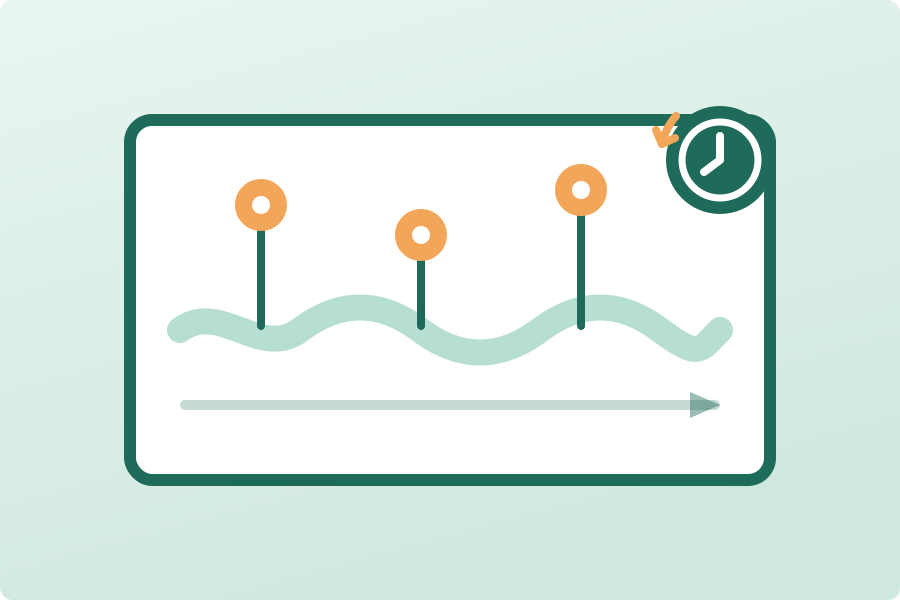
Every past story in Spanish has two layers. The imperfect builds the frame (where, when, what was going on) and the preterite puts events on top of it, one after another.
Era viernes y estaba en la cola del supermercado. Había mucha gente y yo tenía prisa. De repente se fue la luz. Todo el mundo se quedó callado, y luego una señora empezó a reírse.
Read only the imperfects: you get a still picture. Read only the preterites: you get the plot. Three patterns come up constantly:
| Pattern | Example | What happens |
|---|---|---|
| Imperfect + preterite | Mientras cocinaba, sonó el teléfono. | Background interrupted by an event |
| Preterite + preterite | Cuando sonó el teléfono, lo cogí. | One event after another |
| Imperfect + imperfect | Mientras cocinaba, escuchaba la radio. | Two backgrounds at the same time |
The same logic works with estar + gerund: Estaba hablando por teléfono cuando entró mi jefe (in progress, interrupted) vs Estuve hablando por teléfono dos horas (a closed block of time).
Verbs that change meaning: conocí or conocía, supe or sabía
With a few verbs the tense changes the meaning itself, not just the perspective. The Plan Curricular lists this at B1 with the example Lo supe - "I found out".
| Verb | Preterite | Imperfect |
|---|---|---|
| conocer | Conocí a Ana en 2019. - I met Ana. | Conocía a Ana. - I knew Ana. |
| saber | Supe la noticia ayer. - I found out. | Sabía la verdad. - I knew. |
| querer | Quise llamarte. - I tried to call you. No quise ir. - I refused to go. | Quería ir. - I wanted to go (we don't know if I did). |
| poder | Pude abrir la puerta. - I managed to. No pude. - I tried and failed. | Podía salir antes. - I was able to (in general). |
| tener que | Tuve que ir. - I had to go (and I went). | Tenía que ir. - I was supposed to go (maybe I didn't). |
| tener | Tuve una idea. - I got an idea. Tuve un hijo. - I had a baby. | Tenía un coche. - I had (owned) a car. |
| costar | Me costó 50 euros. - I paid 50 euros. | Costaba 50 euros. - It was priced at 50 euros. |
The logic is the same each time: the preterite turns a state into the moment it started or a result. Conocí is the moment you met, supe is the moment the knowing began, pude is the result of trying.
Real-life pairs you will actually use in Spain:
- No sabía que había que pedir cita. - I didn't know you needed an appointment. (state of ignorance)
- Lo supe cuando llegué a la oficina. - I found out when I got to the office. (moment)
- Quería pagar con tarjeta, pero no pude. - I wanted to pay by card, but I couldn't. (wish, then failed attempt)
- Ya conocía el barrio, porque mi hermana vivía allí. - I already knew the neighbourhood, because my sister lived there.
Preterite or present perfect in Spain (comí or he comido)?
In most of Spain, a finished action within a period that includes now takes the present perfect: Hoy he comido paella. Esta semana he ido al médico. ¿Has estado alguna vez en Toledo? A finished period takes the preterite: Ayer comí paella. El lunes fui al médico.
The Plan Curricular teaches exactly this: the present perfect with markers like hoy, este año, esta mañana, ya, todavía no. Usage is not uniform, though. In Galicia, Asturias, parts of León and the Canary Islands, and in most of Latin America, Hoy comí paella is normal. Both are correct Spanish; if you live in Madrid, Valencia or Andalusia, you will mostly hear he comido for today.
The imperfect is not part of this choice. He comido and comí are both "events"; the background stays in the imperfect whichever of the two you use: Esta mañana he ido al banco, pero estaba cerrado.
Example: a story in the past analysed line by line
Here is a short story about a first week in Spain, the kind of thing you might tell a colleague on Monday. Read it once for meaning, then look at the notes.
Cuando llegué a Valencia, era septiembre y todavía hacía mucho calor. No conocía a nadie y no sabía dónde estaba nada. El primer día fui al ayuntamiento para empadronarme. Había una cola enorme y la gente parecía tranquila, así que esperé. Mientras esperaba, conocí a una chica argentina que vivía en mi calle. Me explicó que el martes había un mercado en la plaza. Al final no pude hacer el trámite porque me faltaba un papel, pero salí de allí con una amiga.
What each verb does:
- llegué - the first event, the story starts.
- era, hacía - time and weather, frame.
- conocía, sabía, estaba - states at that moment, frame.
- fui - event: the plot moves to the town hall.
- Había, parecía - description of the scene.
- esperé - event: a decision ("so I waited").
- esperaba - the same verb, now as a background for the next event.
- conocí - the moment of meeting, preterite of conocer.
- vivía - a fact about her that was true at the time, frame.
- explicó - event. había - content of what she said (reported speech).
- no pude - tried and failed. faltaba - the reason, a state.
- salí - the last event.
Notice esperé and esperaba in two consecutive sentences. Same verb, same day, different job in the story. That is the clearest proof that the tense depends on the role, not on the verb or the time word.
Dialogue at the post office: both tenses in real speech
This is how the preterite and the imperfect mix in an ordinary conversation at a counter in Spain, here picking up a parcel at the post office. Each verb does its own job.
— Buenos días. Venía a recoger un paquete. Me llegó un aviso ayer. — ¿Y por qué no lo recogió ayer? — Quise venir por la tarde, pero cuando llegué ya estaba cerrado. — Ya, es que ayer cerramos a las dos por inventario. ¿Trae el DNI o el NIE? — Sí, aquí tiene. Antes vivía en otra dirección y no sabía si el paquete iba a llegar aquí. — Pues llegó el lunes. Firme aquí, por favor.
- Venía - polite imperfect: "I've come to…". A standard way to open at any counter.
- llegó, recogió - events with a finished result.
- Quise - I tried and it didn't work; llegué - event; estaba - the state at that moment (it was already closed).
- cerramos - a closed fact about yesterday, preterite.
- vivía, sabía - background and state; iba a llegar - the "future in the past", also imperfect.
- llegó - an event again: the parcel arrived on Monday.
Act the dialogue out loud, then change the details: a certificate instead of a parcel, the bank or the health centre instead of the post office. Each time, ask yourself whether the verb is an event or the background.
How do you choose the right tense while speaking?
When you are mid-sentence, you do not have time for a rule table. Ask three quick questions about the verb, in this order, and stop at the first "yes":
- Is it a description, an age, a time or the weather? Imperfect: Eran las tres. Hacía sol. Tenía prisa.
- Is it something that happened again and again, with no count? Imperfect: Los domingos comíamos en casa de mi suegra.
- Is it a step in the story, with an end in view (even a long one)? Preterite: Comimos, recogimos y nos fuimos. Trabajé allí cinco años.
If you are still unsure, imagine filming the scene. If the camera shows the action happening and the story waits, imperfect. If the action is a cut to the next shot, preterite.
A useful habit is to prepare your stories in two columns before you tell them: on the left, the frame (where, when, weather, how you felt, who was there); on the right, the numbered events. Speak the left column in the imperfect and the right column in the preterite. After a few weeks, you stop needing the columns, because your ear starts to expect era… y entonces llegó.
And when you get it wrong, people will still understand you. A wrong tense rarely blocks communication; it just makes the story sound flat or odd. Aim for the correct choice, but don't let it stop you from talking.
Practice: preterite vs imperfect exercises with answers
Put the verbs in brackets into the preterite or the imperfect. Answers are below each exercise.
At the town hall. (Ser) las nueve y la oficina ya (estar) llena. (Coger, yo) número y (sentarse). Mientras (esperar), una señora me (explicar) qué papeles (pedir) siempre. A las diez (oír) mi número.
Answers: Eran, estaba, Cogí, me senté, esperaba, explicó, pedían, oí.
The first day at work. (Llover) y yo no (conocer) a nadie. A las once (conocer) a mi jefa. (Tener) unos cuarenta años y (hablar) muy rápido. Por la tarde (tener) que rellenar diez formularios.
Answers: Llovía, conocía, conocí, Tenía, hablaba, tuve.
On the phone. (Llamar) al centro de salud y (decir): "Hola, (querer) pedir cita". Me (dar) cita para el jueves.
Answers: Llamé, dije, quería, dieron.
Ten quick sentences. Choose the form.
- De pequeña (vivir) en un pueblo y (ir) al colegio andando.
- El sábado pasado (ir, nosotros) a la playa.
- ¿Qué (hacer, tú) ayer por la tarde?
- (Estar, yo) enfermo toda la semana pasada.
- No (saber, yo) que la tienda cerraba a las dos.
- Cuando (salir, yo) del metro, (empezar) a llover.
- El piso (tener) dos habitaciones y (ser) muy luminoso.
- Mi hermano (traer) el vino y yo (hacer) la tortilla.
- (Querer, yo) abrir la ventana, pero no (poder): estaba atascada.
- Los vecinos siempre (poner) la música alta los viernes.
Answers: 1 vivía, iba; 2 fuimos; 3 hiciste; 4 Estuve; 5 sabía; 6 salí, empezó; 7 tenía, era; 8 trajo, hice; 9 Quise, pude; 10 ponían.
Meaning check. Translate: I met my landlord in June. I knew the street already. I found out about the strike on the radio. I wanted to go, but I couldn't (I tried).
Answers: Conocí a mi casero en junio. Ya conocía la calle. Supe lo de la huelga por la radio. Quería ir, pero no pude.
Then do the real exercise: tell your own week out loud in six sentences, two of frame and four of events.
Preterite or imperfect? Check yourself
Mientras ___, sonó el teléfono. (cocinar)
Common preterite and imperfect mistakes for English speakers
English uses one simple past for both tenses, so the form of the English verb tells you nothing. The typical mistakes:
- "Was" always becomes era or estaba. I was at the party for three hours is Estuve en la fiesta tres horas: the time span is closed. It was a great party is Fue una fiesta genial when you judge it as a whole.
- Past continuous is the only trigger for the imperfect. It also covers habits with "used to" and "would": De niño jugaba al fútbol - I used to play football. And "would" for habits is never the conditional here: Every summer we would go to the beach is Cada verano íbamos a la playa, not iríamos.
- "Knew", "could" and "wanted" are translated mechanically. I couldn't open the door (I tried) is No pude abrir la puerta, not no podía. I met her at a party is La conocí en una fiesta, not la encontré.
- "I have eaten" vs "I ate" is copied from English. In Spain, Hoy he comido is the norm even where English says "I ate today", and I have lived here since 2020 is Vivo aquí desde 2020, with the present.
- Missing accents. Hablo (I speak) and habló (he spoke) are different words; so are pague and pagué. In writing, the accent is the tense.
- "Had already left" in the preterite or imperfect. When I arrived, he had already left is Cuando llegué, él ya se había ido (pluperfect: one past action before another). Cuando llegué, se fue means he left after you arrived, and se iba that he was just leaving.
- Regularising the irregulars. Hacé, tení and poní do not exist: it is hice, tuve, puse. And no accent on the strong forms: tuvo, not tuvó.
- Playing it safe with one tense. Some learners tell the whole story in the preterite, which sounds like a police report, or in the imperfect, where nothing ever happens. A good story needs both layers.
These two tenses get sorted out in speech, not in exercise books: you tell a story, someone stops you at the wrong verb, you tell it again. That is the reasoning behind our group Spanish course, where a lot of class time goes on telling and retelling stories. It also helps to note every past-tense slip you make in a Spanish error journal and review it weekly. If you also mix up other pairs, start with ser vs estar and por vs para.
How many hours to reach B1?
Five quick questions. You get an approximate range, not a promise.
Frequently asked questions
What is the easiest way to choose between the preterite and the imperfect?
Ask what the verb does in the story. If it is an event that moves the story on (and then what happened?), use the preterite. If it describes the scene, a habit or something already in progress, use the imperfect: Hacía frío (scene), llegué (event).
Does ayer always take the preterite?
No. Ayer usually goes with the preterite, but the background of a story yesterday is still imperfect: Ayer llovía cuando salí de casa. Signal words are clues; the role of the verb decides.
Why is it viví en Madrid tres años if the action was long?
Because the period is closed. Length does not decide the tense: an action with clear limits, even years long, is told in the preterite. Vivía describes the time you lived there as a background for something else.
What is the difference between conocí and conocía?
Conocí is the moment you met someone for the first time: Conocí a Ana en 2019. Conocía means you already knew them: Ya conocía a Ana. The same shift happens with supe (I found out) and sabía (I knew).
Should I say comí or he comido in Spain?
In most of Spain, use he comido for a period that includes now (hoy, esta semana, alguna vez) and comí for a closed period (ayer, el lunes). In Galicia, Asturias, the Canary Islands and most of Latin America comí is also normal for today; both are correct Spanish.
At what level do you learn the preterite and the imperfect?
The Instituto Cervantes Plan Curricular introduces both at A1-A2 and adds the harder uses at B1: interrupted actions, polite quería and verbs that change meaning. Understanding the rule is quick; choosing without thinking comes from speaking with corrections.
Which Spanish verbs are irregular in the preterite and the imperfect?
In the preterite, the most common irregulars are ser/ir (fui), estar (estuve), tener (tuve), hacer (hice, hizo), poder (pude), poner (puse), saber (supe), querer (quise), venir (vine), decir (dije), traer (traje), dar (di) and ver (vi). In the imperfect only three verbs are irregular: ser (era), ir (iba) and ver (veía).
Book your free trial lesson
One to one with a native teacher, on Zoom.
Times shown in your zone: Europe/Madrid
1. Pick a day
Loading the timetable…
3. Your email for the confirmation and the Zoom link
One-to-one lessons with a native teacher
On Zoom with a qualified teacher from Spain who also speaks English.