Por vs para in Spanish: all uses, set phrases, exercises
English has one word, "for", where Spanish has two: por and para. That is why learners who speak English get them wrong so often, and why "I did it for you" can come out with either preposition and mean two different things. This guide covers every common use of both, the pairs where swapping them changes the meaning, the set phrases you simply have to learn as blocks (por fin, para nada, por si acaso), the mistakes English speakers make most, two short dialogues and forty exercises with answers.
If you want the short version first, our earlier overview of por vs para rules and examples gives the core idea on one page. This article goes further: it is the one to keep open while you write, and the one to come back to when a sentence "sounds wrong" and you cannot say why.
When do you use por and when para in Spanish?
Use para when you look forward to a goal: a purpose, a destination, a deadline, a recipient. Use por when you look back at a cause or describe the path, the means, the exchange or the time span through which something happens. Para points to where things are going; por explains where they come from or what they pass through.
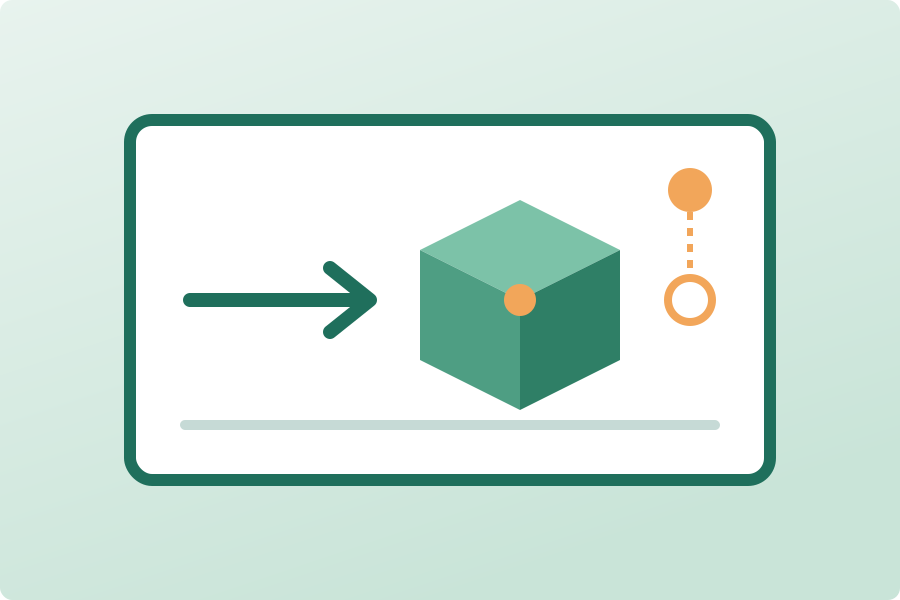
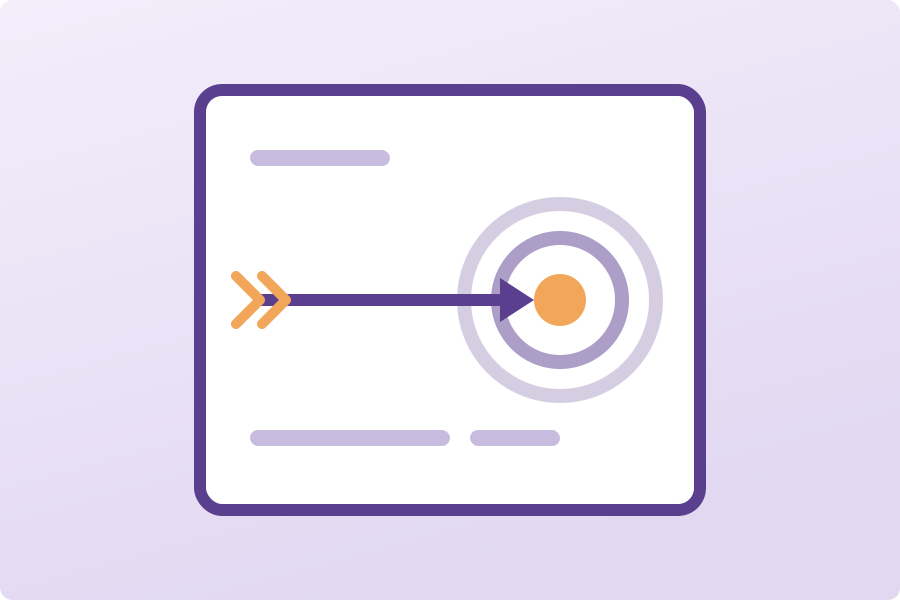
A picture helps. Imagine an arrow. Para is the tip of the arrow: the target you are aiming at. Por is the shaft and the feathers: what pushes the action, the road it travels along, the price you pay for it. Almost every rule in a grammar book is a special case of that image.
- Estudio español para trabajar en Madrid. I study Spanish in order to work in Madrid (goal).
- Estudio español por mi pareja. I study Spanish because of my partner (cause, motive).
- Salgo para Valencia. I am leaving for Valencia (destination).
- Paseo por Valencia. I walk around Valencia (through a place).
The Nueva gramática de la lengua española of the Real Academia Española describes para as expressing purpose, destination and the end point of a period, and por as expressing cause, means, place of transit, approximate time and the agent of the passive. You do not need the terminology. You need the reflex: goal or cause?
A quick test works surprisingly often. If you can replace the preposition with "in order to" or "headed for" or "by (a deadline)", you want para. If you can replace it with "because of", "through", "in exchange for", "per" or "by (someone)", you want por.
All uses of para: purpose, destination, deadline, recipient, opinion
Para has fewer uses than por, and they all point forward. If you learn these six well, you can treat almost everything else as por and be right most of the time.
1. Purpose with an infinitive: "in order to". This is the most frequent use. Ahorro para comprar un piso. (I save in order to buy a flat.) Necesito el NIE para abrir una cuenta. (I need the NIE to open an account.) In English you often drop "in order", but in Spanish para never disappears: Vengo a clase aprender is wrong; it must be Vengo a clase para aprender, or with a verb of movement, Vengo a aprender.
2. Purpose with a noun or with que + subjunctive. Es una crema para el sol. (a cream for the sun). Te lo explico para que lo entiendas. (so that you understand it). After para que, the verb goes in the subjunctive, always.
3. Destination. El tren para Sevilla sale a las diez. Mañana salimos para la playa. With ir, Spanish usually prefers a: Voy a Sevilla. Para adds the idea of "heading towards": Voy para casa (I'm on my way home), very common in speech.
4. Recipient: who something is for. Este regalo es para ti. He hecho la cena para todos. Trabajo para una empresa alemana. (I work for a German company: the company receives your work.)
5. Deadline or a point in the future. Necesito el informe para el viernes. (by Friday). Para entonces ya habremos terminado. (by then). Faltan diez minutos para las ocho. (ten to eight).
6. Opinion and comparison. Para mí, es demasiado caro. (In my opinion...). Para ser extranjero, habla muy bien. (For a foreigner, he speaks very well: considering that he is one). Hace mucho frío para ser mayo. (It's very cold for May.)
Two smaller uses come up in daily Spain. Estar para + infinitive means "to be about to" or "to be in the mood for": El autobús está para salir (the bus is about to leave), No estoy para bromas (I'm not in the mood for jokes). And para with a use or a field: una taza para café, bueno para la salud.
All uses of por: cause, route, exchange, means, duration, agent
Por covers more ground. Group the uses in families and they stop feeling random: why it happens, where it passes, what it is exchanged for, how it is done, when roughly, and who did it.
1. Cause or motive: "because of", "out of". Lo hice por amor. Cerraron la carretera por la nieve. Gracias por tu ayuda. Perdona por el retraso. Gratitude and apologies always take por, because the help or the delay is the cause of your thanks or your apology.
2. On behalf of, in favour of, instead of. Firmo por mi madre. (I sign on her behalf). Votamos por el cambio. Hoy trabajo yo por ti. (I'll cover your shift.) This is the meaning that creates the most confusion with para, and we come back to it in the next section.
3. Movement through or along a place. Paseamos por el centro. El ladrón entró por la ventana. Pasa por Zaragoza. Also vague location: Mis llaves están por aquí. (somewhere around here).
4. Exchange, price, substitution. Lo compré por veinte euros. Te cambio mi bici por tu patinete. Me tomaron por francés. (They took me for a Frenchman.)
5. Means of communication or transport. Te llamo por teléfono. Mándamelo por correo. Lo vi por la tele. Envío los papeles por mensajero. With vehicles Spanish usually says en: en tren, en coche. Por avión survives mainly for post.
6. Time: a part of the day, an approximate period, duration. Por la mañana, por la tarde, por la noche. Volveré por Navidad (around Christmas). Estuve en Madrid por dos semanas is understood, but in Spain people normally say durante dos semanas or simply dos semanas. Many learners overuse por for duration because of English "for two weeks".
7. Rate, frequency, multiplication. Cien kilómetros por hora. Dos veces por semana. El 20 por ciento. Tres por cuatro, doce.
8. Agent of the passive. El libro fue escrito por Cervantes. La casa fue diseñada por un arquitecto local. Spoken Spanish prefers the active voice or se, but in the news and in formal writing you will see this every day.
9. Estar por and quedar por: still to be done. La cama está por hacer. (the bed is still to be made). Quedan tres capítulos por leer. In Latin America estar por also means "to be about to", which in Spain is more often estar a punto de or estar para.
10. Ir por or ir a por: going to fetch. Voy (a) por pan. In Spain ir a por is completely normal in speech, even though some style guides frown on it. You will hear Voy a por el coche every day.
Por and para: myths and facts
- MythEnglish “for” is always para.FactThanks, exchange, price and “on behalf of” take por: gracias por, lo compré por veinte euros, firmo por mi madre.
- MythPor is used for every duration.FactIn Spain duration usually needs no preposition or takes durante: viví allí tres años.
- MythIf you mix them up, nobody understands you.FactContext usually saves the sentence. The choice matters for precision, and in pairs like por ti / para ti it changes the meaning.
- MythThere is always only one correct answer.FactSometimes both are grammatical: me mudé por mi trabajo (cause) and para mi trabajo (goal) stress different things.
Por or para? Tricky pairs that change the meaning
The hard part is not the lists. The hard part is that many sentences are grammatical with both prepositions, and each one says something different. Learn these pairs by heart, because they are exactly where an exam or a native speaker will notice.
| With por | Meaning | With para | Meaning |
|---|---|---|---|
| Lo hago por ti. | I do it because of you / on your behalf | Lo hago para ti. | I do it for you (you receive it) |
| Trabajo por mi hermano. | I work instead of my brother | Trabajo para mi hermano. | My brother is my boss |
| Estudio por mis padres. | My parents are the reason (pressure, gratitude) | Estudio para ser médico. | My goal is to be a doctor |
| Salgo por la puerta. | I go out through the door | Salgo para la oficina. | I leave for the office |
| Lo tengo por el lunes. | (unusual) around Monday | Lo tengo para el lunes. | It will be ready by Monday |
| Estar por salir | (Spain) still to leave; (Am.) about to leave | Estar para salir | about to leave |
| Hablo por ella. | I speak on her behalf | Hablo para ella. | I speak so that she hears it, she is my audience |
| Por mí, vale. | As far as I'm concerned, fine (I don't object) | Para mí, vale. | In my opinion it's OK |
The pair por mí and para mí is worth a minute. Por mí, puedes venir means "I have no objection, come if you like". Para mí, es mejor venir means "in my view, coming is better". Native speakers use por mí constantly to give permission without enthusiasm: ¿Pedimos pizza? —Por mí, vale.
The pair por ti and para ti is the one that ends up in love songs and in mistakes. Este pastel es para ti is a gift. Me he mudado a Madrid por ti is a reason, and a big one. If you write Me he mudado a Madrid para ti, it sounds as if the move itself were a present.
Por and para with time: por la mañana, para el lunes
Time is where the two prepositions meet most often, so it deserves its own map. Para marks a point you aim at in the future: a deadline. Por marks a stretch of time, a part of the day or an approximate moment.
- Lo necesito para mañana. I need it by tomorrow.
- Lo hago por la mañana. I do it in the morning.
- Tenemos reserva para las nueve. Our booking is for nine.
- Pasaré por tu casa por la tarde. I'll drop by your place in the afternoon.
- Los deberes son para el jueves. The homework is due on Thursday.
- Llegaremos por abril, más o menos. We'll arrive around April.
Three details trip people up. First, with clock times Spain says por la mañana but a las diez de la mañana: never por las diez de la mañana for an exact time. Second, para siempre (forever) is fixed, even though it looks like a duration. Third, duration itself usually needs no preposition at all: Viví en Granada tres años is more natural than por tres años, and durante tres años is the neutral formal choice.
If you live in Spain, listen to how appointments are confirmed on the phone: Le doy cita para el martes por la tarde. Both prepositions in one sentence: the target day with para, the part of the day with por.
Set phrases with por: por fin, por si acaso, por lo visto
Many uses of por live in fixed expressions. You do not analyse them; you learn them as one word, the way you learn "of course" in English. These are the ones you will hear every week in Spain.
| Expression | Meaning | Example |
|---|---|---|
| por fin | at last (relief) | ¡Por fin es viernes! |
| por si acaso | just in case | Llévate el paraguas, por si acaso. |
| por lo visto | apparently | Por lo visto, mañana hay huelga de metro. |
| por supuesto | of course | ¿Me ayudas? —Por supuesto. |
| por cierto | by the way | Por cierto, ¿has visto a Ana? |
| por favor | please | Un café, por favor. |
| por ejemplo | for example | Frutas de temporada, por ejemplo, naranjas. |
| por eso | that's why | Llovía; por eso no salimos. |
| por lo menos | at least | Duerme por lo menos siete horas. |
| por lo general | generally | Por lo general, comemos a las dos. |
| por ahora | for now | Por ahora, todo bien. |
| por casualidad | by chance | ¿Tienes un cargador, por casualidad? |
| por desgracia | unfortunately | Por desgracia, no quedan entradas. |
| por suerte | luckily | Por suerte, llegamos a tiempo. |
| por otra parte | on the other hand | Es caro; por otra parte, es muy cómodo. |
| por las buenas o por las malas | the easy way or the hard way | Lo hará por las buenas o por las malas. |
| por los pelos | by a hair | Aprobé por los pelos. |
| por poco | almost | Por poco me caigo. |
Notice por poco: it takes the present tense in Spain for a past event, Por poco me caigo (I almost fell). And notice por fin versus al final. Por fin is relief after waiting: ¡Por fin llegas! Al final is how things turned out: Al final no vino. English "finally" covers both, which is why learners say Por fin no vino when they mean Al final no vino.
Two more phrases deserve attention because they come with a question. ¿Por qué? means "why?" and is written as two words with an accent. Porque (one word, no accent) means "because". El porqué (one word, accent, with an article) is a noun: "the reason". And por que (two words, no accent) is rare: it appears when por meets the relative que, as in la razón por (la) que vine.
Set phrases with para: para nada, para siempre, no es para tanto
Para has fewer fixed expressions, but some of them are so common in spoken Spain that you sound much more natural once you use them.
| Expression | Meaning | Example |
|---|---|---|
| para nada | not at all | ¿Te molesta? —Para nada. |
| para siempre | forever | Se quedaron en Málaga para siempre. |
| no es para tanto | it's not a big deal | Tranquilo, no es para tanto. |
| para colmo | to top it all | Llovía y, para colmo, perdí el tren. |
| para variar | for a change (often ironic) | Llegas tarde, para variar. |
| para que lo sepas | just so you know | Para que lo sepas, ya lo he pagado. |
| para entonces | by then | Para entonces ya estaré en casa. |
| ¿para qué? | what for? | ¿Para qué quieres tanto dinero? |
| para chuparse los dedos | finger-licking good | La paella está para chuparse los dedos. |
| no estar para bromas | not to be in the mood for jokes | Hoy no estoy para bromas. |
| para servirle | at your service (formal) | Muchas gracias. —Para servirle. |
Para nada is a gift for learners. In Spain it answers almost any "Do you mind?" or "Is it a problem?" politely and naturally: ¿Te importa si abro la ventana? —Para nada. Be careful with the tone, though: ¿Te gustó la película? —Para nada is a firm "not at all", so do not use it to soften a "no".
The question ¿para qué? differs from ¿por qué? exactly as the two prepositions do. ¿Por qué estudias español? asks for a reason (because I live here, because I like it). ¿Para qué estudias español? asks for a goal (to get a job, to pass the DELE). Both questions are fine; the answers are different.
Por or para: quick check
Which one is correct?
Common por and para mistakes English speakers make
Most errors come from translating "for" word for word. Here are the patterns that come up again and again, with the fix.
1. "Thank you for..." with para. Gracias para tu ayuda is wrong. Thanks always take por: Gracias por tu ayuda, Gracias por venir.
2. Duration with por out of habit. Viví en Barcelona por dos años is understood, but it sounds like a translation. Say Viví en Barcelona dos años or durante dos años. Keep por for approximate periods: por un tiempo.
3. "Looking for" with para or por. Busco para mi llave and Busco por mi llave are both wrong. Buscar already contains "for": Busco mi llave, Busco a mi hermano. The same happens with esperar (wait for), pedir (ask for) and pagar (pay for): Espero el autobús, Pido la cuenta, Pago la cena. But "pay for" plus a price uses por: Pagué cien euros por el abrigo.
4. "For" with a person as a reason. Lo hice para ti when you mean "because of you" or "on your behalf". Ask yourself: does the person receive something (para) or are they the reason (por)?
5. Dropping para before an infinitive. Estudio aprobar el examen is not Spanish. You need para: Estudio para aprobar el examen. After verbs of movement, use a: Vengo a ver, Salgo a correr.
6. "For example" and "please" spelled together or with para. Para ejemplo does not exist; it is por ejemplo. Also note por favor, never para favor.
7. "Why" and "because" confused in writing. Porque for "why" and por qué for "because" are common written errors even at B1. Read your messages again before sending: question = two words with an accent.
8. "Finally" as por fin everywhere. Use por fin only for relief. For a result or the end of a story, use al final or finalmente.
9. "For me" in opinions with por. Por mí, es difícil sounds odd. Opinions take para: Para mí, es difícil. Por mí means "as far as I'm concerned, I don't mind".
10. Speed and frequency with a. Spanish does accept dos veces a la semana as well as dos veces por semana, so this one is not really a mistake. But speed and percentages are fixed: 120 kilómetros por hora, el 15 por ciento.
A practical habit: every time you write "for" in your head, stop and choose between four options, not two: por, para, another preposition (durante, a, de) or nothing at all. Our guide to keeping a Spanish error journal shows how to log these slips so they stop repeating.
Por and para in real dialogues
Rules become usable when you hear them in context. Read these two everyday conversations aloud. Every por and para is highlighted; try to say why each one is there before reading the notes.
At the post office (Correos)
— Buenos días. Quería mandar este paquete para Alemania. — ¿Lo quiere mandar urgente o normal? — Normal, pero tiene que llegar para el día quince, es un regalo para mi sobrina. — Entonces mejor urgente. Normal tarda unos diez días por las fiestas. — ¿Y cuánto cuesta? — Son veintitrés euros. Le doy un número para seguir el envío por internet. — Perfecto. ¿Puedo pagar por tarjeta? Bueno, con tarjeta. — Claro. ¿Lo envía usted o firma alguien por usted? — Lo envío yo. Muchas gracias por todo. — A usted. Y por si acaso, guarde el resguardo.
Notes: para Alemania (destination), para el día quince (deadline), para mi sobrina (recipient), por las fiestas (cause), para seguir (purpose), por internet (means), firma por usted (on your behalf), gracias por (thanks), por si acaso (set phrase). The speaker corrects pagar por tarjeta to con tarjeta: in Spain you pay con tarjeta or en efectivo. That self-correction is real-life Spanish, and perfectly fine.
Between colleagues
— ¿Has terminado la presentación para el cliente? — Casi. Por cierto, ¿para cuándo la necesitas? — Para mañana por la mañana, a las nueve. — Vale. Esta tarde la reviso por encima y te la mando por correo. — Genial. Y por favor, cambia la diapositiva de precios. Para mí, es demasiado larga. — ¿Tú crees? Por mí la dejaría como está, pero vale. — Gracias. ¡Por fin terminamos este proyecto! — No es para tanto, aún queda la reunión.
Notes: para el cliente (recipient), por cierto (by the way), ¿para cuándo? (deadline question), por la mañana (part of the day), por encima (quickly, superficially: another set phrase), por correo (means), para mí (opinion), por mí (I don't object), por fin (relief), no es para tanto (it's not a big deal).
Por vs para exercises with answers
Do these without looking at the rules, then check. If you get fewer than 32 right out of 40, reread the section on tricky pairs, because that is usually where the points are lost.
A. Fill in por or para.
- Gracias ___ el regalo.
- Este regalo es ___ ti.
- Salimos ___ Madrid a las ocho.
- Paseamos ___ el parque toda la tarde.
- Necesito el informe ___ el lunes.
- Te llamo ___ teléfono esta noche.
- Lo vendí ___ cincuenta euros.
- Estudio ___ ser enfermera.
- ___ mí, es la mejor película del año.
- El cuadro fue pintado ___ Velázquez.
- Trabajo ___ una empresa de software.
- Hoy trabajo yo ___ ti, que estás enfermo.
- Hace calor ___ ser enero.
- Voy al gimnasio dos veces ___ semana.
- Cerraron el colegio ___ la nieve.
- ___ la noche siempre leo un poco.
- La mesa está ___ poner.
- Llévate una chaqueta, ___ si acaso.
- Necesito gafas ___ leer.
- ___ fin llegas, ¡te estábamos esperando!
B. Choose the correct option.
- ¿Te importa? —(Por / Para) nada.
- Lo hago (por / para) que estés tranquila. (careful)
- (Por / Para) lo visto, el vuelo sale con retraso.
- El tren (por / para) Bilbao sale del andén 4.
- Me tomaron (por / para) italiano.
- Lo hice (por / para) amor.
- Llovía y, (por / para) colmo, se rompió el paraguas.
- ¿(Por / Para) qué quieres el dinero? —Para un coche.
- Quedan dos capítulos (por / para) leer.
- Aprobé (por / para) los pelos.
C. Correct the mistakes. Some sentences are already correct.
- Gracias para venir a mi fiesta.
- Busco por un piso en el centro.
- Viví en Sevilla por cinco años.
- Para mí, no hay problema, haz lo que quieras.
- Estudio mucho aprobar el DELE.
- Por fin no vino nadie a la reunión.
- Pagué treinta euros por la cena.
- El coche va a 100 kilómetros para hora.
- Te lo explico para que lo entiendas.
- Me mudé a Valencia para mi trabajo nuevo.
Answers
A: 1 por (thanks). 2 para (recipient). 3 para (destination). 4 por (through a place). 5 para (deadline). 6 por (means). 7 por (exchange). 8 para (goal). 9 para (opinion). 10 por (agent). 11 para (recipient of work). 12 por (instead of). 13 para (comparison). 14 por (frequency; a la semana also correct). 15 por (cause). 16 por (part of the day). 17 por (still to be done). 18 por (set phrase). 19 para (purpose). 20 por (set phrase: relief).
B: 21 para. 22 para (para que + subjunctive: purpose). 23 por. 24 para. 25 por. 26 por. 27 para. 28 para (the answer gives a goal). 29 por. 30 por.
C: 31 Gracias por venir. 32 Busco un piso en el centro. 33 Viví en Sevilla cinco años (or durante cinco años). 34 Better Por mí, no hay problema: the speaker does not object, it is not an opinion. 35 Estudio mucho para aprobar el DELE. 36 Al final no vino nadie. 37 Correct (price). 38 100 kilómetros por hora. 39 Correct. 40 Both are possible: por mi trabajo nuevo (the job is the cause) is the most natural; para mi trabajo nuevo stresses the goal, "to take up the new job".
Sentence 40 shows the honest truth about por and para: sometimes both are grammatical and the choice depends on what you want to stress. That is not a weakness of the rules. It is the point of having two words.
How to practise por and para until it is automatic
You learn por and para by producing them, not by rereading lists. The rules help you check; only practice makes the choice fast enough for conversation.
A routine that works for most adults takes ten minutes a day for three weeks:
- Collect real sentences. Every day, copy three sentences with por or para from something you read or hear in Spanish: a news headline, a WhatsApp message, a shop sign. Write the reason next to each one: goal, cause, means, deadline.
- Make your own pairs. Take one verb and write it with both: Lo hago por ti / Lo hago para ti. Say both aloud and explain the difference to yourself in one sentence.
- Learn ten set phrases a week. Start with por fin, por si acaso, por lo visto, por cierto, por eso, para nada, no es para tanto, para colmo, para siempre, por lo menos. Use each one in a real message that week.
- Speak with a timer. Talk for two minutes about your week, your plans or your reasons for learning Spanish. Planning and reasons force both prepositions: Voy a Madrid para..., Me quedé en casa por...
- Get corrected. A teacher or a native speaker catches the mixed-up cases you do not notice yourself. Write them in your error journal and repeat the corrected sentence aloud three times.
The fourth and fifth steps are the hardest to do alone. In a small group you hear other learners hesitate on the same choices, and the correction of one person's mistake teaches everybody. That is what our monthly group Spanish course is built for: twelve 90-minute lessons a month in mini-groups of up to six, with a lot of speaking time and correction from a native teacher from Spain.
If you are working on other classic pairs at the same time, the logic of looking for the "picture" behind the rule also works for ser and estar and for the difference between he comido and comí. Take one pair at a time, practise it until it stops slowing you down, then move on to the next.
A last reassurance. Native speakers will understand you almost every time you mix up por and para: the context saves the sentence. Getting them right is not about being understood; it is about sounding precise, and in a few cases (por ti or para ti, por mí or para mí) about saying exactly what you mean. That precision comes with use, a little at a time.
Frequently asked questions
What is the easiest way to tell por from para?
Ask whether you are looking forward to a goal or back at a cause. Para marks purpose, destination, deadline, recipient and opinion. Por marks cause, route, exchange, means, approximate time, rate and the agent of the passive.
Is it gracias por or gracias para?
Always gracias por: gracias por tu ayuda, gracias por venir. The help or the visit is the cause of your thanks, and cause takes por. The same goes for apologies: perdona por el retraso.
What is the difference between por mí and para mí?
Para mí gives an opinion: para mí, es caro (in my view it is expensive). Por mí says you do not object: por mí, vale (fine by me). Spaniards use por mí all the time to agree without much enthusiasm.
Do you say por dos semanas for duration?
It is understood, but in Spain people usually say dos semanas or durante dos semanas. Para dos semanas means planned for two weeks, as in comida para dos semanas.
What does para nada mean?
Not at all. It is a polite, natural answer to ¿te importa? or ¿te molesta?. Said about a film or a meal, it is a firm no, so it does not soften a negative answer.
What is the difference between por fin and al final?
Por fin expresses relief after waiting: ¡por fin es viernes!. Al final tells how something turned out: al final no vino. English finally covers both, which is why learners mix them up.
Book your free trial lesson
One to one with a native teacher, on Zoom.
Times shown in your zone: Europe/Madrid
1. Pick a day
Loading the timetable…
3. Your email for the confirmation and the Zoom link
One-to-one lessons with a native teacher
On Zoom with a qualified teacher from Spain who also speaks English.