Spanish connectors: pero vs sino, aunque, sin embargo and more
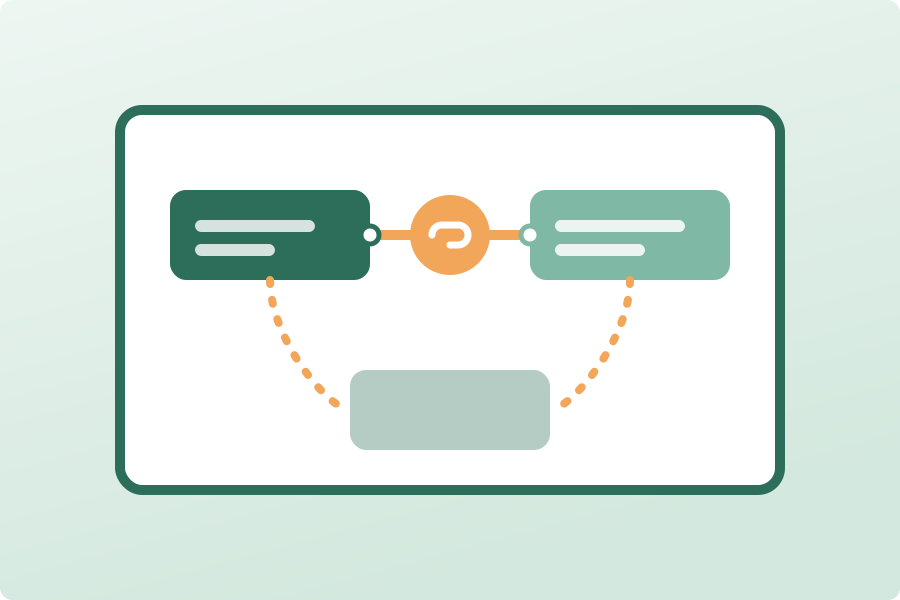
You can order a coffee, rent a flat and explain your job in Spanish, yet your sentences still sound like a list: short statements in a row, each one starting from zero. What is missing is usually not vocabulary but the small words that tie ideas together. Pero, sino, aunque, sin embargo, por eso, así que, además, en cambio, es decir: these are the discourse connectors that turn a list of facts into an argument, a story or a polite disagreement.
This guide explains the Spanish connectors you actually need in daily life and at work, the grammar each one drags along (the indicative or the subjunctive after aunque, the switch from pero to sino), the fillers Spaniards use in conversation (pues, bueno, o sea), a register table for emails and exams, the mistakes English speakers make most often, and exercises with answers at the end.
What are discourse connectors in Spanish?
Discourse connectors are words and phrases that show how one idea relates to the next: contrast, cause, consequence, addition or rephrasing. They do not add new information; they tell the listener how to read the information you have just given.
Spanish grammars call them conectores or marcadores del discurso. The Real Academia Española groups them by function, and that is the most useful way to learn them too. If you know which job a connector does, you will not mix up two that look similar in English.
| Function | Everyday spoken | Neutral | Formal or written |
|---|---|---|---|
| Contrast | pero | sin embargo | no obstante |
| Correction | sino | sino que | antes bien |
| Concession | aunque | a pesar de que | si bien |
| Consequence | así que, por eso | por lo tanto | por consiguiente |
| Cause | porque, como | ya que | dado que, puesto que |
| Addition | y, también, encima | además | asimismo, por otra parte |
| Opposition | en cambio | por el contrario | mientras que |
| Rephrasing | o sea | es decir | esto es, a saber |
Two practical points before the details. First, connectors change register more than any other part of your Spanish. A message full of o sea and encima sounds like a WhatsApp voice note; a message full of no obstante and por consiguiente sounds like a court ruling. Most real situations need the middle column. Second, connectors are scored directly in exams. The DELE and SIELE writing rubrics assess coherence and cohesion, and examiners notice immediately whether a text moves beyond y, pero and porque. If you are preparing a written exam, our guide to DELE B2 writing shows where these connectors fit in each task.
The rest of this article goes connector by connector, always with the same structure: what it means, where it goes in the sentence, what punctuation it needs, and what English speakers typically get wrong.
Pero or sino: what is the difference?
Use pero to add a contrast that does not cancel the first idea: Es caro, pero es bueno (it is expensive, but it is good). Use sino only after a negative, to replace the first idea with the correct one: No es caro, sino barato (it is not expensive, it is cheap).
English uses "but" for both jobs, which is why this pair causes so many errors. The test is simple: if the first part is negative and the second part corrects it, you need sino. If both parts are true at the same time, you need pero.
- No vivo en Madrid, pero trabajo allí. I do not live in Madrid, but I work there. Both facts are true.
- No vivo en Madrid, sino en Getafe. I do not live in Madrid but in Getafe. Getafe replaces Madrid.
- No es mi jefe, pero me da órdenes. He is not my boss, but he gives me orders. Both true.
- No es mi jefe, sino mi compañero. He is not my boss but my colleague. Correction.
Sino que before a verb
When the correction contains a conjugated verb, Spanish adds que: sino que.
- No lo compré, sino que me lo regalaron. I did not buy it; they gave it to me.
- No te estoy criticando, sino que quiero ayudarte. I am not criticising you; I want to help you.
If the second part is a noun, an adjective, an adverb or an infinitive, plain sino is enough: No quiero hablar, sino escuchar.
No solo… sino también
The fixed pattern for "not only… but also" uses sino, never pero: No solo habla español, sino también catalán. With a verb: No solo llegó tarde, sino que además no avisó. This is one of the most frequent constructions in formal writing, and one of the most frequent mistakes in learners' essays, where no solo… pero también appears again and again.
Sino and si no are different words
Sino, written as one word, is the connector. Si no, two words, means "if not": Si no vienes, te llamo. The Diccionario panhispánico de dudas of the RAE dedicates an entry to this confusion, because native speakers mix them up in writing too. Read it aloud: in si no both words carry some stress, and you can replace it with "if… not".
Punctuation
Put a comma before pero when it joins two clauses: Me gusta, pero no puedo. Before sino, a comma is also normal when the clauses are long, but with short corrections many writers leave it out: No es rojo sino azul. Both are accepted.
Aunque with indicative or subjunctive?
Use aunque + indicative when you present the fact as true and known: Aunque llueve, salgo (it is raining, and I am going out anyway). Use aunque + subjunctive when the fact is hypothetical, not yet known, or already known to both of you and not worth arguing about: Aunque llueva, salgo (even if it rains, I am going out).
This is the connector where grammar and meaning are tied most tightly. The same sentence changes meaning with the mood of one verb.
| Sentence | Mood | What the speaker means |
|---|---|---|
| Aunque está cansado, trabaja. | Indicative | He is tired. I am telling you that as news. He works anyway. |
| Aunque esté cansado, trabaja. | Present subjunctive | Even if he is tired, or yes, he may well be tired, but that is not the point. |
| Aunque estuviera cansado, trabajaría. | Imperfect subjunctive | Even if he were tired, which he is not, he would work. |
| Aunque hubiera estado cansado, habría trabajado. | Pluperfect subjunctive | Even if he had been tired in the past, which he was not. |
Three uses of aunque + subjunctive
- Hypothesis about the future. Aunque me ofrezcan más dinero, no me voy. Even if they offer me more money, I am not leaving. They have not offered anything yet.
- Known fact, dismissed as irrelevant. Vale, aunque sea tu amigo, no puede entrar sin entrada. OK, he may be your friend, but he cannot come in without a ticket. Both people know he is a friend; the speaker refuses to treat it as an argument. This use surprises learners, because the fact is true and still takes the subjunctive.
- Unreal situation. Aunque tuviera tiempo, no lo haría. Even if I had time, I would not do it.
Aunque meaning "but"
In spoken Spanish, aunque can also come after a pause and mean "although" in the sense of "but then again": Es un buen piso. Aunque es un poco oscuro. Here it always takes the indicative, because it adds a real fact. You will hear this all the time in flat viewings and restaurant reviews.
Alternatives to aunque
- A pesar de que follows the same mood rules but sounds more neutral or formal: A pesar de que estudió mucho, suspendió.
- A pesar de plus a noun or infinitive avoids the verb altogether: A pesar de la lluvia, A pesar de estar cansado.
- Si bien is formal and almost always takes the indicative: Si bien el plan es ambicioso, es viable.
- Por mucho que plus the subjunctive means "however much": Por mucho que insistas, no voy.
How the error sounds to a Spaniard
Learners often put everything after aunque in the indicative, because English "although" never changes. The result is not a disaster, but it sometimes says something different from what you mean. Aunque tienes razón states that the other person is right; aunque tengas razón concedes it without arguing, which is far more diplomatic in a meeting. If the subjunctive itself is still shaky, practise it with short decision drills, the way the preterite vs imperfect contrast is practised: one rule, many quick examples.
Sin embargo, no obstante and other ways to say "however"
Sin embargo is the neutral, all-purpose "however": it starts a new sentence or clause that contrasts with the previous one, and it goes between punctuation marks. No obstante means the same but is more formal, typical of reports, letters and official texts.
Compare the levels of contrast you can choose from:
- pero: joins two clauses inside one sentence. Lo intenté, pero no funcionó.
- sin embargo: usually after a full stop or semicolon, more weight. Lo intenté varias veces. Sin embargo, no funcionó.
- no obstante: same position, formal register. El plazo ha finalizado. No obstante, se admitirán solicitudes justificadas.
- aun así: spoken and written, "even so". Me lo explicó dos veces y aun así no lo entendí.
- de todas formas, de todos modos: "anyway", very common in speech. De todas formas, te llamo mañana.
Where to put sin embargo
Sin embargo is flexible. It can open the sentence, sit in the middle or, less often, close it. Commas mark it off in every position:
- Sin embargo, el proyecto salió adelante.
- El proyecto, sin embargo, salió adelante.
- El proyecto salió adelante, sin embargo.
The most common learner error is using sin embargo like pero, with only a comma before it and no pause: Me gusta, sin embargo no puedo. Spanish style guides, including the Fundéu recommendations, prefer a semicolon or a full stop before it and a comma after: Me gusta; sin embargo, no puedo. In an exam text this detail is visible to the examiner.
Pero at the start of a sentence
You may have been told never to start a sentence with "but". Spanish has no such rule. Pero at the beginning of a sentence is normal in speech and in informal writing: Pero ¿qué dices? In a formal email, however, sin embargo or no obstante at the start of the sentence sounds more polished.
Spanish connectors: myths and facts
- MythPero and sino are interchangeable, like English «but».FactSino appears only after a negative and replaces the first idea: «No es caro, sino barato». Pero keeps both ideas true.
- MythAunque always takes the indicative.FactIt takes the subjunctive for hypotheses, unreal cases and known facts dismissed as irrelevant: «Aunque llueva, salgo».
- MythSin embargo works just like pero, with a comma.FactSin embargo is set off by punctuation: usually a semicolon or full stop before it and a comma after it.
- MythThe more formal the connector, the better the exam mark.FactExaminers assess correct logic and consistent register. A well-used por eso beats a misused por consiguiente.
Por eso, así que, por lo tanto: how to say "so" in Spanish
To express a consequence, say por eso (that is why) or así que (so) in everyday Spanish, por lo tanto (therefore) in neutral or written Spanish, and por consiguiente or en consecuencia in formal texts. All of them introduce the result of what you said before.
English "so" covers several jobs, and Spanish splits them:
| English | Spanish | Example |
|---|---|---|
| so, consequence | así que | Llovía, así que nos quedamos en casa. |
| that is why | por eso | Vivo lejos. Por eso llego tarde. |
| therefore | por lo tanto | No cumple los requisitos; por lo tanto, no puede solicitarlo. |
| so, purpose | para que + subjunctive | Te lo envío para que lo revises. |
| so, intensity | tan… que | Estaba tan cansado que me dormí. |
| so, conversation opener | entonces, pues | Entonces, ¿quedamos el viernes? |
Así que versus por eso
They are interchangeable in many sentences, but there is a nuance. Así que simply links cause and result, often in one sentence. Por eso points back to the reason and stresses it, which is why it often starts a new sentence: Mi hijo tiene clase de natación los martes. Por eso no puedo quedar ese día. Así que also works as a conversation reaction, almost like "so…": Así que te vas a vivir a Valencia.
Entonces is not always "then"
Entonces means "then" in time, en aquel entonces, but in conversation it usually means "so, in that case": ¿No te viene bien el lunes? Entonces el martes. Spaniards also use it to resume a conversation: Entonces, ¿qué hacemos? Learners sometimes overuse it as a translation of every English "so", and it ends up at the start of every sentence. Mix it with pues and así que.
Cause connectors
Consequence and cause are two sides of one relationship, so learn them together. Porque explains after the main clause; como introduces a known cause at the beginning: Como no contestabas, te escribí. You cannot start a sentence with porque in that meaning. Ya que and puesto que sound more formal, and dado que belongs to reports and official letters.
Además, encima, también: how to add ideas in Spanish
Use además to add an argument (moreover, besides), también to add a similar fact (also), and encima when the extra fact makes things worse or more surprising (on top of that). In writing, asimismo and por otra parte are the formal versions.
- El piso está bien situado y, además, es barato. It is well located and, moreover, cheap.
- Yo también trabajo desde casa. I also work from home.
- Llegó tarde y encima sin los papeles. He was late and on top of that without the documents.
- Asimismo, le informamos de que… Furthermore, we inform you that…
Además de plus a noun or infinitive
Además de means "as well as, apart from": Además de inglés, habla francés. Además de trabajar, estudia. This is a handy way to make one sentence out of two without repeating y… y… y.
Encima is emotional
Encima adds a tone of complaint, irritation or surprise. It is perfect when you tell a friend about a terrible day with Spanish bureaucracy, and completely wrong in a job application. Compare: Me pidieron otro papel y encima tuve que pagar la tasa otra vez is a vivid complaint; in an email to the town hall, write además or simply y.
Ni siquiera and tampoco
The negative counterparts matter too. Tampoco is the negative también: Yo tampoco lo sé. Ni siquiera means "not even": Ni siquiera me contestó. English speakers often say también no, which does not exist in Spanish.
En cambio vs sin embargo: what is the difference?
En cambio compares two different things or people that behave in opposite ways: Mi hermano odia el fútbol; yo, en cambio, no me pierdo un partido. Sin embargo contrasts an expectation with what really happened, usually about the same subject: Estudió mucho; sin embargo, suspendió.
This is the pair that separates a B1 text from a solid B2 text. A useful question: am I comparing two sides, A versus B? Then en cambio, por el contrario or mientras que. Am I saying "despite this, the unexpected happened"? Then sin embargo or no obstante.
| You want to say | Connector | Example |
|---|---|---|
| A does this, B does the opposite | en cambio | En el norte llueve mucho; en el sur, en cambio, apenas. |
| A does this while B does that, in one sentence | mientras que | Yo trabajo de mañana, mientras que mi pareja trabaja de tarde. |
| Contrary to what was said | por el contrario | No fue un fracaso. Por el contrario, superó las expectativas. |
| Despite X, unexpected Y | sin embargo | Hacía sol; sin embargo, hacía frío. |
Mientras que deserves its own note. Mientras alone means "while" in time: Mientras cocino, escucho la radio. Mientras que is the comparison: Madrid es caro, mientras que Albacete es más asequible.
Es decir, o sea: how to rephrase in Spanish
To explain the same idea in other words, use es decir (that is to say) in neutral and written Spanish, and o sea in conversation. In formal texts you will also meet esto es and a saber, and for an example, por ejemplo or como.
- El plazo es de diez días hábiles, es decir, sin contar sábados, domingos ni festivos.
- Mañana no hay clase. O sea, que podemos dormir más.
- Me refiero a los documentos básicos, esto es, el pasaporte y el empadronamiento.
O sea in conversation
O sea is so frequent in speech that it has several jobs. It rephrases, it draws a conclusion and it asks for confirmation:
- Rephrasing: Es mi cuñado, o sea, el marido de mi hermana.
- Conclusion: ¿No tienes cita? O sea, que hoy no puedes hacer el trámite.
- Checking: ¿O sea que el lunes no abren?
Used in moderation it sounds natural and native. Used every five words it marks a very casual, even teenage style, a stereotype that Spanish comedy loves. In emails and exams, replace it with es decir.
Mejor dicho: correcting yourself
When you need to correct what you just said, mejor dicho (or rather) is the cleanest option: Te veo el lunes, mejor dicho, el martes. It saves you from long apologies in the middle of a sentence and sounds very natural.
Pues, bueno, o sea: Spanish filler words in conversation
Pues, bueno, vale, a ver, o sea, es que and venga are the small words Spaniards use to start an answer, buy time, soften a refusal or close a conversation. They carry little meaning of their own, but without them your spoken Spanish sounds abrupt or translated.
Grammarians call them marcadores conversacionales. Here are the ones you hear every day in Spain and what each does:
| Filler | Main job | Example |
|---|---|---|
| pues | starts an answer, often after a pause | ¿Qué tal el fin de semana? Pues mira, tranquilo. |
| bueno | accepts, changes topic, softens | Bueno, vale, lo hacemos a tu manera. |
| vale | agrees, confirms (Spain) | Vale, nos vemos a las cinco. |
| a ver | buys time, introduces an explanation | A ver, te lo explico. |
| es que | introduces an excuse or a reason | Es que no me ha llegado el correo. |
| o sea | rephrases, concludes | O sea, que no vienes. |
| venga | encourages, closes | Venga, hasta luego. |
| hombre, mujer | softens, emphasises | Hombre, claro que sí. |
| oye, mira | gets attention | Oye, ¿tienes un momento? |
Pues: the answer starter
Pues has a classical meaning, "since, because", which survives in formal writing. In conversation, though, it is the signal that an answer is coming: ¿Dónde vives? Pues en Chamberí. It also introduces an opinion that may contradict: Pues yo creo que no. And with a fall in the voice it expresses resignation: Pues nada, otra vez será.
Bueno: the multi-tool
Bueno can mean "well" before an answer, "OK" when you accept, and "anyway" when you change topic. Spaniards answer the phone with ¿Sí? or ¿Dígame?, but Mexicans answer with ¿Bueno?, one of the small regional differences worth knowing if you watch series from both sides of the Atlantic.
Es que: the excuse marker
Es que introduces a justification, and Spaniards use it constantly when declining something politely: ¿Vienes a la cena? Es que mañana madrugo. It is so linked to refusals that a sentence beginning with es que is already half a no. It fits well with the indirect ways of saying no described in our article on ya veremos.
How much is too much?
Fillers make you sound fluent when they are spread out, one or two per answer. A good exercise is to record yourself answering three simple questions and count them. If every sentence starts with bueno, vary it with pues, a ver or no filler at all. And keep them out of formal writing: an email that opens with Bueno, reads as careless.
Spanish connectors by register: which to use in emails, exams and chat
Choose connectors by context: in conversation and WhatsApp, use pero, así que, o sea, encima; in work emails and most everyday writing, use sin embargo, por lo tanto, además, es decir; in official letters, reports and exam essays, add no obstante, por consiguiente, asimismo, si bien. Mixing registers is the most common sign of a learner text.
| Function | Chat and speech | Work email, neutral | Formal letter, exam essay |
|---|---|---|---|
| Contrast | pero, aunque | sin embargo | no obstante, si bien |
| Consequence | así que, por eso | por lo tanto | por consiguiente, en consecuencia |
| Addition | y encima, también | además | asimismo, igualmente |
| Rephrasing | o sea | es decir | esto es |
| Cause | porque, es que | ya que | dado que, puesto que |
| Opposition | y en cambio | en cambio | por el contrario, mientras que |
| Conclusion | total, que | en resumen | en conclusión, en definitiva |
| Opening a topic | oye, mira | en cuanto a | en lo que respecta a |
The same message in three registers
Here is one idea, "the meeting is cancelled because the director is ill, so we will move it to Friday", written three ways:
- WhatsApp: Oye, que la reunión no es hoy. Es que el director está malo, así que la pasamos al viernes.
- Work email: Os escribo para avisaros de que la reunión de hoy se cancela, ya que el director está enfermo. Por lo tanto, la trasladamos al viernes.
- Formal letter: Les comunicamos que la reunión prevista para hoy queda aplazada, dado que el director se encuentra indispuesto. En consecuencia, se celebrará el viernes.
None of them is wrong in its place. What sounds wrong is por consiguiente in a WhatsApp to a friend, or encima in a message to a client.
What examiners look for
In the writing tasks of the DELE and SIELE, connectors count under coherence and cohesion. At B1 the examiner expects basic linking: pero, porque, además, por eso. At B2 you should vary them and use contrast and concession correctly, including aunque with the subjunctive. At C1 the expectation is a wide, precise range, and the absence of repetition. Memorising a list is not enough: a connector used with the wrong logic costs more than a simple y used well.
Common mistakes with Spanish connectors
The errors below are the ones English speakers make most often, mostly because English uses one word where Spanish needs two, or because a connector looks like an English one but behaves differently.
- Pero after a negative correction. No es caro, pero barato → No es caro, sino barato.
- No solo… pero también. → No solo… sino también.
- Sin embargo with a comma only. Me gusta, sin embargo no puedo → Me gusta; sin embargo, no puedo.
- Aunque always with the indicative. For hypotheses: Aunque llueva mañana, vamos.
- Entonces for every "so". Vary it: así que, por eso, pues.
- Porque at the start of a sentence for a known cause. Porque no venías, me fui → Como no venías, me fui.
- También no. → Tampoco.
- Eventualmente meaning "eventually". In Spanish eventualmente means "possibly, occasionally". For "in the end" say al final or finalmente.
- Actualmente meaning "actually". It means "currently". For "actually" say en realidad or de hecho.
- En fin meaning "in the end". En fin is a sigh, "anyway, oh well". For the end of a story say al final.
- Además without a comma in the middle of a sentence. El piso es grande y además es barato is fine; at the start of a sentence, use a comma: Además, es barato.
- Si no instead of sino. No quiero té si no café → No quiero té, sino café.
The false friends in points 8, 9 and 10 are worth special attention, because they do not sound wrong to you, only to your listener. Eventualmente me mudé a Sevilla tells a Spaniard that you perhaps moved there occasionally, which makes no sense. Write them in the error notebook you keep for repeated mistakes.
Why mistakes with connectors stick
Most connector errors survive because nobody corrects them. In a conversation, the listener understands no es caro, pero barato and moves on. Errors that do not block communication are exactly the ones you need to hear corrected out loud, several times, until the right version comes first. That needs a teacher who stops you at the right moment and a group in which you speak enough to make the mistake again and fix it, which is how the monthly group course works: lessons in Spanish, adapted to your level, with Sandra correcting live.
Spanish connectors: check yourself
«No vivo en Madrid, ___ en Getafe.»
Spanish connectors exercises with answers
Do each exercise without looking at the answers, then check. If you get more than three wrong in one block, reread the matching section.
Exercise 1: pero, sino or sino que
- No quiero café, ___ té.
- Es un piso pequeño, ___ muy luminoso.
- No me lo dijo él, ___ lo leí en el periódico.
- No solo habla inglés, ___ también francés.
- Me encanta la paella, ___ hoy prefiero pescado.
- No vino a ayudar, ___ a criticar.
Exercise 2: aunque with the right mood
Put the verb in brackets in the indicative or the subjunctive. Sometimes both are possible with a different meaning; choose the one that fits the context.
- Aunque (estar) ___ cansada, hoy voy al gimnasio. I am tired right now.
- Aunque mañana (hacer) ___ mal tiempo, la excursión se mantiene. We do not know the weather yet.
- Aunque (tener) ___ mucho dinero, no compraría ese coche. I do not have much money.
- Vale, aunque (ser) ___ tu primo, tiene que pagar la entrada. We both know he is your cousin.
- Es un barrio tranquilo. Aunque (haber) ___ poco aparcamiento.
Exercise 3: choose the connector
Choose from: sin embargo, en cambio, así que, además, es decir, por eso, encima.
- El tren se retrasó una hora; ___, llegué a tiempo a la cita.
- Mi marido madruga mucho; yo, ___, me levanto tarde.
- No me quedaban días libres, ___ no pude ir a la boda.
- El curso es práctico y, ___, tiene horario flexible.
- El plazo vence el día 15, ___, dentro de dos semanas.
- Me equivoqué de línea de metro y ___ me quedé sin batería.
- Mi hija tiene alergia al polen. ___ no salimos mucho en primavera.
Exercise 4: change the register
Rewrite each WhatsApp message as a polite work email sentence.
- O sea, que el informe no está, así que lo mando mañana.
- Me han cambiado el turno y encima no me han avisado.
- Es que el lunes no puedo, pero el martes sí.
Answers
Exercise 1: 1. sino. 2. pero. 3. sino que. 4. sino. 5. pero. 6. sino.
Exercise 2: 1. estoy, a known present fact. 2. haga, an unknown future. 3. tuviera, an unreal condition. 4. sea, a known fact dismissed as irrelevant. 5. hay, aunque meaning "but", adding a real fact.
Exercise 3: 1. sin embargo. 2. en cambio. 3. así que. 4. además. 5. es decir. 6. encima. 7. Por eso.
Exercise 4, model answers: 1. Es decir, el informe todavía no está terminado; por lo tanto, lo enviaré mañana. 2. Me han modificado el turno y, además, no se me ha comunicado con antelación. 3. Lamentablemente, el lunes no me es posible; sin embargo, el martes estoy disponible. Other versions are fine if the register is consistent.
How to learn Spanish connectors so they stick
Learn connectors in pairs and in full sentences, not as a list of translations, and practise them out loud in situations where you have to argue, tell a story or disagree. A connector becomes yours when you use it without thinking in a real exchange.
Four habits that work well:
- Learn by function, in contrasting pairs. Pero / sino, sin embargo / en cambio, así que / por eso, es decir / o sea. Each pair has one clear difference; learn the difference with two example sentences.
- Collect real examples. When you hear a connector in a podcast, a series or at work, write down the whole sentence. A notebook of thirty real sentences beats a list of a hundred words.
- Retell with three connectors. After a film or a work meeting, tell what happened in five sentences using at least one contrast, one consequence and one addition. Spoken retelling is where connectors become automatic.
- Rewrite one message a day in a different register. Take a WhatsApp you sent and turn it into a neutral email. It trains the register table without extra materials.
In a group class, connectors come up naturally: in debates, in retelling the weekend, in agreeing and disagreeing with classmates. That is where you get to use aunque with the subjunctive in a live sentence and be corrected the moment you say pero instead of sino. A group gives you more speaking time with real interlocutors than self-study, and a teacher who notices which connectors you avoid.
Frequently asked questions
What is the difference between pero and sino in Spanish?
Pero adds a contrast while keeping the first idea true: «Es caro, pero es bueno». Sino comes only after a negative and replaces the first idea with the correct one: «No es caro, sino barato». Before a conjugated verb use sino que.
Does aunque take the subjunctive or the indicative?
Both. Aunque + indicative presents a known, real fact: «Aunque llueve, salgo». Aunque + subjunctive presents a hypothesis or a fact you dismiss as irrelevant: «Aunque llueva, salgo». The imperfect subjunctive expresses an unreal case: «Aunque tuviera tiempo, no iría».
How do you use sin embargo correctly?
Sin embargo means «however» and is set off by punctuation: usually a semicolon or full stop before it and a comma after it, as in «Me gusta; sin embargo, no puedo». It can also go in the middle of the clause between commas.
What is the difference between en cambio and sin embargo?
En cambio compares two different subjects that behave in opposite ways: «Él odia el fútbol; yo, en cambio, lo adoro». Sin embargo opposes an expectation and a result: «Estudió mucho; sin embargo, suspendió».
What does o sea mean in Spanish?
O sea means «that is, I mean» and is used in conversation to rephrase, draw a conclusion or check understanding: «O sea, que no vienes». In emails and essays, es decir is the neutral equivalent.
What do Spaniards mean by pues and bueno?
In conversation pues usually signals that an answer is coming («Pues en Madrid») or introduces a contrasting opinion («Pues yo creo que no»). Bueno means «well», «OK» or «anyway» depending on context. Both are fillers that make speech sound natural when used in moderation.
Which Spanish connectors are useful for DELE B2?
Vary connectors by function: sin embargo and no obstante for contrast, por lo tanto and por consiguiente for consequence, además and asimismo for addition, es decir for rephrasing, and aunque or a pesar de que with the correct mood for concession. Correct logic matters more than rare words.
Book your free trial lesson
One to one with a native teacher, on Zoom.
Times shown in your zone: Europe/Madrid
1. Pick a day
Loading the timetable…
3. Your email for the confirmation and the Zoom link
One-to-one lessons with a native teacher
On Zoom with a qualified teacher from Spain who also speaks English.