Spanish future tense: ir a, futuro simple or present?
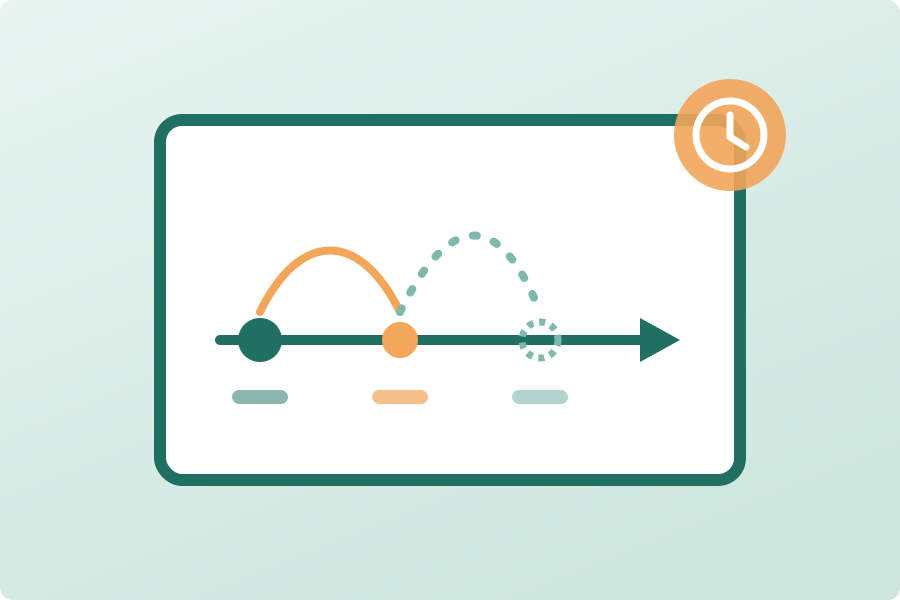
You are in Madrid, it is Friday afternoon and a colleague asks: ¿Qué haces este finde? You could answer Iré a la sierra, Voy a ir a la sierra or simply Voy a la sierra. All three are correct Spanish. All three talk about the future. But they do not sound the same, and a native speaker in Spain would almost never pick the first one in that situation. This is the real difficulty with the future in Spanish: the forms are easy, the choice is not.
In this guide you will find the three ways Spanish talks about the future (ir a + infinitive, the simple future or futuro simple, and the present tense), how each one is formed, the twelve irregular verbs you need, the "future of probability" that Spaniards use every day to guess (serán las diez), how people in Spain actually speak about plans, the mistakes English speakers make most often, two dialogues and exercises with answers.
A note on names. Spanish grammars call the simple future futuro simple or futuro imperfecto; the Real Academia Española also uses the term futuro. The construction ir a + infinitivo is called a perífrasis (a verbal periphrasis), and many textbooks call it futuro próximo or "near future". English learners often meet it first as "the going-to future", and the comparison is useful, as long as you remember where it stops working.
How do you talk about the future in Spanish?
Spanish has three main ways to talk about the future: ir a + infinitive (voy a trabajar), the simple future (trabajaré) and the present tense with a time expression (mañana trabajo). In everyday speech in Spain the first and the third are by far the most common; the simple future is used more in writing, in promises, forecasts and, very often, to make guesses about the present.
Here is the same idea in the three forms:
- Voy a llamar a la gestoría el lunes. — I'm going to call the accountant's office on Monday. (plan, intention)
- Llamaré a la gestoría el lunes. — I will call the accountant's office on Monday. (promise, more formal or more distant)
- Llamo a la gestoría el lunes. — I'm calling the accountant's office on Monday. (fixed, almost scheduled)
All three are correct. The difference is in the tone and in how certain or how close the speaker feels the action is. English works in a similar way: "I'm calling", "I'm going to call" and "I'll call" are all future, and you choose between them without thinking. The goal of this article is to give you the same instinct in Spanish.
There is a fourth form you will meet later in your studies, the future perfect (futuro compuesto): habré terminado, "I will have finished". It is used much less, but it matters for one very Spanish use, guessing about what has just happened (habrá salido, "he must have gone out"), so we will look at it in the section on probability.
In the Plan Curricular of the Instituto Cervantes, the reference syllabus for teaching Spanish as a foreign language, ir a + infinitive appears at A1, the simple future and its irregular verbs at A2, and the future of probability at B1. That order tells you something: you can talk about plans in Spanish from your first month, and you add the other forms as your Spanish grows.
Ir a + infinitive: how to form and use it
To form ir a + infinitive, conjugate ir in the present, add the preposition a and then the verb in the infinitive: voy a comer, vas a comer, va a comer. It is the most common way to talk about plans and intentions in spoken Spanish, and it is the first future form you should master.
The conjugation of ir is irregular but short:
| Person | ir (present) | + a + infinitive |
|---|---|---|
| yo | voy | voy a estudiar |
| tú | vas | vas a estudiar |
| él / ella / usted | va | va a estudiar |
| nosotros / nosotras | vamos | vamos a estudiar |
| vosotros / vosotras | vais | vais a estudiar |
| ellos / ellas / ustedes | van | van a estudiar |
Remember that vosotros is the normal plural "you" in Spain among friends, family and colleagues. In Latin America you will hear ustedes van a estudiar instead.
The main uses:
1. Plans and intentions. This is the core use. You have decided something and you announce it.
- Este verano vamos a ir a Asturias. — This summer we're going to go to Asturias.
- Voy a apuntarme a un gimnasio en enero. — I'm going to join a gym in January.
2. Predictions based on evidence. You see signs that something is about to happen.
- Mira esas nubes: va a llover. — Look at those clouds, it's going to rain.
- Cuidado, que te vas a caer. — Careful, you're going to fall.
3. Something about to happen right now. Often with ya.
- Corre, que el tren va a salir. — Hurry, the train's about to leave.
- Ya voy a terminar, dame cinco minutos. — I'm almost done, give me five minutes.
4. Gentle orders and warnings, especially to children or in an emphatic tone.
- Tú no vas a salir así a la calle. — You're not going out like that.
Two practical details. First, ir a ir is completely normal: Voy a ir al médico ("I'm going to go to the doctor"). Many learners avoid it because it sounds repetitive in English, but Spanish speakers say it all the time, although Voy al médico is often enough. Second, object pronouns can go before ir or attached to the infinitive: Lo voy a hacer = Voy a hacerlo. Both are correct; in speech the first is more frequent.
The past of this construction is also very useful: iba a + infinitive means "was going to". Iba a llamarte, pero se me olvidó ("I was going to call you, but I forgot"). It always uses the imperfect, never the preterite, which is one of the cases explained in our guide to the preterite vs imperfect in Spanish.
How do you form the simple future in Spanish?
The simple future is formed by adding the endings -é, -ás, -á, -emos, -éis, -án to the whole infinitive: hablar → hablaré, comer → comeré, vivir → viviré. The endings are the same for -ar, -er and -ir verbs, which makes this one of the easiest tenses in Spanish.
| Person | hablar | comer | vivir |
|---|---|---|---|
| yo | hablaré | comeré | viviré |
| tú | hablarás | comerás | vivirás |
| él / ella / usted | hablará | comerá | vivirá |
| nosotros | hablaremos | comeremos | viviremos |
| vosotros | hablaréis | comeréis | viviréis |
| ellos / ustedes | hablarán | comerán | vivirán |
Notice that every form except nosotros carries a written accent. The accent is not decoration: hablare without an accent is a different form (the future subjunctive, which survives only in legal texts like el que hablare), and hablara is the imperfect subjunctive. When you write the future, check the accent; when you say it, stress the ending: ha-bla-RÉ, co-me-RÁS.
Verbs that are irregular in the present are usually regular in the future, because the future is built on the infinitive. Dormir changes in the present (duermo) but not in the future (dormiré). Pedir gives pido but pediré. Ir is completely irregular in the present (voy) but regular in the future: iré, irás, irá. This is good news: the stem-changing verbs that make the present tense hard do not exist here.
Reflexive verbs keep the pronoun in front: me levantaré, te ducharás, se mudará.
When is the simple future used? In Spain, mainly in these situations:
- Promises and commitments: Te lo devolveré mañana, te lo prometo. — I'll give it back tomorrow, I promise.
- Formal or written language, news and official notices: El plazo terminará el 30 de junio. — The deadline will end on 30 June.
- Weather forecasts and predictions without visible evidence: Mañana lloverá en el norte. — Tomorrow it will rain in the north.
- Distant or uncertain future: Algún día viviré en el campo. — One day I'll live in the countryside.
- Guesses about the present (future of probability, explained below): Estará en casa. — He's probably at home.
Which verbs are irregular in the future tense?
Twelve common verbs have an irregular stem in the future; the endings stay the same (-é, -ás, -á, -emos, -éis, -án). They fall into three groups, and if you learn the groups instead of a random list, you will remember them much faster.
Group 1: the vowel disappears. The e of the infinitive ending falls out.
| Infinitive | Stem | yo |
|---|---|---|
| poder | podr- | podré |
| saber | sabr- | sabré |
| haber | habr- | habré |
| querer | querr- | querré |
| caber | cabr- | cabré |
Group 2: the vowel becomes d. The vowel of the ending is replaced by a d.
| Infinitive | Stem | yo |
|---|---|---|
| tener | tendr- | tendré |
| poner | pondr- | pondré |
| venir | vendr- | vendré |
| salir | saldr- | saldré |
| valer | valdr- | valdré |
Group 3: completely irregular.
| Infinitive | Stem | yo |
|---|---|---|
| decir | dir- | diré |
| hacer | har- | haré |
Verbs built from these keep the same irregularity: mantener → mantendré, obtener → obtendré, proponer → propondré, suponer → supondré, convenir → convendré, deshacer → desharé, rehacer → reharé, satisfacer → satisfaré. Two well-known exceptions: bendecir and maldecir are regular in the future (bendeciré), and prever is regular too (preveré).
Pay special attention to haber. As the impersonal "there is / there are", it has only one form in the future, singular: habrá. Habrá muchas personas ("there will be many people"), never habrán muchas personas. You will hear habrán in some regions, but standard Spanish, and any exam, expects habrá. The same goes for habrá que + infinitive, "it will be necessary to": Habrá que pedir cita ("We'll have to make an appointment").
The best news: these twelve stems are exactly the same in the conditional. Tendré → tendría, haré → haría, podré → podría. Learn them once and you get two tenses. If you have not studied the conditional yet, our guide to the Spanish conditional tense uses the same three groups.
Present tense for the future: "mañana trabajo"
Spanish uses the ordinary present tense to talk about the future when the action is planned, scheduled or felt as certain, and there is a time expression or context that makes the future clear: Mañana trabajo, El tren sale a las ocho, ¿Qué haces el sábado? It is extremely common in Spain, more than in English.
English uses the present continuous for arrangements ("I'm working tomorrow") and the simple present for timetables ("the train leaves at eight"). Spanish uses the simple present for both:
- Mañana empiezo en el trabajo nuevo. — I start my new job tomorrow.
- El vuelo sale a las 7:15. — The flight leaves at 7:15.
- ¿Vienes a la cena del viernes? — Are you coming to the dinner on Friday?
- Nos vemos el lunes. — See you on Monday.
- En agosto nos mudamos a Valencia. — We're moving to Valencia in August.
Do not use estar + gerund for the future. Mañana estoy trabajando is possible in some contexts, but the default, natural form is Mañana trabajo. "I'm meeting Ana on Saturday" is El sábado quedo con Ana or El sábado he quedado con Ana ("I have arranged to meet Ana"), a very typical way Spaniards present a plan that is already fixed.
The present also covers two uses where English needs "shall" or "will":
Offers and suggestions with a question. "Shall I open the window?" is ¿Abro la ventana? "Shall we go?" is ¿Nos vamos? or ¿Vamos? Using the future here (¿Abriré la ventana?) sounds strange, almost as if you were asking yourself what you will do one day.
Instant decisions. "I'll get it!" when the phone rings is ¡Ya lo cojo yo! or ¡Voy! "I'll have the fish" in a restaurant is Para mí, el pescado or Yo quiero el pescado. English uses "will" for decisions taken at the moment of speaking; Spanish uses the present.
A typical sentence in Spain combines both: Te llamo mañana y lo hablamos — "I'll call you tomorrow and we'll talk about it." No future form at all, and it is perfectly natural.
Ir a or simple future: which one to use?
Use ir a + infinitive for plans, intentions and predictions based on what you can see, especially in conversation. Use the simple future for promises, formal or written language, uncertain or distant events and guesses. In everyday speech in Spain, when in doubt, ir a or the present will almost always sound natural.
A quick comparison:
| Situation | Most natural form | Example |
|---|---|---|
| Plan you have decided | ir a / present | Voy a cambiar de piso. |
| Fixed arrangement with a date | present | El jueves firmo el contrato. |
| Timetable | present | La clase empieza a las seis. |
| Prediction from evidence | ir a | Va a nevar, mira el cielo. |
| Promise | future | No volverá a pasar. |
| Forecast, news, official notice | future | Las temperaturas bajarán. |
| Uncertain, distant future | future | Ya veremos. / Algún día lo entenderás. |
| Guess about the present | future | Serán las tres. |
| Offer: "shall I…?" | present | ¿Te ayudo? |
The difference is often about distance and commitment. Voy a estudiar medicina says "this is my plan". Estudiaré medicina can sound like a firm promise ("I will study medicine, you'll see") or like a vague statement about the future. Parents and teachers in Spain often use the future for this kind of emphasis: ¡Harás los deberes antes de cenar! ("You will do your homework before dinner!").
Several fixed expressions use the simple future and are worth learning as blocks:
- Ya veremos. — We'll see. (Often a polite "probably not".)
- Ya te diré. / Ya te contaré. — I'll let you know. / I'll tell you all about it.
- Te llamaré — often replaced by te llamo in conversation.
- ¿Qué querrá este ahora? — What on earth does he want now?
Another useful contrast is time. With mañana, esta tarde, el lunes, both forms work. With very distant or vague expressions (dentro de veinte años, algún día, en el futuro), the simple future becomes more natural: Dentro de veinte años los coches serán eléctricos. For a schedule or the next few minutes, ir a and the present win.
Myths and facts about the Spanish future
- Myth"Will" always becomes the simple future.FactOffers (shall I…?) take the present: ¿Te ayudo? Instant decisions too: ¡Ya lo cojo yo! Refusals use querer: no quiere escuchar.
- MythIr a is informal or incorrect Spanish.FactIt is standard Spanish, appears at A1 in the Instituto Cervantes curriculum and is the most frequent way to talk about plans in conversation.
- MythThe simple future always talks about the future.FactVery often it guesses about the present: serán las diez means it must be about ten.
- MythAfter cuando you use the future, as in many languages.FactSpanish requires the present subjunctive: cuando llegue, te llamo.
Future of probability: "serán las diez"
In Spanish the simple future is often used not for the future but to guess about the present: ¿Qué hora es? — Serán las diez means "It must be about ten". The future perfect does the same for the recent past: Habrá salido means "He must have gone out". This use is extremely frequent in Spain, and it is one of the main reasons the simple future is alive in speech.
Compare:
- Son las diez. — It is ten. (I know.)
- Serán las diez. — It's probably ten. / It must be about ten. (I guess.)
- Está en casa. — She's at home. (I know.)
- Estará en casa. — She's probably at home. (I suppose.)
Everyday examples:
- ¿Dónde está Luis? — Estará en el atasco. — Where's Luis? — He's probably stuck in traffic.
- La vecina tendrá unos setenta años. — The neighbour must be about seventy.
- Llaman a la puerta. Será el cartero. — Someone's at the door. It'll be the postman.
- ¿Cuánto costará un piso así en Málaga? — I wonder how much a flat like that costs in Málaga.
That last example shows a special use: a future in a question expresses wondering, "I wonder…". ¿Quién será a estas horas? — "Who could it be at this time of night?" ¿Qué le pasará? — "I wonder what's wrong with him."
For guesses about the recent past, use the future perfect: habré, habrás, habrá, habremos, habréis, habrán + past participle.
- No contesta. Habrá salido. — He's not answering. He must have gone out.
- Se habrá quedado sin batería. — Her phone must have died.
- ¿Ya habrán llegado a Sevilla? — I wonder if they've arrived in Seville yet.
And for guesses about the more distant past, Spanish uses the conditional: Serían las diez cuando llegó ("It must have been about ten when he arrived"), which is covered in our conditional guide.
One more nuance: the future can also mean "it may be…, but…", a concession. Será muy listo, pero no sabe escuchar — "He may be very clever, but he doesn't know how to listen." Tendrá dinero, pero no tiene tiempo. You will hear this pattern constantly in Spanish arguments and TV debates.
If you only learn one advanced use of the future, learn this one. A learner who says Estará en el trabajo instead of Probablemente está en el trabajo immediately sounds more natural.
How do people in Spain really talk about the future?
In spoken Spanish in Spain, most references to the future use the present or ir a + infinitive; the simple future is used for promises, emphasis, the expressions ya veremos or ya te diré, and above all for guessing. In writing, news, official letters and forecasts, the simple future is the normal form.
Listen to a conversation in a bar in Albacete, Zaragoza or Madrid and you will hear something like this:
- ¿Qué hacéis en Semana Santa? — Pues nos vamos al pueblo. ¿Y vosotros? — Nosotros nos quedamos, que vamos a pintar la casa.
No simple future at all. Now open the website of AEMET, the Spanish weather agency, or a news site, and you will read Mañana se producirán lluvias en el norte, El Gobierno aprobará la medida, Las obras durarán tres meses. Same country, same day, different register.
Some typical patterns of spoken Spain:
- Quedar for arrangements with friends: He quedado con Marta a las ocho. ¿Quedamos el sábado?
- Tener pensado + infinitive for plans: Tengo pensado cambiar de trabajo. — I'm planning to change jobs.
- Pensar + infinitive: Pienso pedir una excedencia. — I'm thinking of asking for leave.
- A ver si + present for hopes: A ver si nos vemos pronto. — Let's hope we see each other soon.
- Ya + present for promises with a soft tone: Ya te lo mando luego. — I'll send it to you later.
- Ahora in Spain often means "in a moment", not "right now": Ahora voy = "I'll be there in a minute".
There are also regional differences. In Latin America ir a is even more dominant in speech, and in several countries the simple future is mostly kept for probability and formal use. In Spain the simple future is more alive than in, for example, Mexico or Argentina, but the general tendency is the same across the Spanish-speaking world. If you learn Spanish in Spain and use ir a and the present for plans, you will sound natural everywhere.
For official life in Spain, recognise the simple future in documents: Se le notificará por correo ("You will be notified by post"), Deberá presentar el original ("You must present the original"), La cita tendrá lugar en… ("The appointment will take place at…"). In letters from the administration, deberá almost always means an obligation, not a prediction.
Do you know the Spanish future?
What is the future of tener (yo)?
Common mistakes with the Spanish future for English speakers
English speakers have a strong "will" reflex, and that is the source of most mistakes. Spanish does not translate "will" automatically into the simple future; many "will" sentences become the present, a question in the present or a different verb altogether.
1. "When I arrive, I'll call you" → Cuando llegue, te llamo. This is the number one mistake. After cuando and similar time words (en cuanto, hasta que, antes de que, después de que) referring to the future, Spanish uses the present subjunctive, never the future: Cuando tenga tiempo, lo haré, not cuando tendré tiempo. English helps you a little here, because it also avoids "will" after "when" ("when I arrive", not "when I will arrive"), but learners often replace the English present with the Spanish indicative: cuando llego. That means "whenever I arrive" (a habit). For the subjunctive forms, see our guide to the Spanish present subjunctive.
2. Si + future. "If it rains, we'll stay home" is Si llueve, nos quedamos en casa (or nos quedaremos). After si meaning "if", use the present: never si lloverá.
3. "Will you…?" for requests. "Will you help me?" is ¿Me ayudas? or ¿Me puedes ayudar?, not ¿Me ayudarás?, which sounds like you are asking about a future plan or begging for a promise.
4. "Won't" for refusal. "The door won't open" is La puerta no se abre; "He won't listen" is No quiere escuchar. The Spanish future cannot express unwillingness.
5. Forgetting the a. Voy estudiar is wrong; it must be voy a estudiar. The a is short and easy to swallow, but it is required.
6. Missing accents. Hablare, comeran, vivira are not the future. Write hablaré, comerán, vivirá.
7. Regularising irregular stems. Teneré, poderé, haceré, saliré are typical first-year forms. Learn the three groups above and say them out loud until tendré, podré, haré, saldré come automatically.
8. Habrán as "there will be". Habrán muchos problemas should be Habrá muchos problemas.
9. Using the future everywhere. A text full of iré, comeré, visitaré about next weekend is not wrong, but it sounds like a textbook. Mix in the present and ir a: El sábado voy a la playa y por la noche cenamos con unos amigos.
10. Not recognising the future of probability. When a Spaniard says Estará cansado, they are not predicting tomorrow; they are guessing about today: "He must be tired."
Dialogues about plans in everyday Spain
Two short dialogues with typical future forms from life in Spain. Read them aloud, then cover the Spanish and try to rebuild each line from the English.
Dialogue 1. Plans for the long weekend (el puente)
— Laura: Oye, ¿qué haces en el puente de diciembre? (Hey, what are you doing over the December long weekend?) — Tom: Pues todavía no lo sé. Creo que voy a quedarme en Madrid, que tengo mucho trabajo. (I don't know yet. I think I'm going to stay in Madrid, I've got a lot of work.) — Laura: ¡Qué pena! Nosotros nos vamos a Cuenca el viernes. Volvemos el lunes por la noche. (What a shame! We're going to Cuenca on Friday. We're coming back on Monday night.) — Tom: ¿Y qué tiempo va a hacer? (And what's the weather going to be like?) — Laura: Según la AEMET, hará frío pero no lloverá. Ya veremos. (According to AEMET it will be cold but it won't rain. We'll see.) — Tom: Bueno, si termino pronto, a lo mejor me apunto. Te escribo el jueves, ¿vale? (Well, if I finish early, maybe I'll join you. I'll message you on Thursday, OK?) — Laura: Vale. ¡Y cuando termines, me avisas! (OK. And when you finish, let me know!)
Notice: nos vamos, volvemos and te escribo are present tense for arrangements; voy a quedarme is an intention; hará and lloverá come from a weather forecast; cuando termines uses the subjunctive.
Dialogue 2. Waiting for a delivery
— Ana: ¿Sabes algo del paquete? Debería haber llegado esta mañana. (Do you know anything about the parcel? It should have arrived this morning.) — Mark: No sé. Estará en la oficina de Correos. (No idea. It's probably at the post office.) — Ana: O el repartidor habrá venido cuando estábamos fuera. (Or the delivery man must have come while we were out.) — Mark: Puede ser. Mira el buzón, habrá dejado un aviso. (Could be. Check the mailbox, he'll have left a notice.) — Ana: Sí, aquí está. Dice que podré recogerlo a partir de mañana. (Yes, here it is. It says I'll be able to pick it up from tomorrow.) — Mark: Pues mañana te acompaño, que voy a pasar por allí de todas formas. (Then I'll go with you tomorrow, I'm going to pass by there anyway.)
Here the simple future is used mainly for guessing (estará, habrá venido, habrá dejado) and for what the written notice says (podré recogerlo), while the real plans use the present and ir a. That is a very accurate picture of how the future works in spoken Spanish in Spain.
Spanish future tense exercises with answers
Do these exercises in writing first, then read your answers out loud. The answers are at the end of the section.
Exercise 1. Put the verb in the simple future.
- Mañana (hacer, yo) ______ la compra.
- ¿(Venir, tú) ______ a la fiesta?
- El año que viene (vivir, nosotros) ______ en Granada.
- Ellos no (poder) ______ venir el lunes.
- (Haber) ______ mucha gente en el concierto.
- Te lo (decir, yo) ______ cuando lo sepa.
- ¿A qué hora (salir, vosotros) ______?
- Usted (tener) ______ que presentar el pasaporte.
Exercise 2. Complete with ir a + infinitive.
- Mira el cielo: (llover) ______.
- Este verano (yo, aprender) ______ a nadar.
- ¿Qué (vosotros, hacer) ______ con el piso?
- Cuidado, (tú, romper) ______ el vaso.
- Mis padres (venir) ______ a verme en Navidad.
Exercise 3. Guess with the future of probability. Rewrite the sentence to show you are guessing.
- Probablemente son las cinco.
- Supongo que está enfermo.
- Seguramente tiene unos treinta años.
- Imagino que ya ha llegado.
- Me pregunto quién es.
Exercise 4. Choose the most natural form.
- "Shall I close the door?" — a) ¿Cerraré la puerta? b) ¿Cierro la puerta?
- "When I finish, I'll call you." — a) Cuando termine, te llamo. b) Cuando terminaré, te llamo.
- "The train leaves at nine." — a) El tren sale a las nueve. b) El tren saldrá a las nueve.
- "If it rains, we'll stay in." — a) Si llueve, nos quedamos. b) Si lloverá, nos quedamos.
- "He won't answer the phone." — a) No cogerá el teléfono. b) No quiere coger el teléfono.
Answers
Exercise 1: 1. haré; 2. Vendrás; 3. viviremos; 4. podrán; 5. Habrá; 6. diré; 7. saldréis; 8. tendrá.
Exercise 2: 1. va a llover; 2. voy a aprender; 3. vais a hacer; 4. vas a romper; 5. van a venir.
Exercise 3: 1. Serán las cinco. 2. Estará enfermo. 3. Tendrá unos treinta años. 4. Ya habrá llegado. 5. ¿Quién será?
Exercise 4: 1. b (offer: present); 2. a (cuando + subjunctive); 3. a (timetable: present; b is possible in an announcement); 4. a (si + present); 5. b (refusal: querer; a is possible only as a prediction).
If Exercise 1 was easy but Exercise 4 made you hesitate, you are in the most common situation: the forms are learned in a week, but choosing between voy a, iré and the present in a real conversation takes practice with feedback. That is what our monthly group Spanish course is built around: small groups, lessons in Spanish adapted to your level, and plenty of speaking about real plans, so the right future comes out without thinking.
How many hours to reach A2?
Five quick questions. You get an approximate range, not a promise.
Frequently asked questions
What is the difference between ir a and the future tense in Spanish?
Ir a + infinitive (voy a comer) is used for plans, intentions and predictions based on evidence, and it dominates everyday conversation. The simple future (comeré) is more common in promises, formal and written language, forecasts, the distant future and guesses about the present.
Is the simple future used in spoken Spanish in Spain?
Yes, but less than ir a and the present. In conversation it appears mainly in promises, in fixed phrases like ya veremos or ya te diré and, very often, to make guesses: estará en casa, serán las diez.
Which verbs are irregular in the Spanish future?
Twelve common ones: poder, saber, haber, querer, caber (lose the vowel), tener, poner, venir, salir, valer (vowel becomes d) and decir, hacer (dir-, har-). Their compounds follow the same pattern, and the same stems are used in the conditional.
Can I use the present tense to talk about the future in Spanish?
Yes. With a time expression or clear context, the present is very natural for plans and timetables: mañana trabajo, el tren sale a las ocho, ¿qué haces el sábado? It is also used for offers like ¿te ayudo?
Why can't I say cuando llegaré?
After cuando referring to the future, Spanish uses the present subjunctive: cuando llegue, te llamo. The future is never used after cuando in this meaning, and the indicative cuando llego means a habit (whenever I arrive).
What does serán las diez mean?
It is the future of probability: a guess about the present, meaning it must be about ten o'clock. In the same way, estará en casa means he is probably at home, and habrá salido means he must have gone out.
Book your free trial lesson
One to one with a native teacher, on Zoom.
Times shown in your zone: Europe/Madrid
1. Pick a day
Loading the timetable…
3. Your email for the confirmation and the Zoom link
One-to-one lessons with a native teacher
On Zoom with a qualified teacher from Spain who also speaks English.