Spanish school system explained: ages and stages to university

Spanish schools run on a vocabulary of their own: infantil, primaria, ESO, bachillerato, FP, PAU. Once you know what each word stands for and at what age it starts, the system is simpler than it looks: compulsory school from 6 to 16, then a choice between an academic and a vocational route, then university or work.
This is the map. For the day-to-day side, from the tutoría to the report card, see our guide to Spanish for parents: school in Spain.
What are the stages of the Spanish school system?
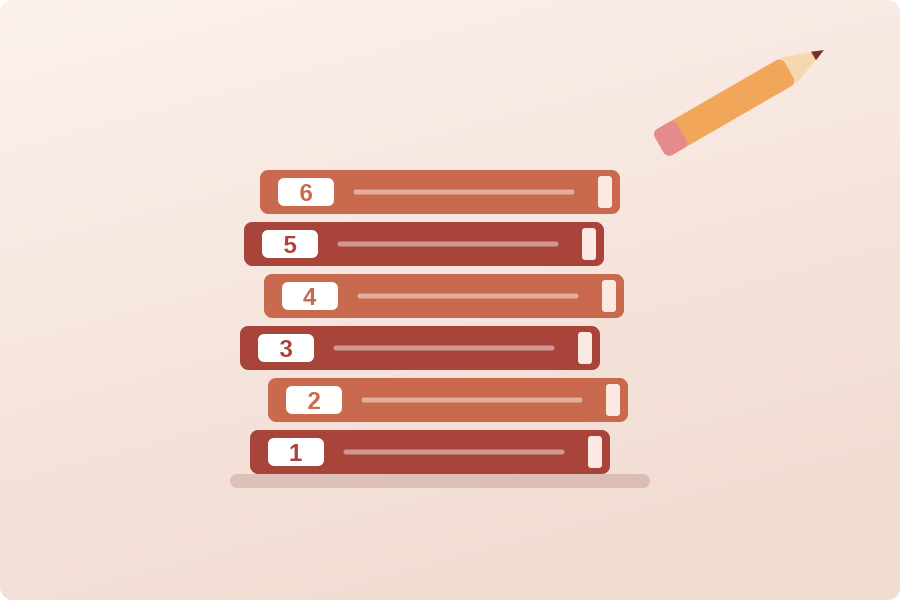
Spanish education has six stages: educación infantil (0–6), primaria (6–12), ESO (12–16), then either bachillerato (16–18) or formación profesional (FP), and finally university. Primaria and ESO together are the compulsory, free enseñanza básica.
| Stage | Ages | Courses | Compulsory? | Where |
|---|---|---|---|---|
| Infantil, 1st cycle | 0–3 | 3 | No | escuela infantil |
| Infantil, 2nd cycle | 3–6 | 3 | No, but free in state schools | colegio (CEIP) |
| Primaria | 6–12 | 6 | Yes | colegio (CEIP) |
| ESO | 12–16 | 4 | Yes | instituto (IES) |
| Bachillerato | 16–18 | 2 | No | instituto |
| FP básico / medio / superior | from 15–16 | 2 each | No | instituto or FP centre |
| University (grado) | from 18 | usually 4 | No | university |
The framework is the national education law, the LOE as amended by the LOMLOE in 2020. Running the schools is the job of the 17 autonomous communities, so the calendar, the forms and the admission points differ by region; the stages and their names do not.
School ages in Spain: which year will my child join?
Children are grouped by calendar year of birth, not by a cut-off date in the school year. Everyone born in the same year, January to December, is in the same class, and a child starts 1.º de primaria in the September of the year they turn six.
So a child born in 2020 is in 1.º de primaria in 2026–27 and starts ESO in September 2032. The school year runs from early or mid-September to around 20 June, with dates set by each region.
For a family arriving from abroad, the rule that matters is that placement is by age, not by the level reached in the old school. A child who did two years of school in another system lands in the year for their birth year, with support if needed. A child born in December is in the same class as one born the previous January, so the youngest in a Spanish class can be almost a year younger than the oldest.
| Born in | Course in 2026–27 |
|---|---|
| 2023 | Infantil 3 años |
| 2020 | 1.º de primaria |
| 2014 | 1.º de ESO |
| 2010 | 1.º de bachillerato or FP |
Is school compulsory from age 3 in Spain?
No. Compulsory schooling starts at 6, but almost every child starts at 3, in the segundo ciclo de infantil, which is free in state schools. In practice infantil de 3 años (P3 in Catalonia) is when most families first apply for a school place.
Infantil has two cycles. The first, 0 to 3, is the nursery: escuelas infantiles, public or private, with fees and places that depend on your region and town. The second, 3 to 6, usually sits inside the same colegio that runs primaria. This matters for admission: the main entry point to a school is at 3, and in popular schools the places in primaria are mostly taken by children who started there in infantil.
Primaria and ESO: what happens from 6 to 16?
From 6 to 12 children do six courses of primaria in a colegio, with one class teacher, the tutor, and subject teachers for English, PE or music. At 12 they move to an instituto for four courses of ESO, Educación Secundaria Obligatoria, and the compulsory part ends at 16.
There is no streaming into different school types before 16, as there would be in Germany: everyone follows ESO. The core subject throughout is Lengua Castellana y Literatura, the native-speaker Spanish subject, and it is usually where a newcomer feels the gap first; our Lengua year by year in primaria shows what is covered in each course. In regions with a second official language, that language is a subject and often a language of teaching too.
Repeating a year is meant to be exceptional: the law allows a pupil to repeat the same course once, and at most twice across compulsory schooling. Pupils can move up with one or two failed subjects and catch up on them the following year.
If Lengua is the subject that keeps slipping, our one-to-one Lengua support for ages 6–12 works in Spanish on the same reading, spelling and grammar as the class. Nobody can promise a grade; regular hours on the subject usually help.
When does the school year start in Spain, and what are school hours?
The Spanish school year runs from early or mid-September to around 20–23 June, and the national law sets a minimum of 175 teaching days for the compulsory stages. Each autonomous community publishes its own calendario escolar every spring, so exact start dates and holidays differ by region.
The fixed points are the same almost everywhere: two weeks or so at Christmas, from about 22 December to 7 January; a week around Easter, Semana Santa, whose dates move every year; and a long summer from late June to September. On top of that come national, regional and local holidays, plus a few días no lectivos chosen by the town or the school. A few regions also add short breaks during the term. Download the calendar from your region's education website as soon as it appears; it is the only reliable source.
School hours depend on the school's jornada:
| Type of day | Typical hours | What it means for you |
|---|---|---|
| Jornada continua | about 9:00–14:00 | Lessons end at lunchtime; comedor and activities run afterwards |
| Jornada partida | about 9:00–12:30 and 14:30–16:30 | Two blocks with a long lunch break in between |
| Jornada intensiva | mornings only in June and September | Many regions shorten the day at the start and end of the year |
Most primary schools offer an early drop-off service, often called primeros del cole or madrugadores, from around 7:30, and a comedor escolar, the school canteen, which usually costs money unless you qualify for a grant (beca de comedor). Ask about both on your first visit, because places can be limited.
How does grading work in Spanish schools?
Marks run from 0 to 10 and 5 is a pass. School reports use five words: Insuficiente (fail, below 5), Suficiente (5), Bien (6), Notable (7–8) and Sobresaliente (9–10).
In primaria the report usually gives only the words. In ESO the words often come with a whole number from 1 to 10, depending on the region. In bachillerato marks are numbers from 0 to 10, and they count: the average feeds directly into the university entrance grade.
At the end of ESO, the teachers who teach your child decide together whether they get the título de Graduado en Educación Secundaria Obligatoria. There is no final exam and no fixed number of failed subjects that blocks it; the question is whether the pupil has reached the competences of the stage. The title is issued without a grade. A pupil who leaves without it gets an official certificate of the years completed. The Graduado is what opens bachillerato and FP de grado medio.
Bachillerato or FP: what comes after ESO?
After ESO there are two roads. Bachillerato is two academic years, normally 16 to 18, ending in the título de Bachiller. FP, Formación Profesional, is vocational training in two-year cycles with time in a company built in. Both can lead to university.
Bachillerato comes in four tracks (modalidades): Sciences and Technology, Humanities and Social Sciences, Arts, and a General track. The track shapes which university degrees are easiest to reach, so it is worth choosing in 4.º de ESO with the degree in mind.
FP has three levels:
- Grado básico: for pupils of 15 to 17 who have finished 3.º de ESO (exceptionally 2.º) and whose teachers recommend it. It leads to a basic vocational title and, under the current law, to the ESO title as well.
- Grado medio: entry with the ESO title. It leads to the título de Técnico.
- Grado superior: entry with the Bachiller or a grado medio title. It leads to Técnico Superior and gives access to university degrees without the PAU.
FP is not a dead end in Spain. A Técnico Superior can apply to university directly.
What is the PAU, and is it the same as EBAU or Selectividad?
Yes. The PAU, Prueba de Acceso a la Universidad, is the university entrance exam, regulated since the 2024–25 school year by Royal Decree 534/2024. It replaced the EBAU (called EvAU in Madrid, ABAU in Galicia); older Spaniards still say Selectividad.
Pupils sit it at the end of 2.º de bachillerato, in June, with a second sitting in early July. The compulsory phase has four exams, five in regions with a co-official language: Spanish Language and Literature, History of Spain or History of Philosophy, a foreign language, the regional language where there is one, and one main subject of the pupil's track. Each is marked 0 to 10.
The access grade is 60% the bachillerato average and 40% the compulsory phase. You pass with 5, as long as the exams themselves average at least 4. An optional phase lets pupils add subjects weighted by each university to push the admission grade above 10, up to 14. Popular degrees are filled by grade, against a published nota de corte.
Public, concertado or private school: what is the difference?
Público schools are run and funded by the region and are free. Concertado schools are privately owned but publicly funded under an agreement, the concierto: teaching is free and places are allocated by the same rules as in state schools, though many ask for a voluntary monthly contribution and charge for extras. Privado schools charge fees and set their own admission.
A large share of concertados are religious schools. Private schools include international ones with a British, American, French or German curriculum. Those suit short stays or older children, but a child who later moves into the Spanish system, or goes on to a Spanish university, will need the foreign studies recognised. For a family planning to stay, the local public or concertado school also does something no other option can: daily immersion in Spanish.
How do you enrol a child in a Spanish school?
For a September start you apply in the regional admission period, usually in spring: you list schools in order of preference, and where there are more applicants than places a points scale, the baremo, decides. Siblings at the school, living or working nearby, and family income are the main criteria. For the full baremo and the phrases you will need, see our guide to school in Spain for parents.
The key document is the certificado de empadronamiento, the proof that you are registered at your address with the town hall. Your address decides which schools count as nearby. Bring passports or NIE, the child's birth certificate, the vaccination record and the last school reports.
Arriving mid-year? Spanish law guarantees a place to children who join the system late, at any point of compulsory school age. Outside the admission period you apply through the region's comisión de escolarización or the town's education office, and the child is placed in a school with free places, not necessarily your first choice. Placement is by age; with a large gap in knowledge, some regions allow an ESO pupil to start one year lower, so ask. Many regions add a language programme for newcomers, such as aulas de enlace in Madrid or ATAL in Andalusia, part of the week and alongside the normal class.
From bachillerato upwards, foreign studies have to be recognised by the Ministry of Education (homologación). Start that early, since it can take months.
Spanish school: myths and facts
- MythSchool in Spain is compulsory from age 3.FactIt is compulsory from 6. Infantil from 3 to 6 is optional, but free in state schools, and almost every child goes.
- MythA concertado is a private school you pay for.FactTeaching at a concertado is publicly funded and free, with the same admission rules as state schools. Many ask for a voluntary contribution and charge for extras.
- MythMy child will be put down a year until their Spanish is good enough.FactChildren are placed by birth year. Some regions allow an ESO pupil with a large gap to start one year lower, and language support runs alongside the normal class.
- MythWithout the PAU there is no way into a Spanish university.FactThe Técnico Superior title from FP de grado superior gives access to university degrees without the PAU.
How does the baremo work, and how many points do you need?
There is no fixed number of points that guarantees a place: the baremo only matters when a school has more applications than places, and then children are ranked from most to fewest points. The criteria come from the national law (article 84 of the LOE, as amended by the LOMLOE); the points for each criterion are set by every region in its own decree.
The criteria you will meet everywhere are:
- Siblings already enrolled at the school, usually the heaviest item.
- Parents or legal guardians working at the school.
- Proximity of the home or of a parent's workplace, measured against the school's catchment area.
- Family income (the law speaks of renta per cápita of the household).
- Familia numerosa (large family), disability of the pupil, a parent or a sibling, and foster care situations.
- In many regions, familia monoparental and multiple births.
The steps follow the same sequence in every region. You hand in one application per child, with your schools in order. The listas provisionales are published, there are a few days for a reclamación (complaint) if your points are wrong, then come the listas definitivas. Ties are broken by a public draw, the sorteo. Once you have a place, you still have to do the matrícula, the actual enrolment, within its own deadline, usually in June or July; missing it can cost you the place.
Two practical rules. First, everything you claim has to be proved with documents at the time of applying: a padrón certificate dated after you moved in, a work certificate for the workplace criterion, the título de familia numerosa. Second, never put just one school on the form. If your first choice is full, the administration places your child in a school with free places, and that may be further away than the second or third school you would have chosen.
What do you say at the school office? A model conversation
The first contact is usually with the secretaría, the school office. You do not need perfect Spanish, but a few set phrases make the visit much smoother.
You: Buenos días. Acabamos de llegar a España y quería información para escolarizar a mi hijo. Secretaría: ¿Qué edad tiene? You: Nació en 2016. Le corresponde quinto de primaria, ¿verdad? Secretaría: Sí. ¿Estáis empadronados en el municipio? You: Sí, aquí tiene el certificado de empadronamiento, los pasaportes y las notas de su colegio anterior. Secretaría: Ahora mismo no hay plazo abierto. Tenéis que pedir plaza en la comisión de escolarización. You: ¿Dónde está y qué horario tiene? ¿Hay plazas libres en este colegio? Secretaría: En quinto nos queda una. Lo indicáis en la solicitud. You: Muchas gracias. ¿Tienen comedor y servicio de madrugadores?
| Spanish | Meaning | When to use it |
|---|---|---|
| Quería pedir plaza para… | I'd like to apply for a place for… | Opening line at the office |
| ¿Qué documentos tengo que traer? | Which documents do I need to bring? | Before you leave |
| ¿Cuándo se publican las listas? | When are the lists published? | During the admission period |
| Quería presentar una reclamación | I'd like to file a complaint | If your points are wrong |
| No habla español todavía. ¿Hay aula de enlace / apoyo? | He/she doesn't speak Spanish yet. Is there language support? | At enrolment |
| ¿Podemos hablar con el tutor? | Can we speak to the class teacher? | First week of school |
If you want to prepare your child before the move, from vocabulary to the first-day routine, see how to prepare a child for school in Spain.
Does the system change from region to region?
The stages, ages, titles and the PAU are the same everywhere. What changes is the admission calendar, the points, school hours, part of the curriculum and, in six regions, the language of teaching.
In Catalonia, the Valencian Community, the Balearic Islands, Galicia, the Basque Country and Navarre, a co-official language is both a subject and a language of teaching. How much of the week it takes depends on the region and the school. Our article on Catalan, Valencian and Galician at school goes through each region's rules and the exemptions for children arriving from abroad.
Before you choose where to live, look up two things on the regional education website: the admission calendar for next year and the language model of the schools near you.
Do you know the Spanish school system?
A child born in 2020: which course in 2026–27?
How does the Spanish school system compare with the UK and the US?
The biggest differences are the birth-year rule, the late start of compulsory school at 6, and the single comprehensive track until 16. A British Year 1 child is five; a Spanish 1.º de primaria child turns six during the year, so English-speaking families often find their child a year "behind" on paper but not in practice.
| Spain | England | United States | |
|---|---|---|---|
| Compulsory from | 6 | 5 | 5–6 (by state) |
| Cut-off | calendar year (1 Jan–31 Dec) | 1 September | varies by state, often 1 September |
| Primary | primaria, 6 years (6–12) | Years 1–6 | grades 1–5 or 1–6 |
| Lower secondary | ESO, 4 years (12–16) | Years 7–11 (GCSEs) | middle school + grades 9–10 |
| Upper secondary | bachillerato 2 years or FP | sixth form, A levels | grades 11–12 |
| Leaving exam | PAU after bachillerato | A levels | SAT/ACT not set by the school |
| Marks | 0–10, 5 is a pass | GCSE 9–1 | A–F, GPA |
A few things English-speaking parents notice: there are no national tests at 11 that decide which school a child goes to; homework and memorisation can weigh more than they are used to; and repeating a year, while exceptional, exists. A child born in November or December in Spain is among the youngest in the class, which is the reverse of what an August birthday means in England.
For children from English-speaking families, the obstacle is rarely maths or science. It is reading and writing in Spanish: spelling with accents, long texts in Lengua, the language of exam questions. That is where the first year's marks drop, and where regular practice in Spanish helps most.
Practice: a short chat with your child's tutor. Read this exchange aloud a few times before your first parent meeting so the key phrases feel familiar.
— Buenas tardes, soy la madre de Lucas, de tercero. — Encantada. Siéntese, por favor. Lucas se está adaptando bien. — Me alegro. ¿Cómo va con el castellano? — Cada vez mejor. Participa más en clase. — ¿Hay algo que podamos hacer en casa? — Sí, leer un poco todos los días y revisar la agenda. — De acuerdo. ¿Cuándo son las próximas evaluaciones? — A final de trimestre. Les enviaremos las notas por la plataforma.
Useful phrases: soy la madre de... or soy el padre de... is how you introduce yourself, ¿cómo va con...? asks how your child is doing with a subject, and ¿hay algo que podamos hacer en casa? shows you want to support the school. La agenda is the school diary where teachers write notes and homework, so it's worth checking it regularly. If you didn't catch something, ask ¿Me lo puede repetir, por favor? Teachers are used to families who are still learning Spanish. Sandra can rehearse this kind of meeting with you in a lesson, in Spanish, with short English explanations when needed.
Spanish school vocabulary every parent needs
These are the words you will see on circulars, in the parents' chat and in the school app. Learn them in your first weeks and most school messages become readable.
| Spanish | English | Note |
|---|---|---|
| colegio / cole (CEIP) | primary school | Infantil 3–6 and primaria |
| instituto (IES) | secondary school | ESO, bachillerato, FP |
| curso | school year / class year | Está en 3.º = he is in year 3 |
| tutor / tutora | class teacher | Your first contact for everything |
| tutoría | meeting with the class teacher | Ask for one; it is normal |
| evaluación | term and its assessment | Usually three a year |
| boletín de notas | report card | One per evaluación |
| recuperación | resit | For failed subjects |
| deberes | homework | |
| AMPA / AFA | parents' association | Runs activities, sometimes books |
| comedor | school canteen | Paid, with grants |
| extraescolares | after-school activities | Usually paid |
| excursión + autorización | trip + signed permission | Sign and return on time |
| circular | letter to parents | Often through the school app |
| matrícula | enrolment | Separate deadline after admission |
| libros de texto / banco de libros | textbooks / book-lending scheme | Varies by region |
Each region has its own family app for marks, absences and messages: in Madrid, for example, it is Raíces, with family access through its ROBLE portal. Ask the office for your login in the first week.
Frequently asked questions
At what age do children start school in Spain?
School is compulsory from 6, when children start 1.º de primaria in the September of the year they turn six. In practice almost all children start at 3, in the second cycle of infantil, which is free in state schools. Classes are grouped by calendar year of birth.
What age is ESO in Spain?
ESO, Educación Secundaria Obligatoria, runs from 12 to 16 in four courses, 1.º to 4.º de ESO. It is the last compulsory stage and ends with the título de Graduado en ESO, which the pupil's teachers award jointly, without a final exam.
What is the difference between a colegio concertado and a public school?
A public school is run and funded by the region. A concertado is privately owned but publicly funded under an agreement: teaching is free and places follow the same admission rules, but many ask for a voluntary monthly contribution and charge for extras. Many concertados are religious schools.
Is the PAU the same as the EBAU?
Yes. Since the 2024–25 school year the university entrance exam is officially the PAU, Prueba de Acceso a la Universidad, under Royal Decree 534/2024. It replaced the EBAU (EvAU in Madrid); many people still call it Selectividad.
Can my child start a Spanish school in the middle of the year?
Yes. Children of compulsory school age who arrive late have a right to a place at any time of year. Outside the admission period you apply through the region's comisión de escolarización or the town's education office, and the child is placed by age in a school with free places. You will need the certificado de empadronamiento.
What is a pass mark in Spanish schools?
5 out of 10. Reports use the words Insuficiente (below 5), Suficiente (5), Bien (6), Notable (7–8) and Sobresaliente (9–10). Bachillerato marks are numbers from 0 to 10, and their average counts for 60% of the university access grade.
Can you go to university in Spain after FP?
Yes. The título de Técnico Superior from an FP de grado superior gives access to university degrees without the PAU. Students can still sit the optional phase of the PAU to raise their admission grade for competitive degrees.
When does the school year start in Spain?
In early or mid-September, with the exact day set by each autonomous community. It ends around 20–23 June, and the law requires at least 175 teaching days in the compulsory stages. Holidays are about two weeks at Christmas, a week at Easter and the summer.
Book your free trial lesson
One to one with a native teacher, on Zoom.
Times shown in your zone: Europe/Madrid
1. Pick a day
Loading the timetable…
3. Your email for the confirmation and the Zoom link
One-to-one lessons with a native teacher
On Zoom with a qualified teacher from Spain who also speaks English.