How to Choose a Language Tutor
Finding the right language tutor can feel a lot like dating. You scroll through profiles, weigh up first impressions, and hope the chemistry is there once you finally sit down together. The stakes are real, too. A brilliant tutor can take you from stumbling through a coffee order in Paris to negotiating a contract in fluent French. A poor one can drain your wallet, crush your confidence, and leave you no closer to your goal than you were six months ago. Whether you are a university student in Manchester preparing for an exchange year, a professional in New York brushing up on Spanish for a promotion, or a retiree in Edinburgh who simply wants to read Dostoevsky in the original Russian, the tutor you choose will shape how fast you progress and whether you enjoy the process along the way. This guide covers everything you need to know before you book that first lesson.
What Makes a Good Language Tutor
A good language tutor is not simply someone who speaks the target language well. Fluency is the floor, not the ceiling. What separates a competent tutor from a truly effective one is a collection of skills that have little to do with vocabulary size and everything to do with understanding people.
First, a good tutor listens. That sounds obvious, but you would be surprised how many tutors spend the bulk of a session talking at you rather than getting you to talk. The best tutors treat silence as a tool. They ask a question, then wait, letting you wrestle with the answer instead of jumping in to rescue you the moment you hesitate. Research published by the British Council consistently shows that learner talk time is one of the strongest predictors of progress in communicative language teaching. If your tutor is doing 70 percent of the talking, something is off.
Second, a good tutor adapts. Your friend might thrive with flashcard drills while you need context-rich conversations built around real scenarios, things like ordering at Pret, explaining symptoms to a GP, or writing an email to a client. A skilled tutor notices what works for you and adjusts lesson content accordingly. They do not simply march through a textbook page by page, regardless of whether the material connects with your life.
Third, a good tutor gives honest, specific feedback. "Good job" after every sentence is not feedback. It is cheerleading. Useful feedback sounds more like, "Your word order was perfect there, but you used the present tense when the context needed the past. Let me show you how that works." It is precise enough that you know exactly what to fix and encouraging enough that you want to try again.
Fourth, a good tutor has a plan. Every lesson should feel like part of a larger story. If you cannot see the thread connecting this week's lesson to last week's, your tutor may be winging it. The best tutors begin with a needs analysis, a short conversation or questionnaire about your goals, your current level, and your timeline. From there, they build a rough syllabus and revisit it regularly to make sure you are on track.
Finally, a good tutor genuinely cares about your progress. You can spot this in small ways: they remember what you struggled with last time, they check whether the homework was too easy or too hard, they celebrate genuine milestones without overdoing it. Teaching is, at its core, a relationship. The tutor who remembers that you have a job interview next Thursday and pivots the lesson to help you prepare is the tutor you want to keep.
Qualifications and Certifications to Look For
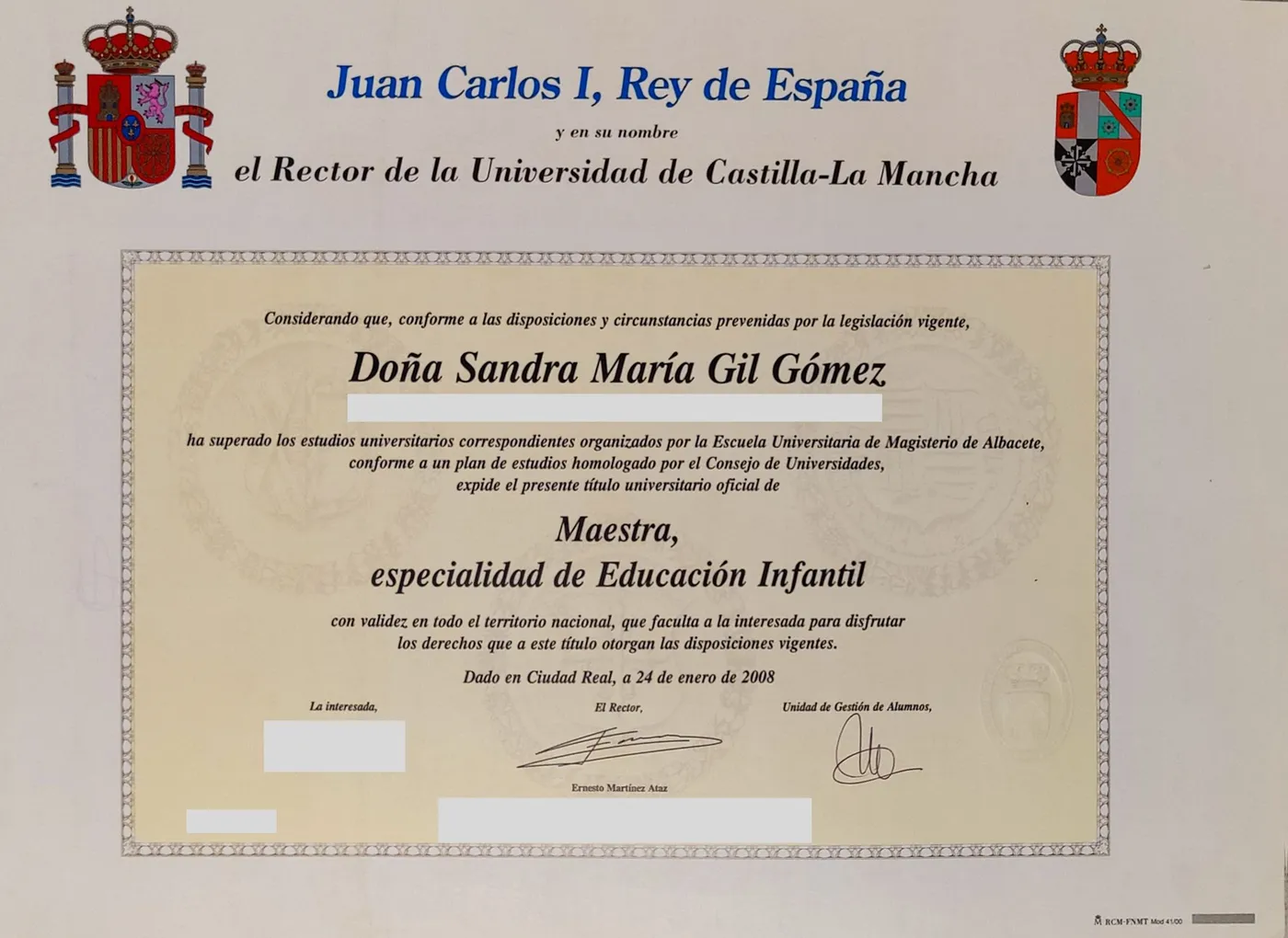
Not every language tutor holds a formal teaching qualification, and not every qualification guarantees good teaching. Still, credentials are a useful starting filter, especially when you are comparing tutors you have never met.
For English tutors, the gold standard in the UK is the CELTA, the Certificate in Teaching English to Speakers of Other Languages, awarded by Cambridge Assessment. A CELTA requires candidates to complete a minimum of six hours of observed teaching practice with real learners. It is intensive, practical, and widely respected by language schools worldwide. The next step up is the DELTA, the Diploma in Teaching English, which is aimed at experienced teachers looking to deepen their expertise. Both are regulated by Ofqual, the English qualifications regulator, and recognised by the British Council.
Another well-regarded option is the Trinity CertTESOL, which covers similar ground to the CELTA but is awarded by Trinity College London. Many hiring managers at reputable language schools consider CELTA and CertTESOL to be roughly equivalent. If your prospective tutor holds either one, you can be reasonably confident they have been trained in lesson planning, classroom management, and error correction.
For tutors who teach in a formal school setting in England and Wales, look for QTS, Qualified Teacher Status. A tutor with QTS has completed an accredited teacher-training programme and met the Teachers' Standards. While QTS is not specific to language teaching, it signals a baseline of pedagogical skill and safeguarding awareness.
Beyond English, certifications vary by language. French tutors may hold the DAEFLE (awarded by the Alliance Francaise and the CNED), while Spanish tutors might carry accreditation from the Instituto Cervantes. German tutors often reference qualifications from the Goethe-Institut. These certificates do not guarantee brilliance, but they do show that the tutor has invested time and money in learning how to teach, not just how to speak.
A word of caution: the online tutoring market is flooded with short, unregulated TEFL certificates that can be completed in a weekend for under fifty pounds. These vary enormously in quality. A 20-hour online TEFL certificate is not in the same league as a CELTA or CertTESOL, no matter what the marketing copy says. When evaluating credentials, ask where and how the tutor earned them. A face-to-face course with observed teaching practice carries far more weight than a multiple-choice quiz completed from a sofa.
Native Speaker vs Non-Native Tutor: Does It Matter
This is one of the most debated questions in language education, and the short answer is: it depends on what you need.
Native speakers bring an intuitive grasp of idiom, slang, and cultural nuance. They know that "quite good" in British English often means "not that good," while in American English it typically means "pretty good." They can model natural pronunciation and intonation without thinking about it. For advanced learners polishing their accent or preparing for life in a new country, a native-speaking tutor can be invaluable.
But native speakers are not automatically good teachers. Speaking a language from birth does not mean you understand its grammar rules well enough to explain them. Ask a native English speaker to explain the difference between the present perfect and the past simple, and many will stare at you blankly. They use these tenses correctly every day, but they have never had to think about why. A non-native tutor who learned English as a second language often has a deeper, more explicit understanding of grammar because they had to study it consciously.
Non-native tutors also have a hidden superpower: they have been where you are. They know what it feels like to be confused by irregular verbs, to freeze up in a real conversation, to feel embarrassed about their accent. That empathy translates into patience and a knack for anticipating the mistakes learners are likely to make. A Hungarian tutor teaching English to a fellow Hungarian speaker knows exactly which sounds will be tricky and which grammar structures will cause interference from the first language.
The British Council's own research supports the idea that both native and non-native teachers can be equally effective when properly trained. What matters far more than passport is pedagogy. A CELTA-trained non-native speaker with ten years of experience will almost certainly outperform an untrained native speaker who decided to "try teaching" because they moved abroad and needed income.
The practical takeaway: do not rule out a tutor simply because they are not a native speaker, and do not assume a native speaker is automatically the better choice. Focus on qualifications, experience, and how well the tutor's style matches your needs. If you are a beginner, a non-native tutor who shares your first language can actually speed things up, because they can explain tricky concepts in your mother tongue when needed. If you are advanced and need to refine your accent for professional settings, a native speaker from the region you are targeting may be the better fit.
How to Evaluate a Tutor Before Your First Lesson
You do not have to commit blindly. There are several ways to assess a tutor before you ever open your wallet.
Start with the profile. On platforms like ProLang, italki, and Preply, tutors typically include a written bio, a video introduction, and reviews from previous students. Watch the video first. Does the tutor speak clearly? Do they seem warm and approachable, or stiff and rehearsed? A video introduction is essentially a tiny demo lesson, and it tells you more than a written bio ever could.
Next, read the reviews, but read them critically. Look for patterns rather than individual comments. One unhappy reviewer might have had unrealistic expectations. Ten reviewers all saying the same thing, "lessons felt unstructured" or "tutor was often late," is a signal you should take seriously. Pay attention to reviews from learners whose goals match yours. If you are preparing for the IELTS, a glowing review from someone who studied conversational English for travel may not be relevant.
Check the tutor's experience with your specific needs. A tutor who specialises in preparing students for Cambridge exams (FCE, CAE, CPE) is not necessarily the right choice if you need business English for client presentations at a London law firm. Many tutors list their specialisations on their profiles. If they do not, ask directly.
Look at scheduling and logistics. Does the tutor offer lessons at times that work for your routine? If you are based in the UK and your tutor is in a time zone eight hours ahead, early-morning lessons might be your only option. That is fine if you are a morning person, but it is a recipe for cancellations if you are not.
Ask about a trial lesson. Most reputable tutors and platforms offer a trial session, often at a reduced rate or even free. Treat the trial lesson as an audition, for both of you. Come prepared with a specific goal for the session ("I want to practise talking about my work experience" or "I want to understand when to use the subjunctive"). A good tutor will use that goal to shape the lesson on the spot. If the tutor ignores your goal and launches into a generic "tell me about yourself" exercise, that tells you something about how responsive they will be in the long run.
Finally, trust your gut. Teaching is a human interaction. If the conversation feels forced, if the tutor talks over you, or if you feel patronised rather than supported, those feelings are unlikely to disappear by lesson five. You are allowed to say no after a trial lesson, and any professional tutor will understand.
Questions to Ask a Potential Language Tutor
Walking into a trial lesson without a list of questions is like turning up to a job interview without knowing what the company does. You will get through it, but you will not learn much. Here are the questions that matter most.
"What is your teaching qualification, and where did you get it?" This is not rude. It is basic due diligence. A confident tutor will answer without hesitation. If they dodge the question or get defensive, consider that a yellow flag.
"How do you structure a typical lesson?" You want to hear something specific: a warm-up activity, a focus on a particular skill or grammar point, practice activities, and a review. If the answer is "it depends on the student," push a little further. Flexibility is good, but "it depends" with no further detail can sometimes mean "I do not plan my lessons."
"What materials do you use?" Some tutors work from established coursebooks like English File, Cutting Edge, or Straightforward. Others create their own materials. Neither approach is inherently better, but you want to know that the tutor has thought about resources rather than simply Googling worksheets five minutes before each session.
"How do you handle error correction?" This is a surprisingly revealing question. Some tutors correct every mistake in real time, which can feel overwhelming. Others note errors and address them at the end of the lesson, which allows for more natural conversation but risks letting mistakes become habits. The best approach usually falls somewhere in the middle, and a good tutor will be able to describe their philosophy.
"Can you give me an example of a student you have helped reach a similar goal?" Experienced tutors will have stories. They might tell you about a student who went from A2 to B2 in eight months, or someone who passed the IELTS with a band 7 after twelve weeks of preparation. Specific examples are more convincing than vague claims.
"What do you expect from me between lessons?" Great tutoring is not just about what happens during the session. Homework, self-study, and practice between lessons all contribute to progress. A tutor who never assigns homework may not be pushing you hard enough. A tutor who assigns three hours of homework per week when you only have time for thirty minutes is setting you up for guilt and frustration.
"What happens if I need to cancel or reschedule?" Cancellation policies vary widely. Some tutors require 24 hours' notice; others charge for any cancellation within 12 hours. Knowing the rules upfront prevents awkward conversations later.
"How do you track progress?" Look for something concrete: regular assessments, a shared document with notes from each lesson, periodic check-ins against your original goals. If the tutor has no system for tracking progress, you may reach lesson thirty without any clear sense of how far you have come.
Online vs In-Person Tutoring: Pros and Cons
The pandemic forced millions of language learners online, and many never went back. But online tutoring is not automatically better or worse than meeting in person. Each format has genuine strengths and real drawbacks.
Online tutoring is convenient. You can take a lesson from your kitchen table in Bristol, your hotel room in Dubai, or your lunch break at a co-working space in Brooklyn. There is no commute, no parking, and no awkward small talk in a waiting room. Platforms like ProLang, italki, and Preply make it easy to find tutors in any time zone, which means you are not limited to whoever happens to live near you. For learners in rural areas or small towns with few language schools, online tutoring can be genuinely transformative.
Online lessons also tend to be easier to record, with the tutor's permission, so you can revisit tricky explanations later. Screen-sharing makes it simple to work through documents, slides, or websites together. And many learners find that the slight distance of a video call actually reduces anxiety, making it easier to speak up and make mistakes.
On the other hand, online lessons depend on technology, and technology is not always cooperative. A shaky internet connection can turn a productive lesson into a frustrating exercise in repeating "Can you hear me now?" Video fatigue is real, too. If you spend your entire working day on Zoom, adding another video call in the evening may feel like a chore rather than a learning opportunity.
In-person tutoring has its own advantages. Physical presence creates a different kind of energy. It is harder to zone out when someone is sitting across the table from you. In-person lessons also make it easier to use physical materials, flashcards, board games, role-play props, that can make learning more tactile and memorable. For younger learners especially, the classroom environment provides structure and social cues that a screen cannot replicate.
Geography is the obvious limitation. If you live in London, you will have plenty of in-person tutors to choose from. If you live in a small village in the Scottish Highlands, your options shrink dramatically. In-person lessons also require travel time and often cost more, because the tutor has to account for their own commute and room hire.
The best format is the one you will actually stick with. If online lessons fit neatly into your schedule and you consistently show up, they will serve you well. If you find yourself cancelling video calls because you "do not feel like it," in-person sessions might provide the accountability you need. Some learners split the difference, doing one in-person lesson per week for structure and one online lesson for flexibility. That hybrid model works well for many people, and more tutors are offering it now than ever before.
How Much Should a Language Tutor Cost
Pricing is one of the first things learners ask about, and one of the trickiest to answer, because rates vary enormously depending on the tutor's qualifications, location, and the language being taught.
In the UK, expect to pay somewhere between 25 and 50 pounds per hour for a qualified, experienced language tutor. At the lower end, you will find newly qualified CELTA holders, tutors based outside major cities, and non-native speakers offering competitive rates. At the higher end, you will find tutors with DELTA or MA TESOL qualifications, those specialising in exam preparation (IELTS, Cambridge, TOEFL), and tutors based in London, where overheads are higher.
In the United States, hourly rates typically range from $30 to $60 for a qualified tutor, with rates in New York, San Francisco, and other major cities often pushing toward the upper end. Tutors specialising in less commonly taught languages, Mandarin, Arabic, Japanese, sometimes charge more because supply is lower.
On global online platforms, you will find a much wider range. Tutors based in countries with lower costs of living may charge as little as $10 to $15 per hour, while highly experienced tutors with niche expertise can charge $80 or more. Price alone does not determine quality, but there are some general patterns worth noting.
Very low rates, anything under 10 pounds or $12 per hour, should prompt a closer look. At that price point, the tutor may be unqualified, new to teaching, or treating tutoring as a casual side gig rather than a profession. That does not mean they are necessarily bad, but the odds of inconsistency go up. If a rate seems too good to be true, check the tutor's qualifications and reviews carefully before booking.
Very high rates do not guarantee excellence either. Some tutors charge premium prices based on the fact that they are native speakers in a popular city, without the qualifications or teaching skill to justify the markup. Credentials, experience, and reviews are more reliable indicators of value than price alone.
Many tutors offer discounts for packages. Buying ten lessons upfront is often 10 to 15 percent cheaper per session than paying lesson by lesson. This can be a good deal, but only if you have already tried the tutor and are confident in the fit. Never buy a large package before a trial lesson. If the tutor turns out to be wrong for you, getting a refund for unused lessons can be difficult.
Some platforms, including ProLang, offer a free or discounted trial lesson. Take advantage of this. It reduces your financial risk and gives you a concrete basis for comparison if you are evaluating multiple tutors.
Red Flags When Choosing a Language Tutor
Not every tutor is worth your time, and some are worth avoiding entirely. Here are the warning signs that should make you think twice.
The tutor has no visible qualifications and gets evasive when you ask. There is nothing wrong with asking about credentials. A professional tutor will be happy to tell you about their training. If the response is vague ("I have years of experience" without specifics) or defensive ("you don't need a certificate to be a good teacher"), proceed with caution.
The tutor does not prepare for lessons. If your tutor regularly shows up without a plan and spends the first ten minutes deciding what to do, that is not spontaneity. It is laziness. You are paying for structured learning, not improvised conversation.
Lessons feel the same every week. A sign of a weak tutor is repetitive lesson formats: the same type of exercise, the same level of difficulty, the same topics. Good teaching involves progression. If lesson twelve feels identical to lesson two, you are not being challenged, and you are probably not improving.
The tutor is frequently late or cancels often. Everyone has the occasional emergency, but a pattern of lateness or cancellations signals that the tutor does not respect your time. If they cannot manage their own schedule, they are unlikely to manage your learning plan effectively.
There is no feedback, or all feedback is positive. If your tutor never corrects you, they are not doing their job. Equally, if every single thing you say is met with "excellent!" and "perfect!", something is off. Real improvement requires honest feedback about what you are doing well and what needs work.
The tutor refuses to adapt. You have told them you want to focus on speaking, but every lesson is a grammar worksheet. You have mentioned that you need English for job interviews, but they keep assigning essays about holidays. A tutor who ignores your goals is teaching for their own convenience, not for your benefit.
The tutor pressures you to buy large packages upfront. A confident tutor lets their teaching speak for itself. If someone is pushing you to commit to twenty or thirty lessons before you have even tried one, ask yourself why they are in such a hurry to lock you in.
The tutor makes you feel bad about your level. Learning a language is hard enough without being made to feel stupid. A good tutor meets you where you are and builds from there. If you leave lessons feeling demoralised rather than motivated, the tutor is failing at the most fundamental part of their job.
How to Get the Most Out of Private Tutoring
Hiring a great tutor is half the equation. The other half is what you bring to the table.
Set clear goals from the start. "I want to learn Spanish" is not a goal. "I want to reach B1 in Spanish within six months so I can handle basic conversations during my relocation to Madrid" is a goal. The more specific you are, the easier it is for your tutor to design lessons that actually get you there. If you are not sure what level you are aiming for, the Common European Framework of Reference (CEFR) provides a useful scale from A1 (beginner) to C2 (mastery). Your tutor can help you figure out where you are now and where you need to be.
Do the homework. This sounds like advice from a parent-teacher evening, and it is. But it matters enormously. The hour you spend with your tutor is for guided practice, correction, and new input. The hours between lessons are for consolidation. If you skip the homework, you will spend the first fifteen minutes of each lesson re-learning what you covered last time. That is expensive revision.
Prepare for each lesson. Even five minutes of preparation makes a difference. Review your notes from the previous session. Think about what you want to practise. Jot down questions or situations you encountered during the week where you wished your language skills were better. Bringing real-world context into the lesson makes the learning stick.
Speak as much as possible during the lesson. It is tempting to let the tutor do the heavy lifting, especially if you feel self-conscious. Resist that temptation. Every minute you spend listening passively is a minute you could have spent practising actively. If your tutor is talking more than you are, politely point it out. A good tutor will appreciate the feedback.
Use the language outside of lessons. Watch films and TV shows in the target language (with subtitles at first, then without). Listen to podcasts during your commute. Change the language on your phone. Read the news in your target language, even if you only understand half of it. Label items around your house. The more you surround yourself with the language between sessions, the faster the lessons will pay off.
Track your own progress. Keep a notebook or a digital document where you record new vocabulary, grammar points, and mistakes you keep making. Review it weekly. Seeing how far you have come is one of the best motivators, and it helps you spot patterns in your errors that you might otherwise miss.
Be honest with your tutor. If the pace is too fast, say so. If you found the homework boring, say so. If you did not understand something but nodded along anyway, go back and ask. Your tutor cannot help you with problems they do not know about. The best student-tutor relationships are built on honest communication, not polite pretence.
When to Switch Tutors and How to Do It Gracefully
Switching tutors is not failure. It is a normal part of the learning process, and sometimes it is the smartest thing you can do.
There are several legitimate reasons to switch. You may have outgrown your tutor. The person who was perfect for your beginner stage might not have the skills or materials to take you from B2 to C1. Your goals may have changed. You started learning Italian for a holiday, but now you need it for work, and your conversational tutor does not do business Italian. Or the chemistry simply is not there anymore. Lessons feel flat, you dread them instead of looking forward to them, and your progress has stalled.
Plateaus are worth a closer look before you make a decision. Every language learner hits them, typically around the upper-intermediate level (B1 to B2), where the initial excitement has worn off and progress feels glacially slow. A plateau is not always the tutor's fault. But if you have been stuck at the same level for several months and your tutor has not adjusted their approach, that is a sign that something needs to change.
When you do decide to switch, handle it professionally. Your tutor is a person, not a subscription service. You do not owe them a lengthy explanation, but a brief, honest message goes a long way. Something like, "Thank you for your help over the past few months. I have decided to try a different approach for the next phase of my learning. I really appreciate everything you have taught me." That is kind, clear, and leaves the door open if you ever want to come back.
Avoid ghosting. It is surprisingly common for students to simply stop booking lessons without saying a word. This is not only rude; it also leaves the tutor wondering whether something went wrong. A short message takes two minutes and preserves the relationship.
If you are on a platform like ProLang, switching is straightforward. You can browse other tutors, book a trial, and transition without any contractual awkwardness. If you are working with a tutor privately and have pre-paid for lessons, check the refund policy before making the switch. Most tutors will refund unused lessons, but some have a no-refund policy, so it is worth clarifying this upfront when you first start.
Before you switch, make sure you have given your current tutor a fair chance. Have you communicated your concerns? Sometimes a simple conversation, "I feel like my speaking is not improving as fast as I would like. Can we try a different approach?", is enough to reset the dynamic. If you have raised concerns and nothing has changed after a few weeks, then switching is the right call.
Finally, do not feel guilty. Tutors lose and gain students all the time. It is part of the profession. Your job is to learn, and if your current arrangement is not serving that goal, making a change is not disloyal. It is practical.
Choosing a language tutor is not a decision you make once and forget about. It is something you revisit as your skills grow, your goals shift, and your life changes. The tutor who is right for you today might not be right for you in a year, and that is perfectly fine. What matters is that you stay engaged, keep learning, and never settle for lessons that feel like a waste of your time. The perfect tutor is out there. With the right questions and a clear sense of what you need, you will find them.
Frequently asked questions
What qualifications should a language tutor have?
For English, CELTA or the Trinity CertTESOL are the usual benchmarks, both regulated by Ofqual and recognised by the British Council; DELTA is the step up for experienced teachers. For other languages, look at Instituto Cervantes accreditation for Spanish, DAEFLE for French or Goethe-Institut qualifications for German. Ask where the certificate was earned, since a weekend online TEFL is not comparable to a course with observed teaching practice.
How much does a language tutor cost per hour?
In the UK, a qualified experienced tutor generally charges 25 to 50 pounds an hour, and in the United States roughly 30 to 60 dollars. Online platforms show a much wider spread, from around 10 to 15 dollars up to 80 or more for niche expertise. Rates under 10 pounds or 12 dollars usually mean an untrained or very new tutor, so check credentials and reviews before booking.
Is a native speaker always a better language tutor?
No. Native speakers model idiom, accent and cultural nuance without effort, but many have never had to analyse their own grammar and struggle to explain it. A tutor who learned the language themselves often explains rules more clearly and anticipates the mistakes speakers of your first language make. Training and experience predict results far better than nationality does.
What are the warning signs of a bad language tutor?
Watch for evasiveness about qualifications, arriving without a lesson plan, repeated lateness or cancellations, and lessons that look the same in week twelve as in week two. Feedback that is always positive is another sign, since real progress needs honest correction. Pressure to buy twenty or thirty lessons before you have taken a trial is a reason to walk away.
Book your free trial lesson
One to one with a native teacher, on Zoom.
Times shown in your zone: Europe/Madrid
Loading the timetable…
3. Your email for the confirmation and the Zoom link
One-to-one lessons with a native teacher
On Zoom with a qualified teacher from Spain who also speaks English.